
2025-06-08
Ten Cheapest Places to Live in Texas
Looking for a cheap place to live in Texas? Look no further. These counties have the lowest property tax bills in the Lone Star State.
As an Amazon Associate I earn from qualifying purchases.

Know what the Bible says and understand why it matters with the fully revised NIV Study Bible featuring updated notes, full-color design, and Comfort Print typography designed for immersive reading.
A trusted companion for deep personal study, sermon prep, and devotional reading highlighted in our faith and leadership coverage.
Looking for a cheap place to live in Texas? Look no further. These counties have the lowest property tax bills in the Lone Star State.

ThyssenKrupp executive warns of ‘collateral damage’ to supply chains and urges protective action on energy pricingEurope’s steel industry faces being “wiped out” in the face of Donald Trump’s prohibitive 50% tariffs, high energy costs and a mountain of cheaper Chinese steel, one of Germany’s biggest industrial groups has warned.Ilse Henne, a board member at the steel, engineering and chemicals group ThyssenKrupp, said the industry faced an existential crisis after the US president’s decision last week to double tariffs on steel and aluminium imports from 25% to 50%. Continue reading...
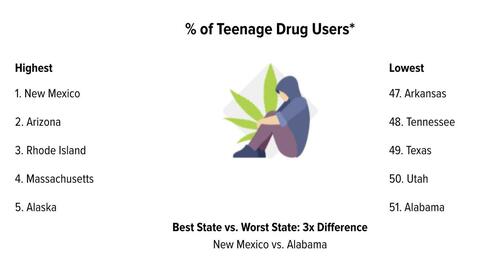
These Are The U.S. States With The Most Drug Use Drug abuse has long been a serious issue in the United States, with the so-called “War on Drugs” dating back to 1971 under President Nixon.Despite decades of efforts to fight addiction, the problem remains widespread and deadly. More than 80,670 Americans died from drug overdoses in the 12 months ending November 2024. As new threats like fentanyl spread—enough was seized last year for 380 million lethal doses—it’s more urgent than ever for policymakers to act.But where is the crisis worst? A new report from WalletHub ranks all 50 states and the District of Columbia across key metrics like drug use, overdoses, and access to treatment.Chip Lupo, an analyst at WalletHub, explains: “Drug problems can start from multiple sources, like taking illegal substances with friends or getting hooked on a prescription that was originally given for a legitimate medical issue. As states fight drug addiction, they need to consider all angles and make sure they are not just addressing things from a law enforcement perspective but also providing the resources necessary to help people with addictions get clean.”WalletHub’s analysts compared states using 20 metrics organized into three main categories: drug use and addiction, law enforcement, and drug health issues and rehab. These metrics included measures like the percentage of adults and teens who reported using illicit drugs, overdose death rates, opioid prescriptions, and availability of treatment facilities. New Mexico tops the list with the biggest drug problem in America. The state has the highest percentage of teens using drugs, the most teens reporting marijuana use before age 13, and the third-highest rate of adult illicit drug use. New Mexico also struggles with high overdose deaths and ranks near the bottom in offering help to those with addiction.West Virginia ranks second, with the highest overdose death rate in the country and one of the top college campus drug arrest rates. A lack of addiction treatment resources means many residents have nowhere to turn for help.Nevada comes in third. Nearly 30% of students there report being offered or sold drugs at school. Nevada also ranks high for teens trying marijuana early and has too few treatment facilities to meet the need.Other high-ranking states include Alaska, the District of Columbia, Oklahoma, Missouri, and Colorado. Each faces unique challenges, from high rates of opioid prescriptions to limited treatment options.The report also highlights troubling data on teen drug use. New Mexico, Arizona, Rhode Island, Massachusetts, and Alaska have the highest percentages of teenagers who admit using drugs in the past month. Meanwhile, states like Arkansas, Tennessee, and Texas report much lower teen drug use.Students being offered drugs at school is a big concern, too. California, Nevada, Georgia, New Jersey, and Hawaii top the list for that category, while states like Connecticut and South Dakota report much lower numbers.The crisis shows no sign of ending on its own. Experts recommend a mix of strategies to combat addiction, including making rehab more accessible and expanding education on the risks of drug use. The federal government and states alike must prioritize treatment alongside law enforcement to help communities recover. Tyler DurdenSat, 06/07/2025 - 22:45
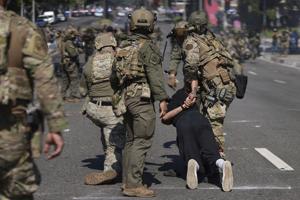
President Donald Trump is deploying 2,000 California National Guard troops despite the governor’s objections to Los Angeles where protests Saturday led to clashes between immigration authorities and demonstrators. The White House said in a statement Saturday that he was deploying...
Canada stands at a crossroads in its energy future, and the path it chooses will define its economic resilience, environmental integrity, and quality of life for generations. As a Canadian who is involved in shaping Ireland’s 2050 energy roadmap through my work with Trifecta Ireland, I see an immense opportunity ... [continued]The post Transforming Canada: Mapping A 100% Electrified Energy Economy appeared first on CleanTechnica.
Why is the full lifecycle of plastics — including production — so important? Plastic degrades into microplastics, pieces less than 5 millimeters long. Nanoplastics, which measure less than 1 micrometer, are the smallest of these and the most likely to get into our blood and tissues. World Environment Day, which ... [continued]The post World Environment Day Calls On You To #BeatPlasticPollution appeared first on CleanTechnica.

The 39-year-old senator is a member of the opposition conservative Democratic Center party founded by former Colombian President Alvaro Uribe.

By Ben Blanchard TAIPEI, June 6 (Reuters) – Taiwan accused China on Friday of raising tensions in the region with a “provocative” military patrol involving warplanes and warships near the island, an...

Wood Pellets: America's Underrated Power Play Authored by Darrell Smith, Executive Director of the U.S. Industrial Pellet Association via RealClearEnergy,In an energy conversation dominated by buzzwords and breakthroughs, it’s easy to overlook the quiet, proven solutions that are already delivering results. Exhibit A: wood pellets.These compact cylinders aren’t flashy or trend on social media. For the uninitiated, they are carriers of renewable carbon and energy, sourced from responsibly managed forests; a real, scalable, domestic resource that delivers energy security, climate value, and rural jobs while sustaining and growing forests. Wood pellets are emerging as one of the smartest plays in America’s energy and climate portfolio.The Math Works Let’s be clear: climate solutions need to scale. We need terawatts of clean power, gigatons of carbon removal, and a replacement for fossil carbon in sectors where options are limited. Think steel mills, cargo ships, aviation fuel, and cement plants — industries that can’t rely on solar panels and wind turbines.Enter forest biomass. Every year, America’s 360 million acres of privately-owned forests grow more wood than we harvest. Driven by strong markets for wood products, these forests are powerful carbon sinks that have been growing since the 1950s when regenerative forestry practices became the norm.Responsible forest management, the kind that thins out fuel for wildfires, not only keeps forests healthy but also supplies feedstock for wood pellets. These pellets burn clean, emit fewer particulates than coal, are carbon-neutral, and have the potential to be carbon-negative when sourced sustainably. In other words, we’re turning forest byproducts into a strategic asset instead of a forest fire risk and ensuring more investment into our nation’s forests.Valued at $1.75 billion, the U.S. led the world last year in wood pellet exports — heating homes and decarbonizing power grids from Cambridge to Copenhagen. That’s not just a climate win. It’s a geopolitical and economic one. Furthermore, there are ample opportunities to increase use domestically. The Digital Surge: Data Centers Meet BiomassData centers are growing at breakneck pace. From streaming to AI, every click and query demands energy. These facilities already consume nearly 3% of global electricity, and that figure is climbing fast. In the U.S. alone, data center energy demand is expected to double by 2030.While tech companies make pledges to run on “100% renewable,” achieving this goal is challenging. Intermittent renewables like wind and solar can’t always deliver the 24/7 baseload power data centers require. Wind and power are not the silver bullet many had hoped, because expensive batteries must be manufactured and installed to account for their lack of reliability. Meanwhile, wood pellets offer a firm, dispatchable, renewable fuel that can complement the grid and provide the consistent power backbone data infrastructure needs, without the carbon price tag of fossil fuels.Speed is also a challenge. AI infrastructure is being developed on start-up timelines, but the grids meant to supply power are often hampered by multi-year planning cycles and limited capacity. Utilizing the existing biomass fleet or retrofitting coal-fired power stations to run on sustainable biomass bypasses these time-intensive and costly barriers. These sites are already grid-connected, often already have relevant permits, and crucially a coal-to-biomass conversion can be completed in under two years.A Carbon-Negative Future? Biomass is the FeedstockThere’s another dimension to this story. Biomass isn’t just an energy source; it’s a carbon solution. Engineered carbon removal technologies like Bioenergy with Carbon Capture and Storage (BECCS) require a steady, sustainable feedstock to function at scale. That feedstock needs to be renewable, reliable, and available today. Wood pellets fit that bill.When wood pellets are used in BECCS systems, they generate power and remove CO2 from the atmosphere at the same time, locking it away underground or turning it into usable materials like concrete, fuels, or even long-lived bioplastics. That’s negative emissions. Not net zero. Below zero.With private markets pouring billions into carbon removal innovation, the need for biogenic carbon is accelerating. Whether it’s carbon-negative electricity, sustainable aviation fuel or green hydrogen, they all have one thing in common: they start with a reliable renewable carbon stream. Wood pellets and woody biomass are poised to play a major role in supporting these emerging technologies.Missing the Forest for the Trees Despite all this, woody biomass, like all energy, eventually finds itself in the crosshairs. Critics claim it’s just “burning trees,” a false narrative that ignores both the science and the forests. Sustainable biomass doesn’t chop down protected, old-growth forests. It’s sourced from working forests, the type that are deliberately selected and sustainably managed to produce our dimensional lumber and furniture. Except biomass utilizes the lowest-value fiber that comes off these tracts.As America’s pulp and paper industry has declined, shuttering dozens of mills and shedding thousands of jobs over the last decade, wood pellets have offered a new market for low-value wood. This fiber has little economic value and without a buyer will often rot, burn, or get landfilled. Using this wood isn’t deforestation, it’s responsible forest stewardship. In fact, without reliable markets like biomass, private landowners will sell and convert their forests for more lucrative returns like agriculture, golf courses, and residential developments.Investing in Rural AmericaThe benefits of the wood pellet industry go beyond carbon math. This is a sector that brings real jobs to rural America. It supports forest owners, loggers, truckers, and working forests. This is climate action with a hard hat, not a hashtag.If we’re going to win the climate war, we have to include the states in America’s wood basket where trees grow, people work the land, and decarbonization isn’t an abstract ideal.Wood pellets are real, scalable, renewable and a true American resource.In a world increasingly distracted by hype, maybe it’s time we doubled down on solutions that deliver quietly, reliably, and sustainably. One of the smartest is hiding in plain sight — in our forests. Tyler DurdenSat, 06/07/2025 - 22:10

The bestselling author shares blunt words about retirement finances.

Scott Pelley said that a settlement of Donald Trump’s lawsuit would be “very damaging” to the reputation CBS and Paramount, while the 60 Minutes correspondent also defended a recent commencement speech where he warned of the threats to freedom of speech. Appearing on CNN’s post show following the live telecast of Good Night, And Good [...]
UPDATE: Three Injured After Car Crashes into Milford Dollar Tree WBOC TVDriver of car loses control, crashes into Dollar Tree store in Milford, Sussex County, Delaware 6abc PhiladelphiaCar drives through Dollar Tree in Milford, DE, injuring 97-year-old woman NBC10 PhiladelphiaUPDATE: Three hurt after car crashes into Milford Dollar Tree CoastTVThree Injured In Crash At Milford Dollar Tree First State Update
She receives benefits for "severe disability" but competes in races: an athlete convicted of fraud. Stewartville StarThe benefits cheats making a £6.5 billion mockery of the welfare system The TelegraphBenefit cheat mum must repay £22k after innocuous Facebook posts caught her out Stoke on Trent LiveMum who lied about MS to claim thousands found out through own posts EVOKEBenefits cheat who claimed PIP for her MS while running 10K races deletes her 'ex-prisoner' TikTok on life ins Daily Mail
a.jpg?itok=xf_OMV6J)
Trump To Deploy National Guard In Los Angeles As Anti-ICE Demonstrations Turn Violent The Trump administration will deploy the National Guard to Los Angeles following several violent confrontations between Immigrations and Customs Enforcement (ICE) and protesters, after ICE agents carried out multiple immigration sweeps throughout the county.Border czar Tom Homan revealed the plans Saturday night in an interview on Fox News. BREAKING - Border Czar Tom Homan has just confirmed that the National Guard will be deployed to Los Angeles tonight to reestablish order after Democrats seized control during violent anti-ICE riots. pic.twitter.com/fa2llnUPsP— Right Angle News Network (@Rightanglenews) June 7, 2025Earlier, the Deartment of Homeland Security accused Democratic leaders in California - including Governor Gavin Newsom (D) and Mayor Karen Bass (D) of contributing to the violence."The violent targeting of law enforcement in Los Angeles by lawless rioters is despicable and Mayor Bass and Governor Newsom must call for it to end," DHS spokeswoman Tricia McLaughlin said in a statement. BREAKING: Protesters in Paramount, California have vandalized a U.S. Marshals Service bus during fiery demonstrations against immigration raids. pic.twitter.com/cK02O3CYIR— Brian Allen (@allenanalysis) June 7, 2025Border Patrol personnel deploy tear gas during a demonstration over the dozens detained in an operation by federal immigration authorities a day earlier in Paramount section of Los Angeles on June 7, 2025. Eric Thayer/AP PhotoBREAKING NEWS:Paramount, California is ERUPTING into chaos as federal agents are fighting back against a crowd of anti-deportation agitators!Flash bangs and tear gas is deployed against them.What is your reaction? pic.twitter.com/FTOnbL2b3g— AmericanPapaBear (@AmericaPapaBear) June 7, 2025DHS Secretary Kristi Noem also chimed in, posting on X that protesters who use violence against officers will be prosecuted."You will not stop us or slow us down," she posted on X. President Trump also blamed 'Newscum' and Bass - saying in a Saturday night 'Truth' that if they can't do their jobs, "then the Federal Government will step in and solve the problem."White House spox Karoline Leavitt echoed Trump's comments, saying in a post on X: "President Trump will uphold law and order and continue to remove all dangerous illegal alien invaders from our country," adding "The mob violence will be quelled, the criminals responsible will be brought to justice, and operations to arrest illegal aliens will continue unabated."Left-wing radicals waving foreign flags are viciously attacking ICE and Border Patrol agents and obstructing official law enforcement activities in Los Angeles.Democrats refuse to condemn this despicable behavior but this will NOT be tolerated by the Trump Administration.... pic.twitter.com/JFzrVhOfjk— Karoline Leavitt (@PressSec) June 8, 2025The White House issued the following statement: In recent days, violent mobs have attacked ICE Officers and Federal Law Enforcement Agents carrying out basic deportation operations in Los Angeles, California. These operations are essential to halting and reversing the invasion of illegal criminals into the United States. In the wake of this violence, California’s feckless Democrat leaders have completely abdicated their responsibility to protect their citizens. That is why President Trump has signed a Presidential Memorandum deploying 2,000 National Guardsmen to address the lawlessness that has been allowed to fester. The Trump Administration has a zero tolerance policy for criminal behavior and violence, especially when that violence is aimed at law enforcement officers trying to do their jobs. These criminals will be arrested and swiftly brought to justice. The Commander-in-Chief will ensure the laws of the United States are executed fully and completely.Newsom responded - saying in a post on X: "The federal government is moving to take over the California National Guard and deploy 2,000 soldiers. That move is purposefully inflammatory and will only escalate tensions," adding "This is the wrong mission and will erode public trust."The federal government is moving to take over the California National Guard and deploy 2,000 soldiers. That move is purposefully inflammatory and will only escalate tensions.LA authorities are able to access law enforcement assistance at a moment’s notice. We are in close...— Governor Gavin Newsom (@CAgovernor) June 8, 2025Stay tuned... Tyler DurdenSat, 06/07/2025 - 21:35

"I’m going to be living in these over the summer."
China’s grueling ‘996’ work culture is being debated by European startups — 7 founders and VCs on why they are resisting CNBCView Full Coverage on Google News
Risk appetite migrates to stocks as Bitcoin braces itself – Here’s why that matters AMBCryptoWhile Bitcoin Hits a New Price Record, Critics Still Have These Warnings for Crypto Investors The Globe and MailBitcoin Price Watch: Cup and Handle Pattern Signals Potential Surge Bitcoin.com NewsIs a Bitcoin price rally to $150K possible by year's end? CointelegraphAsia Morning Briefing: Bitcoin Stalls at $105K as Analyst Says Market Looks 'Overheated' CoinDesk
Trump's tariffs could pay for his tax cuts -- but it likely wouldn't be much of a bargain

DUBAI, United Arab Emirates (AP) — The leader of al-Qaida's Yemen branch has threatened both U.S. President Donald Trump and billionaire Elon Musk over the Israel-Hamas war in the Gaza Strip in his first video message since taking over the...

Q. After almost 10 years of marriage, my divorce has been finalized, but unfortunately the marriage ended a few months prior to 10 years. It is my understanding that unless the marriage lasted 10 years, I would not eligible for a spousal benefit from Social Security. My ex did work a sufficient number of years [...]

Wall Street posted its second straight positive week.

The AI Arms Race Could Destroy Humanity As We Know It Authored by Merav Ozair via CoinTelegraph.com,The AI arms race is moving too fast for safety, with companies pushing boundaries and governments lagging. AI-driven dehumanization and the unchecked proliferation of autonomous weapons require responsible leadership before it’s too late.The launch of ChatGPT in late 2023 sparked an arms race among Big Tech companies such as Meta, Google, Apple and Microsoft and startups like OpenAI, Anthropic, Mistral and DeepSeek. All are rushing to deploy their models and products as fast as possible, announcing the next “shiny” toy in town and trying to claim superiority at the expense of our safety, privacy or autonomy.After OpenAI’s ChatGPT spurred major growth in generative AI with the Studio Ghibli trend, Mark Zuckerberg, Meta’s CEO, urged his teams to make AI companions more “humanlike” and entertaining — even if it meant relaxing safeguards. “I missed out on Snapchat and TikTok, I won’t miss out on this,” Zuckerberg reportedly said during an internal meeting.In the latest Meta AI bots project, launched on all their platforms, Meta loosened its guardrails to make the bots more engaging, allowing them to participate in romantic role-play and “fantasy sex,” even with underage users. Staff warned about the risks this posed, especially for minors.They will stop at nothing. Not even the safety of our children, and all for the sake of profit and beating the competition.The damage and destruction that AI can inflict upon humanity runs deeper than that.Dehumanizing and loss of autonomyThe accelerated transformation of AI likely leads to full dehumanization, leaving us disempowered, easily manipulable and entirely dependent on companies that provide AI services.The latest AI advances have accelerated the process of dehumanization. We have been experiencing it for more than 25 years since the first major AI-powered recommendation systems emerged, introduced by companies like Amazon, Netflix and YouTube.Companies present AI-powered features as essential personalization tools, suggesting that users would be lost in a sea of irrelevant content or products without them. Allowing companies to dictate what people buy, watch and think has become globally normalized, with little to no regulatory or policy efforts to curb it. The consequences, however, could be significant.Generative AI and dehumanizationGenerative AI has taken this dehumanization to the next level. It became common practice to integrate GenAI features into existing applications, aiming to increase human productivity or enhance the human-made outcome. Behind this massive push is the idea that humans are not good enough and that AI assistance is preferable.A 2024 paper, “Generative AI Can Harm Learning,” found that “access to GPT-4 significantly improves performance (48% improvement for GPT Base and 127% for GPT Tutor). We also find that when access is subsequently taken away, students perform worse than those who never had access (17% reduction for GPT Base). That is, access to GPT-4 can harm educational outcomes.”This is alarming. GenAI disempowers people and makes them dependent on it. People may not only lose the ability to produce the same results but also fail to invest time and effort in learning essential skills.We are losing our autonomy to think, assess and create, resulting in complete dehumanization. Elon Musk’s statement that “AI will be way smarter than humans” is not surprising as dehumanization progresses, as we will no longer be what actually makes us human. AI-powered autonomous weaponsFor decades, military forces have used autonomous weapons, including mines, torpedoes and heat-guided missiles that operate based on simple reactive feedback without human control. Now, it enters the arena of weapon design. AI-powered weapons involving drones and robots are actively being developed and deployed. Due to how easily such technology proliferates, they will only become more capable, sophisticated and widely used over time.A major deterrent that keeps nations from starting wars is soldiers dying — a human cost to their citizens that can create domestic consequences for leaders. The current development of AI-powered weapons aims to remove human soldiers from harm’s way. If few soldiers die in offensive warfare, however, it weakens the association between acts of war and human cost, and it becomes politically easier to start wars, which, in turn, may lead to more death and destruction overall. Major geopolitical problems could quickly emerge as AI-powered arms races amp up and such technology continues to proliferate.Robot “soldiers” are software that might be compromised. If hacked, the entire army of robots may act against a nation and lead to mass destruction. Stellar cybersecurity would be even more prudent than an autonomous army. Bear in mind that this cyberattack can occur on any autonomous system. You can destroy a nation simply by hacking its financial systems and depleting all its economic resources. No humans are harmed, but they may not be able to survive without financial resources.The Armageddon scenario“AI is more dangerous than, say, mismanaged aircraft design or production maintenance or bad car production,” Musk said in a Fox News interview. “In the sense that it has the potential — however small one may regard that probability, but it is non-trivial — it has the potential of civilization destruction,” Musk added.Musk and Geoffrey Hinton have recently expressed concerns that the possibility of AI posing an existential threat is 10%-20%.As these systems get more sophisticated, they may start acting against humans. A paper published by Anthropic researchers in December 2024 found that AI can fake alignment. If this could happen with the current AI models, imagine what it could do when these models become more powerful.Can humanity be saved?There is too much focus on profit and power and almost none on safety.Leaders should be concerned more about public safety and the future of humanity than gaining supremacy in AI. “Responsible AI” is not just a buzzword, empty policies and promises. It should be at the top of the mind of any developer, company or leader and implemented by design in any AI system.Collaboration between companies and nations is critical if we would like to prevent any doomsday scenario. And if leaders are not stepping up to the plate, the public should demand it. Our future as humanity as we know it is at stake. Either we ensure AI benefits us at scale or let it destroy us. Tyler DurdenSat, 06/07/2025 - 10:30

President Donald Trump told NBC News that he believes his relationship with Elon Musk is irreparable after their clash this week. “I would assume so,” Trump said when asked if the pair’s relationship is over. He also said that there would be “serious consequences” if Elon Musk backs Democratic candidates to take on GOP lawmakers who support the spending bill.President Donald Trump told NBC News on Saturday that Elon Musk would see “serious consequences” if he backs Democratic candidates who challenge Republicans supporting the “big, beautiful bill.”“If he does, he’ll have to pay the consequences for that,” Trump told NBC News’ Kristen Welker in a phone interview.“He’ll have to pay very serious consequences if he does that,” he continued, without giving specifics on what that would look like.Trump also said that he thinks his relationship with Musk is done after their public feud erupted this week.“I gave him a lot of breaks, long before this happened, I gave him breaks in my first administration and saved his life in my first administration,” Trump said.“I have no intention of speaking to him,” Trump added.When asked whether he thinks his relationship with Musk is over, he said, “I would assume so.”Trump also accused Musk of being “disrespectful to the office of the president.”Trump’s remarks are among his most extensive public comments yet on his feud with Musk, and the latest sign that the president is not interested in mending his relationship with the onetime ally. Trump ‘not interested’ in call with Musk, White House official saysMusk says SpaceX will decommission Dragon spacecraft after Trump threat — or notTrump calls Elon Musk ‘CRAZY,’ floats cutting government contracts for his companiesElon Musk blasts Trump: ‘Without me, Trump would have lost’Trump speaks with Xi, will resume talks between U.S. and China over tariffsTrump admin blocked from deporting Colorado suspect’s family, lawyer blasts ‘medieval’ tacticSen. Ron Johnson rips into ‘immoral’ GOP spending bill: ‘I can’t accept it‘Trump says he spoke to Putin, predicts no ‘immediate’ peace for Russia, UkraineRepublican tax bill would add $2.4 trillion to deficits, CBO saysMusk has been a vocal critic of the Trump-backed spending bill that moved through the House last month.Earlier this week, Musk called the spending bill a “disgusting abomination” that will lead to exploding federal budget deficits.“In November next year, we fire all politicians who betrayed the American people,” he wrote in a separate X post.Musk’s criticism of the spending package — which is now being considered in the Senate — is in part what spurred the clash between the two men.Trump told NBC News that he is still “very confident” that the bill will be passed by July 4, and that he doesn’t think Musk could derail the bill.“If you look at the Republicans, we’ve never been more unified,” Trump told NBC News. “The bill is fantastic.”— NBC News contributed reporting

The proposed policy would require the Santa Ana Police Department to post ICE notifications online within 48 hours of receiving them.
Musk has a history of acrimonious breakups The Washington Post

SAN DIEGO, June 6, 2025 /PRNewswire/ -- The law firm of Robbins Geller Rudman & Dowd LLP announces that the Organon class action lawsuit – captioned Hauser v. Organon & Co., No. 25-cv-05322 (D.N.J.) – seeks to represent purchasers or acquirers of Organon & Co. (NYSE: OGN) securities and...
United Switches Off Starlink Internet on Regional Jets After Static Problem WSJ
No S&P 500 Stock Changes In Quarterly Rebalance; Robinhood Is The Biggest Snub Investor's Business DailyS&P Dow Jones Makes No Changes to S&P 500 in Quarterly Rebalance BloombergRobinhood, AppLovin Could Be Added to the S&P 500 Soon. What Other Stocks Are in the Running. Barron'sWhy Is Robinhood (HOOD) Stock Soaring Today Yahoo FinanceRobinhood May Enter S&P 500 Club: A Win for Retail Investors? The Globe and Mail

On Friday, the Supreme Court ruled in favor of granting the Department of Government Efficiency (DOGE) access to sensitive Social Security records.What Happened: The Supreme Court granted the Donald Trump administration's emergency request to lift a lower court's ruling that had blocked DOGE's access to Social Security's data, reported Politico. This decision allows DOGE's team, tasked with detecting and preventing fraud, to access personal information in the Social Security Administration's (SSA) systems, including tax and wage reports and disability payments.A three-paragraph unsigned order from the court's majority stated, "We conclude that, under the present circumstances, SSA may proceed to afford members of the SSA DOGE ...Full story available on Benzinga.com

D-Day: The Great Crusade And The Men Who Made It Work Authored by Daniel Oliver via American Greatness,Seventy-one years ago next month, a young man went with his parents and siblings to Europe on a Cunard liner, the MV Britannic. On the liner with them was a middle-aged couple going to France to visit, for the first time, their son’s grave in Normandy, France.The beaches of Normandy are where thousands of soldiers, including their son, landed and died on D-Day: June 6, 1944.The young man, then aged fifteen, had, at best and generously, little understanding of what that couple was doing. Oh yes, he remembered the war from his earliest childhood: he remembered blackouts in New York City, remembered his mother putting the heavy blue paper that cotton came in those days over the windows of their apartment so the “Jerries” (Germans) wouldn’t see any light, remembered hearing planes fly overhead, wondering whether they were “ours” or “theirs,” and remembered his father going at night to stand on the roofs of buildings to be a spotter of German aircraft.And he remembered hearing the church bells ring when the war in Europe ended—but he was only six then, so his memory was, and is... sketchy.Seventeen years later, when he was serving in the army in Germany, the horror of war intruded into his faint memory—and almost entirely literary understanding—of armed conflict.He was a linguist, trained to understand Russian, and particularly Russian military language and jargon. In the unit he was serving with, the best duty, but only for the best linguists, was “plane duty”: the soldiers flew along the East German border most of an afternoon and night, listening to whatever they could pick up, and then had several days off! Our young man was selected for plane duty but was scrubbed from it, permanently, because he was going home for a few weeks of leave.One night after he returned from leave, the plane crashed. All on board were killed. The official explanation was engine failure, but all the soldiers on the base “knew” it had been shot down by the East Germans (probably the pilot had strayed over the border) and that the U.S. government (the Kennedy administration) had decided not to make a cause célèbre out of it.Our then-young man remembers seeing the married men’s wives (some of them no more than about eighteen years old) come to the base and collect their husbands’ belongings. That’s when the horror of war hit home.No movie, not even Saving Private Ryan, could produce the effect of seeing those young girls collecting, grasping at the scanty memorabilia that remained from their very short married lives.Twenty-seven years later, on a Sunday afternoon, our young man, by then middle-aged, took his children to Coleville-sur-Mer, which is where the Normandy American Cemetery is located. It was officially dedicated on July 19, 1956. Before 1956, the remains of American soldiers who died during the Normandy campaign were temporarily interred at various sites, including the original cemetery established at Saint-Laurent-sur-Mer shortly after D-Day. It was to one of those sites that the couple on the Cunard liner were going.That Sunday afternoon, the sun was bright and the weather warm, not at all like D-Day, when the temperature there had been around 55 degrees and the water temperature 59 degrees. (When was the last time you went swimming in 59-degree water?) The wind had been blowing 10 to 20 mph, gusting higher at times, which created the waves and surf that complicated the beach landings and made airborne drops difficult—facts you know if you’ve seen the movies.But on that sunny day so many years later, our middle-aged man watched two of his sons stroll up from the landing beach in their Brooks Brothers blazers and loafers. He stood transfixed, watching, appreciating the study in contrast—and his good luck of not being on the army plane that had crashed in the line of duty.Today, the cemetery at Coleville-sur-Mer, burial ground of 9,387 soldiers, is, some of its visitors think, the eighth wonder of the world. Rows and rows of graves marked by crosses, and some by Stars of David, remind us that greater love hath no man than this: that he lay down his life for a friend.Yes, yes, those soldiers didn’t plan to lay down their lives. Most were drafted, although about a quarter had volunteered. But still, they did lay down their lives, and you can, and should, visit their graves at the American Cemetery in Colleville-sur-Mer before you... join them. And if you can’t get to Normandy, there are 156 military cemeteries in the U.S.—one of which is bound to be near enough to you to coax a visit.Can those of us today, in our Brooks Brothers suits, or BB look-alikes, ever really appreciate the grind and sacrifice of war? Or is it all simply beyond most of our ability to imagine?There’s a museum at the Normandy cemetery that displays letters from some of the young soldiers who went from America to those beaches, so many of them to die. Their letters show that many had no idea where they were going or even where Normandy was. But there they were, nevertheless, saving Western Civilization.World War I was called “the war to end all wars.”But of course it wasn’t, as the world discovered only twenty-one years later.Can wars ever end? Probably not, because some things are worth fighting for. And dying for. Is Western Civilization one of those things? Do most Americans think it is? Do enough Americans think it is worth dying for? Will we have to find out?That is worth contemplating on June 6 this year, as we remember—as the once-young, and then middle-aged, and now old man remembers—those who died for us eighty-one years ago, some of whom are buried in the American Cemetery in Colleville-sur-Mer, Normandy, France. Tyler DurdenFri, 06/06/2025 - 22:35
Complete Incompetence at the Board Level Results in Fire Sale of Treasured MediPharm Asset, the Hope Facility, to a Competitor

Syria Allows UN Team Immediate Access To Suspected Nuke Sites The Syrian regime of Al-Qaeda linked President Ahmed Sharaa continues its remarkable degree of cooperation with the so-called international community, this week affirming that it will give inspectors from the United Nations' nuclear watchdog, the IAEA, immediate and unprecedented access to the country.While not known for nuclear sites, it's long been suspected that Damascus was overseeing a nascent program under the prior Assad government. This included an undeclared nuclear reactor built by North Korea in eastern Deir el-Zour province, which was attacked by Israeli jets in a September 2007 raid. That operation had remained a secret for years after.Images: satellite via DigialGlobe/NYT of alleged secretive Syrian nuclear site bombed by the Israelis in 2007.The IAEA previously described the reactor as being "not configured to produce electricity" - which raised suspicions in the West and in the region that Assad had been seeking nuclear weapons.The UN watchdog's aim is "to bring total clarity over certain activities that took place in the past that were, in the judgment of the agency, probably related to nuclear weapons," IAEA director-general, Rafael Grossi, has said.Grossi further said the new government run by Hayat Tahrir al-Sham (which when it began fighting Assad years ago was an al-Qaeda affiliate) remains "committed to opening up to the world, to international cooperation."Interestingly, even the Jewish News Syndicate identifies the terror pedigree of the man now running things in Damascus:The IAEA leader told the AP that al-Sharaa — a former al-Qaida member who has courted Western governments since seizing power in December — had shown a "very positive disposition to talk to us and to allow us to carry out the activities we need to."Now that Assad is out, and Sharaa (aka. Jolani) is in, delegations from Western capitals have rushed back to Damascus, and Washington has even lifted sanctions. Syria under Sharaa has gone so far as to signaled openness to normalizing relations with Israel, after the two had been in a permanent state of war for decades under the Assad family.But after Syria fell to the Sunni jihadists, this meant Iran lost a crucial ally in a strategic location - the so-called 'Shia crescent' - that linked Beirut, Damascus, Baghdad, and Tehran.READ this brilliant article by The Cradle's Syria correspondent about the dubious role of Britain's secret service in grooming Syria’s Al-Qaeda-rooted government.READ: https://t.co/XcNIbz168p pic.twitter.com/PJbRUNHyXX— Kevork Almassian (@KevorkAlmassian) June 5, 2025UN inspectors will likely eventually also want to inspect Syria's chemical weapons sites, though Israel had long ago bombed many of them, yet there probably remains underground stockpiles. Tyler DurdenFri, 06/06/2025 - 22:10

SPRINGFIELD, Ill. — A bill that would lift long-standing restrictions on small poultry farmers in Illinois, reducing red tape and transforming the way local farmers process and sell their products, is heading to the governor.

How much does a robot have to cost and how good does it need to be in order to replace a human delivery person? If there’s one company that knows, it’s Amazon, and that online retail giant may be on the verge of reaching that critical juncture. Reportedly, Amazon has ... [continued]The post Is Amazon On Verge Of Replacing Delivery People With Humanoid Robots? appeared first on CleanTechnica.
Aura Announces Public Filing of Registration Statement for Proposed U.S. Public Offering

A new grant program through the City of Fresno and PG&E is offering locally-owned restaurants an opportunity to become more energy efficient.
Musk could lose billions of dollars depending on how spat with Trump unfolds

President Donald Trump has adopted a peculiar and dangerous pattern in his second term, wrote Amanda Shendruk and Catherine Rampell for The Washington Post in an analysis published on Friday: moving to "delete" entire categories of people he doesn't like or want to acknowledge from federal data whenever possible."For example, when the Defense Department was asked to cull all DEI-related content from its websites, it removed approximately 26,000 images," they wrote. "A list of the deleted photos was given to the Associated Press. About 19,000 of them included descriptions, and our analysis found that 4 out of 5 depicted women, people in the LGBTQ+ community and racial minorities."Almost half of the deleted images included racial minorities, the report found."This is part of a broader campaign to delete the statistical and visual evidence of undesirables, or at least those who may not fit into President Donald Trump’s conception of the new American 'golden age,'" they wrote. "Entire demographics are being scrubbed from records of both America’s past and present — including people of color, transgender people, women, immigrants and people with disabilities. They are now among America’s 'missing persons.'"All of this comes at a moment when the Trump administration is also seeking to rename and redefine everything around him, changing the Gulf of Mexico to the "Gulf of America," undoing the military's decision to take Confederate names off of bases, and most recently moving to strip the names of civil rights leaders like Harvey Milk and Harriet Tubman from Naval ships."Everyday Americans who happen to be nonwhite have been deleted from federal datasets and indexes designed to inform government preparations for emergencies. Some government mapping tools that involve race have been taken down entirely," the report continued. "In response to an executive order banning DEI, some federal agencies now forbid the recognition of Black History Month and employee affinity groups. And keywords such as 'Black,' 'ethnicity' and 'indigenous' have appeared on lists of banned words for public communications and scientific grants."Even poor people appear to be being marked for deletion, Shendruk and Rampell wrote: the administration fired the Health and Human Services team responsible for calculating poverty guidelines, and eliminated the Social Security Administration's Disability Analysis File. "Perhaps if we never define or quantify poverty, the administration seems to believe, poor people would cease to exist — and therefore would no longer be entitled to safety-net services," they wrote.All of this, they wrote, is one of the least popular things the administration is doing, with polls overwhelmingly showing opposition to removing diversity and keywords acknowledging it from websites, State Department reports, or posters on government buildings."And why would Americans support this?" they concluded. "Most people see themselves in at least one of these groups — and they want to be seen by their government, too."
_0.jpg?itok=uGoxHhdG)
Supreme Court Sides With DOGE In Social Security, Records Cases Authored by Matthew Vadum via The Epoch Times (emphasis ours),The Supreme Court handed the Department of Government Efficiency (DOGE) two big wins late on June 6 in its effort to reduce the size of the federal government.The U.S. Supreme Court in Washington on June 3, 2025.Madalina Vasiliu/The Epoch TimesThe nation’s highest court issued the two unsigned rulings at the same time.One order removed a block on DOGE staffers accessing sensitive data at the Social Security Administration.Justices Sonia Sotomayor, Elena Kagan, and Ketanji Brown Jackson dissented in the case known as Social Security Administration v. American Federation of State, County, and Municipal Employees.The other new order, in U.S. DOGE Service v. CREW, formally blocked lower court orders requiring DOGE to respond to freedom of information requests in a pending lawsuit.That order came after Chief Justice John Roberts on May 23 issued an administrative stay temporarily blocking the lower court orders.President Donald Trump issued Executive Order 14158 on Jan. 20, renaming the United States Digital Service as the United States DOGE Service and creating an advisory body that recommends cost-cutting measures for federal agencies.The executive order directed the entity to “implement the President’s DOGE Agenda, by modernizing Federal technology and software to maximize governmental efficiency and productivity.” Tyler DurdenFri, 06/06/2025 - 21:45
LONDON (AP) — Amazon has pledged to beef up fight against fake reviews, Britain’s competition regulator said Friday after an investigation into whether big online platforms are doing enough to crack down on phony online ratings for products and services.
Midea is voluntarily recalling about 1.7 million of its popular U and U+ Smart air conditioners because pooled water in the units may not drain fast enough, leading to mold growth.

Ovintiv (NYSE:OVV) has outperformed the market over the past 5 years by 14.89% on an annualized basis producing an average annual return of 28.19%. Currently, Ovintiv has a market capitalization of $9.65 billion. Buying $1000 In OVV: If an ...Full story available on Benzinga.com

President Trump and Elon Musk have ended their previously close relationship, with Trump stating he won't be speaking to Musk for a while and Musk acknowledging he may be inclined to put their issues aside.
_0.jpg?itok=FtsHXydZ)
Feds Say California Bullet Train Has 'No Viable Path', Threaten To Pull $4 Billion Authored by Chase Smith via The Epoch Times (emphasis ours),California’s long-delayed high-speed rail project is in default of federal grant agreements and may soon lose more than $4 billion in funding, the U.S. Department of Transportation said on June 4.A report released by the department accuses the California High-Speed Rail Authority (CHSRA) of chronic mismanagement, unrealistic projections, and failure to meet key obligations, despite receiving billions in taxpayer money.The Federal Railroad Administration (FRA) concluded that the bullet train has “no viable path” to finish the project’s first operational segment by 2033, the deadline outlined in federal agreements.In a letter to Ian Choudri, CHSRA’s CEO, the FRA stated that the agency intends to terminate two grants totaling roughly $4 billion unless California responds with a satisfactory corrective plan. CHSRA has up to 37 days to avoid a final termination.The letter outlines nine key findings from a 310-page compliance review, including a $7 billion funding gap, missed procurement deadlines, and what the FRA referred to as “substantially overrepresented” ridership forecasts.The FRA letter called the rail project “a story of broken promises and of waste of Federal taxpayer dollars.” It noted that what began as a proposed 800-mile system was “first reduced to 500 miles, then became a 171-mile segment, and is now very likely ended as a 119-mile track to nowhere.”Transportation Secretary Sean Duffy said the report justifies reprogramming the funds to other projects.“This report exposes a cold, hard truth: CHSRA has no viable path to complete this project on time or on budget,” Duffy said in a statement.“CHSRA is on notice—If they can’t deliver on their end of the deal, it could soon be time for these funds to flow to other projects that can achieve President Trump’s vision of building great, big, beautiful things again. Our country deserves high-speed rail that makes us proud—not boondoggle trains to nowhere.”The FRA report found that CHSRA has not yet laid a single mile of high-speed rail track, despite more than $6.9 billion in total federal funding since 2009. It also said that CHSRA continues to rely on unstable funding sources, such as California’s cap-and-trade auction revenues, to fill budget gaps.According to the FRA, CHSRA has already spent about $1.6 billion on change orders over the past two years and still faces legal disputes and procurement delays and hasn’t started construction on key segments.The state originally promised an 800-mile rail line connecting San Francisco and Los Angeles by 2020 for $33 billion. Estimates now range from $89 billion to $128 billion.In a statement last month, CHSRA said construction is active on 119 miles in the Central Valley and has created more than 15,000 jobs. The agency also said it was making progress on a 171-mile segment from Merced to Bakersfield.But FRA officials say even that scaled-back version may be unreachable. The agency noted that CHSRA’s internal inspector general found no credible plan to close the current $7 billion gap for the Merced-Bakersfield stretch.A CHSRA Authority spokesperson told The Epoch Times in an email that they “strongly disagree” with the FRA’s conclusions, which they said are “misguided and do not reflect the substantial progress made to deliver high-speed rail in California.”“We remain firmly committed to completing the nation’s first true high-speed rail system connecting the major population centers in the state,” the spokesperson said. “While continued federal partnership is important to the project, the majority of our funding has been provided by the state. To that end, the Governor’s budget proposal, which is currently before the Legislature, extends at least $1 billion per year in funding for the next 20 years, providing the necessary resources to complete the project’s initial operating segment. The Authority will fully address and correct the record in our formal response to the FRA’s notice.”The compliance review concluded that continued federal support would not achieve the goals of the High-Speed Intercity Passenger Rail Program. The FRA said it may redirect unspent funds from the grants to other infrastructure projects and is not currently seeking repayment of the funds already used.Reuters contributed to this report. Tyler DurdenFri, 06/06/2025 - 10:45

DELRAY BEACH, Fla., June 6, 2025 /PRNewswire/ -- 360Quadrants has released its latest PFAS testing Startups/SMEs Companies Assessment, 2025, recognizing key players, including both global giants and emerging innovators, for their excellence in market presence, product innovation, and business strategy. The report highlights Restek Corporation, LANXESS, Evonik, and Cytiva among the top companies that are actively shaping the future of the PFAS testing Startups/SMEs Companies Assessment.The evaluation leverages 360Quadrants' proprietary methodology to map competitive positioning across 7,000+ micro markets within 10+ industries, enabling decision-makers to make strategic, data-backed vendor choices.Company Highlights in the PFAS testing Startups/SMEs Companies Assessment:Restek Corporation is a privately held company specializing in the development and manufacturing of high-performance chromatography columns and accessories. Renowned for its innovation and precision, Restek offers a broad portfolio of analytical solutions tailored for the analysis and quality monitoring of air, water, soil, food, pharmaceuticals, chemicals, and petroleum products. In addition to its chromatography products, Restek provides a comprehensive range of certified reference standards that support critical applications in environmental testing, clinical diagnostics, forensic science, toxicology, petrochemical analysis, and pharmaceutical research. Serving laboratories and research institutions around the globe, Restek is widely recognized for delivering reliable, high-quality products that meet the evolving needs of analytical science professionals.Evonik Industries AG, based in Essen, Germany, is a leading global specialty chemicals company known for delivering high-performance materials and innovative solutions across a broad range of industries, including healthcare, nutrition, coatings, agriculture, and energy. With a strong emphasis on sustainability and resource efficiency, Evonik leverages advanced research and development to drive innovation and support environmentally responsible practices. Evonik is actively pursuing the development of sustainable, fluorine-free alternatives. This includes the ...Full story available on Benzinga.com

The Alabama Department of Human Resources is recommending that all EBT cardholders utilize the new Lock/Unlock feature on the ConnectEBT app and website, especially the “Lock Card Everywhere” option which will help block out of state fraud.

WASHINGTON (AP) — U.S. employers slowed hiring last month, but still added a solid 139,000 jobs amid uncertainty over President Donald Trump’s trade wars.

NEW YORK (AP) — Stocks rose on Wall Street Friday following a better-than-expected report on the U.S. job market.

While President Donald Trump's executive orders have previously ruffled political and ideological feathers, some of them have also positively influenced the financial markets. Case in point is the uranium sector. Last month, Trump signed a sweeping executive order aimed at rebuilding America's nuclear energy capacity while also reducing dependency on foreign-sourced uranium. The move marks the biggest federal intervention in nuclear power policy in decades, subsequently reinvigorating uranium producers.Indeed, the underlying commodity has represented one of the hottest segments in the equities arena recently. For example, Cameco Corp (NYSE:CCJ) – the world's largest publicly traded uranium company – is up over 29% in the trailing month since June 5. Smaller entities in the space, such as Uranium Energy Corp. (AMEX:UEC), have also printed double-digit percentage spikes during the aforementioned period.Both enterprises – along with several other companies – make up the portfolio of Sprott Uranium Miners ETF (NYSE:URNM). Owned and managed by global asset manager Sprott Inc. (NYSE:SII), the exchange-traded fund represents one of the few U.S.-listed ETFs which features dedicated exposure to uranium miners and physical uranium. According to Sprott's overview document, 83.8% of URNM's weighting is centered on uranium and related equities, while the rest is allocated to physical uranium.Beyond direct and convenient exposure to a rarefied arena, the Sprott Uranium Miners ETF facilitates broad exposure to an often choppy market. While uranium stocks are currently enjoying a wave of bullish momentum thanks to the aforementioned political catalyst, the sector frequently incurs price volatility due to thin trading volumes, lack of transparent spot pricing and sensitivity to news and government policy.By distributing the risk across multiple names in the sector, investors can gain exposure to uranium while reducing reliance on any one particular entity. Just as importantly, thanks to the fund's underlying diversity, this attribute fosters a more stable and interpretable backdrop for technical analysis.Utilizing Price Action To Assess The Market Behavior Of The URNM ETFAt its ...Full story available on Benzinga.com
Bitcoin nears $105K as Donald Trump demands 'full point' Fed rate cut CointelegraphTrump presses Fed chief Powell to cut interest rate by full point despite strong jobs report CNBCTrump fumes at Jerome Powell after weak ADP jobs report MSNBC NewsTrump Pressures Fed’s Powell to Cut Rates ‘A Full Point’ BloombergDonald Trump Fires New Jerome Powell Attack Newsweek
HO CHI MINH CITY, Vietnam — President Donald Trump ignited a global trade war on a gamble that taxing other countries’ goods would bring jobs and factories “roaring back” to the United States.

In this web exclusive, Steve Ballmer, the former CEO of Microsoft and one of the nation's wealthiest individuals, talks to correspondent Rita Braver about society's determination of setting tax rates.

/NOT FOR DISTRIBUTION TO UNITED STATES NEWSWIRE SERVICES OR FOR RELEASE PUBLICATION, DISTRIBUTION OR DISSEMINATION DIRECTLY, OR INDIRECTLY, IN WHOLE OR IN PART, IN OR INTO THE UNITED STATES./VANCOUVER, BC, June 5, 2025 /CNW/ - Stamper Oil & Gas Corp. ("Stamper" or the "Company") (TSXV:STMP) is pleased to announce that further to the Company's press release dated May 14, 2025 announcing the entering into of an acquisition agreement dated May 12, 2025 with BISP Exploration Inc. ("BISP") pursuant to which the Company will acquire all of the issued and outstanding common shares of BISP (the "Transaction"), BISP will undertake a "best efforts" brokered private placement of subscription receipts (the "Financing"). In connection with the Transaction, BISP has engaged Ventum Financial Corp. (the "Lead Agent") to act as lead agent and sole bookrunner (on its own behalf and on behalf of a syndicate of agents which may be formed, and collectively with the Lead Agent, the "Agents") in connection with the Financing of up to 80,000,000 subscription receipts (the "Subscription Receipts") at a price of $0.20 per Subscription Receipt (the "Offering Price") to raise gross proceeds of up to $16 million (the "Escrowed Funds"), which will be held in escrow by Endeavor Trust Corporation (the "Subscription Receipt Agent"). BISP has granted to the Agents an over-allotment option, exercisable at any time prior to the Closing Date (as defined below), to offer up to an additional 15% of the Subscription Receipts at the Offering Price. The Subscription Receipts will be issued pursuant to a subscription receipt agreement (the "Subscription Receipt Agreement") to be entered into among BISP, the Lead Agent, and the Subscription Receipt Agent. Upon satisfaction of the escrow release conditions, which will be further outlined in the Subscription Receipt Agreement and include, but not limited to, satisfaction of all conditions precedent of the Transaction, each Subscription Receipt will entitle the holder thereof, without payment of any additional consideration and without further action on the part of the holder thereof, to one unit of BISP (a "BISP Unit"), and the Escrowed Funds, together with any interest earned thereon, will be released to BISP. If the escrow release conditions are not satisfied or waived within six (6) months of the ...Full story available on Benzinga.com

With an industry in flux, mergers led by the top breweries in New England may be the industry's shot at surviving.

The Swiss franc has appreciated 10% against the U.S. dollar since the beginning of the year. A strengthening franc has put deflationary pressure on the Swiss economy, which returned to deflation last month. The Swiss National Bank has, in the past, intervened in currency markets — but with Donald Trump back in the White House, that move is harder for the central bank to make. U.S. President Donald Trump’s trade policies have rocked global equities in recent weeks, driving investors to seek out pockets of safety in financial markets.One of the beneficiaries of the market volatility has been the Swiss franc, widely seen as a safe haven asset in times of macroeconomic or geopolitical uncertainty. The Swiss currency has appreciated 9.5% against the U.S. dollar since the beginning of the year — but inside Switzerland’s borders, rising demand for the franc is stirring up challenges for policymakers.The Swiss franc was last seen trading 0.2% lower against the greenback, with $1 buying around 0.82 Swiss francs. A strong franc puts deflationary pressure on Switzerland. As the currency appreciates, imports – which play a significant role in the country’s economy – become cheaper.For some countries, this effect might be a welcome reprieve from sticky inflation. But while many developed markets, such as the U.S. and the U.K., are still working to bring inflation down to their 2% targets, Switzerland is facing the opposite problem: prices are falling too much.Swiss inflation turned negative in May, with the country’s Consumer Price Index falling by 0.1% year-on-year. The price of imported goods contracted significantly, falling by 2.4% on an annual basis after staying flat in the previous month.Charlotte de Montpellier, senior France and Switzerland economist at ING, noted the role the currency rally was playing in the country’s inflation picture.“The latest decline is largely driven by external factors,” she said in a note on Tuesday. “A strong Swiss franc has significantly reduced the cost of imported goods ... Given that imports make up 23% of the CPI basket, this has a notable impact on overall inflation in Switzerland.”The May data marked Switzerland’s first return to deflation since the Covid-19 pandemic. It could push the Swiss National Bank toward utilizing two key policies previously implemented to address what De Montpellier labeled a “persistent headache” for the central bank.Negative interest ratesThe SNB ended a seven-year stretch of negative interest rates in 2022 — an unpopular policy with savers and lenders, as they eliminate returns on savings deposits and squeeze banks’ margins and profitability.At its most recent meeting in March, the central bank cut its key rate by 25 basis points to 0.25%.In the wake of this week’s inflation data, the SNB is expected to “seek to combat the appreciation of the Swiss franc with the weapons at its disposal,” De Montpellier said.ING expects the SNB to cut its key interest rate by 25 basis points at its next meeting later this month — and De Montpellier argued that further cuts will likely follow.“Based on current data, a return to negative interest rates before year-end appears increasingly probable,” she said. “Our base case includes a second 25bp cut in September, bringing the policy rate to -0.25%. While the SNB would prefer to avoid deeper cuts, a 50bp reduction in June cannot be ruled out.”While ING expects Swiss policymakers to stop cutting rates at -0.25%, De Montpellier said a further strengthening of the Swiss franc “could force [the SNB’s] hand,” leaving it with little choice but to take rates further into negative territory.Lily Fang, a professor of finance at business school INSEAD, told CNBC that current conditions were likely to push Switzerland back into a negative rates environment — a move that SNB Chair Martin Schlegel has stressed remains on the table.“The Swiss authorities are clearly concerned, because ... it’s a small, open economy that relies on international trade, and the U.S. in particular is their single most important trading partner beyond the EU bloc,” Fang said in a phone call.“Switzerland has already gone ahead and lowered rates ahead of the EU. I think it is very likely to go to zero and even negative.”Currency interventionAnother tool the SNB has previously used to cool the Swiss franc is intervening in the foreign exchange market by selling the franc and purchasing foreign currencies.However, with U.S. President Donald Trump back in the White House, this strategy now comes with political challenges.On Thursday, the U.S. Treasury Department added nine economies to a “Monitoring List” of trading partners “whose currency practices and macroeconomic policies merit close attention.”They are: China, Japan, Korea, Taiwan, Singapore, Vietnam, Germany, Ireland and Switzerland.Back in 2020, the U.S. Treasury, under the first Trump administration, labeled Switzerland a currency manipulator, accusing it of deliberately devaluing the Swiss franc against the greenback. The department stopped short of using the term “currency manipulator” on Thursday.However, Trump’s full list of so-called reciprocal tariffs said “currency manipulation and trade barriers” had been factored into calculating the levies individual countries were imposing on the United States. The administration said it had calculated that Switzerland — which abolished all industrial tariffs last year — charged tariffs of 61% to the U.S., and it would therefore slap new tariffs of 31% onto Swiss goods.In a statement on Friday, the Swiss National Bank said it had taken note of the U.S. Treasury’s report.“The SNB does not engage in any manipulation of the Swiss franc,” a spokesperson said. “It does not seek to prevent adjustments in the balance of trade or to gain unfair competitive advantages for the Swiss economy.”They added that the main instrument the SNB used to implement its monetary policy is its key interest rate — but noted that it would intervene in currency markets if deemed prudent.“The use of foreign exchange market interventions may be necessary under certain circumstances to ensure appropriate monetary conditions in Switzerland,” the SNB spokesperson said. “In so doing, the SNB does not pursue an exchange rate target, but rather focuses on its statutory mandate to ensure price stability.”Alongside Swiss authorities, the SNB said, the central bank remained in contact with U.S. officials to explain Switzerland’s economic situation and monetary policy.“We welcome these ongoing discussions as part of the ‘macroeconomic dialogue,'” the spokesperson added.While ING’s De Montpellier acknowledged that any possible FX intervention from the SNB risked “provoking the ire of the US administration,” she argued it was likely the central bank would intervene in markets in the coming months.Alex King, a former FX trader and founder of personal finance platform Generation Money, agreed that any direct purchase of foreign currencies by the SNB was “unlikely to sit well with the US administration.”“When Switzerland was labelled a currency manipulator in 2020 the threat of tariffs wasn’t such a major factor, but it now has a dilemma on its hands,” he told CNBC in an email. “If it was to intervene directly again in FX markets, it could get hit with higher US tariffs, and the negative impact of this could be worse than short term inflationary pressures.”“I’m not sure that they will immediately go and use currency intervention, market intervention, because the U.S. tends to be ... labeling countries ‘manipulators,'” added INSEAD’s Fang. “I don’t think that they really want to be labeled as a manipulator again, [so] I think that they will use that probably as a last resort tool.”
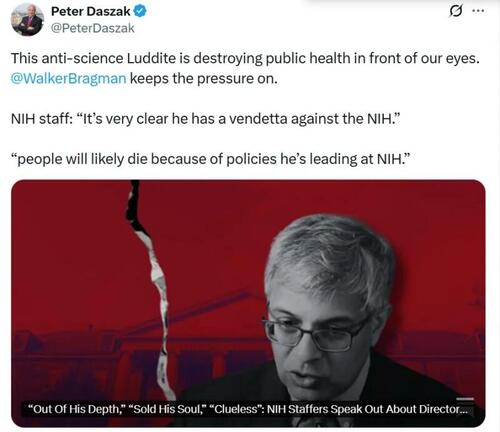
Peter Daszak's Smokescreen Attack on Dr. Bhattacharya Authored by Randall Bock via The Brownstone Institute,Peter Daszak’s recent X posts (June 2, 2025) labeling Dr. Jay Bhattacharya, the new NIH Director, an “anti-science Luddite” who is “destroying public health” are a masterclass in projection.Daszak, former head of EcoHealth Alliance (facilitator and co-conspirator of that recent pandemic, what was it called? Oh yes, SARS CoV-2 Covid-19), accuses Bhattacharya of having a “vendetta against the NIH” and claims his policies will cost lives, while pointing fingers at organizations like Brownstone Institute for being part of a right-wing conspiracy (how original!) to dismantle science. Let’s cut through the noise.Calling Bhattacharya anti-science is absurd. Erstwhile Stanford professor and co-author of the Great Barrington Declaration, Bhattacharya has consistently championed evidence-based public health, advocating for open scientific debate over dogmatic policies. His focus on data-driven approaches—like considering natural immunity and the harms of lockdowns—earned him censorship under the previous administration. His leadership at the NIH promises transparency and rigor, both of which seem to terrify Daszak—operating without (his previous sponsor) Dr. Fauci’s golden parachute of a Biden/autopen pardon.Now, let’s talk about Daszak’s version of “science.” EcoHealth Alliance, under his watch, funneled US. taxpayer dollars to the Wuhan Institute of Virology (WIV) for gain-of-function research on bat coronaviruses—research that may have contributed to the unleashing of the novel coronavirus in Wuhan. As I detailed in my Brownstone articles, Daszak’s collaboration with WIV’s “Bat Woman” Zhengli-Li Shi involved modifying coronaviruses to make them more infectious to humans, fitting the NIH’s own definition of gain-of-function despite his denials. That second article of mine only came about after EcoHealth Alliance’s bullying. When I had pointed out EcoHealth’s complicity in my original Dr. Anthony Fauci’s Own Gain-of-Function, Daszak’s minions tried to bully Brownstone into retracting the reference. When that failed, he blocked me on X to dodge accountability.How “science-y” is that? Blocking someone for raising legitimate questions about your role in a global pandemic isn’t the mark of a scientist—it’s the mark of someone with something to hide.Daszak’s attacks on Bhattacharya are a distraction from his own failures. Why were US funds sent to a CCP-controlled lab with poor oversight instead of trusted allies? Why the lack of transparency? These questions remain unanswered, and his attempts to silence critics—like me—only deepen the suspicion around EcoHealth’s actions.Science thrives on open debate, not censorship. Bhattacharya represents a return to that principle at the NIH, while Daszak’s behavior—blocking dissenters and evading tough questions—shows what anti-science really looks like. The public deserves better, and with Bhattacharya leading the NIH, we might finally get it.NEVER FORGET: Peter Daszak’s EcoHealth Alliance tried to quash and have Brownstone retract my: Dr. Anthony Fauci’s Own “Gain-of-Function”—October 9, 2023.Instead, I researched further, doubled down, and produced this: “EcoHealth Alliance’s Wuhan-Virus Dalliances” October 22, 2023.After which, crickets...Peter Daszak blocked me on X.com. The essence of bullies is cowardice.Please see also my Fauci’s ‘DNA of Caring’ By Randall Bock, August 9, 2024, Brownstone.org.Republished from the author’s Substack Tyler DurdenThu, 06/05/2025 - 22:35

LOS ANGELES, June 5, 2025 /PRNewswire/ -- CJ 4DPLEX, the world's leading producer of premium film formats, announced today the company's highest-ever domestic box office results for the month of May in both 4DX and SCREENX formats. 4DX generated $9.4 million in North America for the month, up 151% year-over-year. And SCREENX also posted a record performance with $4.6 ...Full story available on Benzinga.com
Lawsuit says mayor called people who opposed Buc-ee's project 'terrorists' 9NewsView Full Coverage on Google News

Alford A. Young, Jr., has been elected the 118th President of the American Sociological Association (ASA), and Jessica Calarco has been elected ASA Vice President.

U.S. President Donald Trump said Thursday he had a “very good call” with his Chinese counterpart Xi Jinping, which focused “almost entirely” on trade. The relationship between Trump and Tesla CEO Elon Musk splintered Thursday as both criticized each other publicly. U.S. stocks fell Thursday, weighed down by Tesla shares tanking. Microsoft’s stocks, however, climbed 0.8% to hit a record. The Reserve Bank of India lowered its benchmark policy rate to 5.5% from 6%, the lowest level since August 2022. Shares of Circle Internet Group soared 168% on Thursday after in their first day of trading. Investors should be rooting for a May jobs report that is neither too hot nor cold, according to a JPMorgan trading desk note.Nathan Howard | ReutersU.S. President Donald Trump and Elon Musk attend a press event in the Oval Office of the White House in Washington, D.C., U.S., May 30, 2025. Developments from the White House are growing more exciting and unpredictable than those 1,000-episode Asian drama serials.On Thursday, “So much for being Mr. NICE GUY” Donald Trump reverted to being a nice guy and had a “very good call,” in his words, with Chinese president Xi Jinping over trade issues. Following the call, Trump said that officials from both countries will meet to negotiate further. Trump had previously described the process of reaching an agreement with Xi as “extremely hard,” while Treasury Secretary Scott Bessent said that talks between the U.S. and China are “a bit stalled,” which makes the positive outcome of the call even more of a breakthrough.But Trump’s no longer playing nice with Elon Musk. Just last Friday, the U.S. president at a farewell ceremony to Musk’s role at DOGE called the latter “terrific” and said “he will, always, be with us.” Starting from the weekend, however, Musk began blasting Trump’s “big, beautiful bill,” which on Thursday culminated in a public spat between the former compatriots in the White House. Trump acknowledged Thursday that “Elon and I had a great relationship” — note the use of the past tense — but he doesn’t know “if we will anymore.” Unlike the twists and turns of a television series, however, the White House’s relationships with others — a drama equally or more entertaining than fiction to some — have concrete effects on the economy and markets. Tesla’s shares, for instance, tanked 14% after its CEO feuded with the U.S. President. A viewer cannot be completely absorbed, lest, in losing themselves in the spectacle, they lose their investments as well.What you need to know todayUgly spat between Trump and Musk U.S. President Donald Trump on Thursday called Tesla CEO Elon Musk “CRAZY” and threatened to cut his companies’ government contracts as the two men feuded over a major tax bill. In response, Musk said Space X will begin decommissioning its Dragon spacecraft “immediately.” “Without me, Trump would have lost the election,” Musk added later. Shares of Tesla sank more than 14% and shed $152 billion in value from the electric vehicle maker.Trump talks to Xi on tradeTrump and his Chinese counterpart Xi Jinping on Thursday had a “very good call” for about 90 minutes which focused “almost entirely” on trade, Trump wrote on Truth Social. He added that U.S. and China officials will meet soon for more talks to resolve an ongoing trade war. Beijing’s Ministry of Foreign Affairs and China’s embassy in the U.S. said earlier Thursday that Trump had requested the call with Xi.U.S. markets dragged down by TeslaU.S. stocks fell Thursday, weighed down by Tesla shares tanking. The S&P 500 retreated 0.53%, the Dow Jones Industrial Average lost 0.25% and the Nasdaq Composite lost 0.83%. But Microsoft’s stocks climbed 0.8% to hit a record and reclaim the title of the world’s largest company by market capitalization. Asia-Pacific markets were mixed Friday. India’s Nifty 50 was up by 0.95% at 1:45 p.m. in Singapore after the country’s central bank slashed interest rates. Hong Kong’s Hang Seng Index, however, slipped 0.4%.India’s central bank delivers outsized cutThe Reserve Bank of India lowered its benchmark policy rate to 5.5% from 6%, the lowest level since August 2022. Economists polled by Reuters had expected the bank to reduce rates by 25 basis points. The decision comes India reported better-than-expected gross domestic product growth in its fiscal fourth quarter. However, the RBI held its full-year GDP estimate at 6.5%, marking a sharp slowdown from the 9.2% seen in the previous financial year.Circle shares pop after IPOShares of Circle Internet Group soared 168% on Thursday after the stablecoin company and its selling shareholders raised almost $1.1 billion in an initial public offering. The stock opened at $69 on the New York Stock Exchange after its IPO priced at $31. At one point, shares traded as high as $103.75. Circle joins Coinbase, Mara Holdings and Riot Platforms as one of the few pure-play crypto companies to list in America.[PRO] Tariffs might benefit LSEThe London Stock Exchange has struggled to entice companies looking to go public — but some market watchers say a tariffs-driven diversification away from the U.S. could help the U.K. win back a greater share of the IPO market.And finally...Nathan Howard | ReutersU.S. President Donald Trump and Elon Musk attend a press event in the Oval Office of the White House in Washington, D.C., U.S., May 30, 2025. Trump and Musk feud draws reactions from billionaires, politicians and pundits. Here’s who said whatTrump and Musk seemed inseparable not so long ago: attending events together, doing joint interviews and showering praises on each other. All that changed overnight.Billionaire Bill Ackman on Thursday urged Trump and Musk to stop fighting. The two men should “make peace for the benefit of our great country,” Ackman said on X.Tesla bull Ross Gerber, head of Gerber Kawasaki Wealth and Investment Management, had harsh words for Musk in a series of X posts, stating that Elon was “now attacking all the people he helped put in power.” Others in Trump’s orbit, such as former senior Trump advisor Steve Bannon, who has clashed with Musk in recent months, were also critical of Musk, saying that Trump should sign an executive order to take control of SpaceX.
Lululemon shares plunge as tariffs bite BBCLululemon shares tumble 23% as it cuts full-year earnings guidance, citing 'dynamic macroenvironment' CNBCLululemon Athletica Cuts Profit Outlook as Tariffs Threaten to Raise Costs WSJLululemon stock plunges 20% as company's second quarter outlook misses Wall Street estimates Yahoo FinanceLululemon Projects Lower-Than-Expected Growth for Second Quarter Bloomberg
EIA Natural Gas Storage Build Of +112 Bcf Exceeds Analyst Estimates FXEmpireNat-Gas Prices Slip as US Weather Forecasts Moderate The Globe and MailStorage Overhang, Weak LNG Weigh on Natural Gas Futures as Spot Prices Jump Natural Gas IntelligenceUS natgas prices jump 8% to 3-week high on lower output, higher demand BOE ReportNatural Gas News: Today’s EIA Report May Jolt Futures in Tight Technical Zone FXEmpire

The European Central Bank cut its benchmark interest rate for an eighth time, aiming to support businesses and consumers with more affordable borrowing as U.S. President Donald Trump's trade war threatens to slow already tepid growth.The bank's rate-setting council cut interest rates by a quarte...

President Donald Trump lashed out at Elon Musk as their feud rapidly ramped up. Trump called Musk “CRAZY” and suggested that he may target the Tesla CEO’s government contracts.President Donald Trump on Thursday lashed out at Elon Musk as their feud rapidly ramped up, calling him “CRAZY” and suggesting that he may terminate the Tesla CEO’s government contracts.Trump in a bitter Truth Social post wrote that Musk was “wearing thin” by the end of his tenure leading the president’s Department of Government Efficiency, or DOGE.“I asked him to leave,” Trump claimed.The angry swipe came after Musk blasted the president amid an escalating clash that stemmed from the mega-billionaire’s vocal opposition to Trump’s massive tax-cut bill.Trump earlier Thursday said Musk was “upset” that the budget package cuts electric vehicle credits.“I took away his EV Mandate that forced everyone to buy Electric Cars that nobody else wanted (that he knew for months I was going to do!), and he just went CRAZY!” Trump wrote in the post.Musk has aggressively trashed the bill on the grounds that it will add trillions of dollars to the nation’s deficits. He is actively urging Senate Republicans to “kill the bill,” which comprises a huge swath of Trump’s domestic agenda.The president wrote in a second Truth Social post, “The easiest way to save money in our Budget, Billions and Billions of Dollars, is to terminate Elon’s Governmental Subsidies and Contracts. I was always surprised that Biden didn’t do it!” This is breaking news. Please refresh for updates.

The Nation's Only Fast-Casual Chicken Salad Restaurant Concept is Increasing its Midwest Presence with Restaurants Backed by the Coffey Family MINNEAPOLIS, June 5, 2025 /PRNewswire/ -- Chicken Salad Chick, the nation's only fast-casual chicken salad restaurant concept, is expanding its...
Toronto, June 05, 2025 (GLOBE NEWSWIRE) -- The Ontario Confederation of University Faculty Associations (OCUFA) voiced grave concerns about legislation introduced in the Ontario legislature to update governance rules for colleges and universities. While OCUFA supports necessary "housekeeping" efforts like ensuring gender-inclusive language, the organization highlights significant worries about governmental interference in university autonomy."We support inclusive policy updates," stated OCUFA President Nigmendra Narain. "However, government interference runs counter to university autonomy. Our faculty and academic librarians are the academic experts best suited to guide their institutions' priorities, not external political directives."OCUFA emphasizes the crucial distinctions between colleges and universities, particularly in governance."Minister Quinn's call for 'consistent and transparent' governance across the system suggests a one-size-fits-all approach that ignores fundamental differences," said OCUFA Executive Director Jenny Ahn. "Universities operate on the principle of shared academic leadership between Senates (composed of faculty, academic ...Full story available on Benzinga.com

BREAKING OVERNIGHT ... TRUMP ORDERS DOJ INVESTIGATION INTO PRESIDENTIAL AUTOPEN ... BENNY JOHNSON: MASSIVE BREAKING: President Trump orders AG Pam Bondi to launch a full investigation into the Biden autopen scandal as well as any cover-ups related to his health. (OFFICIAL ORDER)

President Donald Trump lashed out at Elon Musk as their feud rapidly ramped up. Trump called Musk “CRAZY” and suggested that he may target the Tesla CEO’s government contracts.President Donald Trump on Thursday lashed out at Elon Musk as their feud rapidly ramped up, calling him “CRAZY” and suggesting that he may terminate the Tesla CEO’s government contracts.Trump in a bitter Truth Social post wrote that Musk was “wearing thin” by the end of his tenure leading the president’s Department of Government Efficiency, or DOGE.“I asked him to leave,” Trump claimed.The angry swipe came after Musk blasted the president amid an escalating clash that stemmed from the mega-billionaire’s vocal opposition to Trump’s massive tax-cut bill.Trump earlier Thursday said Musk was “upset” that the budget package cuts electric vehicle credits.“I took away his EV Mandate that forced everyone to buy Electric Cars that nobody else wanted (that he knew for months I was going to do!), and he just went CRAZY!” Trump wrote in the post.Musk has aggressively trashed the bill on the grounds that it will add trillions of dollars to the nation’s deficits. He is actively urging Senate Republicans to “kill the bill,” which comprises a huge swath of Trump’s domestic agenda.The president wrote in a second Truth Social post, “The easiest way to save money in our Budget, Billions and Billions of Dollars, is to terminate Elon’s Governmental Subsidies and Contracts. I was always surprised that Biden didn’t do it!” This is breaking news. Please refresh for updates.

The Mexican government had filed a lawsuit against gun companies seeking accountability for violence epidemic.

Advanced low-voltage technology from Clarios supports a factory-backed Volkswagen Golf GTI at one of the world's toughest endurance races Collaboration with driver Benny Leuchter demonstrates the performance and reliability of advanced low-voltage technology Nürburgring 24-Hour Race...

DELRAY BEACH, Fla., June 5, 2025 /PRNewswire/ -- 360Quadrants has released its latest Lubricants Startups/SMEs Companies Assessment, 2025, recognizing key players, including both global giants and emerging innovators, for their excellence in market presence, product innovation, and...
Eager customers have lined up outside electronics stores hours in advance in Tokyo to collect Nintendo’s much-anticipated Switch 2 video game consoles. The Switch 2 is an upgrade to its eight-year-old predecessor, with new social features meant to draw players...

Leading cryptocurrencies slipped Tuesday after weak private-sector job growth dampened investor sentiment.CryptocurrencyGains +/-Price (Recorded at 9:30 p.m. ET)Bitcoin (CRYPTO: BTC)-0.68%$105,032.58Ethereum (CRYPTO: ETH) -0.27%$2,610.06Dogecoin (CRYPTO: DOGE) -2.64%$0.1882What Happened: Bitcoin dipped to an intraday low of $104,232.70 in early trading hours and fluctuated between the low $105,000s and high $104,000s for the rest of the day.Ethereum surged to $2,670 but failed to sustain the rally, retreating to the early-$2,600 region. Compared to Bitcoin, the second-largest cryptocurrency recorded higher trading volumes during the day.These moves led to the liquidation of nearly $150 million worth of bullish bets, while $64 million in shorts were erased. That said, about $492 million in Bitcoin shorts were at the risk of liquidation if Bitcoin reclaims $107,000.Bitcoin's Open Interest declined by 0.47% in the last 24 hours, matching the fall in its spot price. Interestingly, the majority of the top traders on Binance with open BTC positions placed bullish bets on the apex cryptocurrency.The "Greed" sentiment weakened from 62 to 57 in ...Full story available on Benzinga.com

On Wednesday, Anthony Scaramucci, founder and CEO of SkyBridge Capital, praised Tesla Inc. (NASDAQ:TSLA) CEO Elon Musk for his transformative impact on humanity through his companies, urging the political left to reconsider their stance on the billionaire entrepreneur.What Happened: Scaramucci highlighted Musk's contributions across multiple industries, from Tesla’s electric vehicles revolutionizing the auto industry to SpaceX making humanity's interplanetary ambitions a reality. Musk is catalyzing the EV revolution with Tesla, extending the healthy life of Earth, Scaramucci posted.He also pointed to the billionaire's focus on "responsible AI development" with xAI and advancements in healthcare with Neuralink, which is empowering paralyzed patients.See Also: Mark Zuckerberg Warns Of ‘Serious Disadvantage’ As China’s Data-Center Blitz Could Let DeepSeek Leapfrog US AI Labs"The left should focus on why it lost Elon, rather than demonizing him," Scaramucci stated.With @elonmusk back in private sector, ...Full story available on Benzinga.com
VANCOUVER, BC, June 4, 2025 /CNW/ - The government is acting to protect Canada's nature, biodiversity and water. Southern Resident killer whales are iconic to Canada's Pacific coast and hold deep cultural significance for Indigenous Peoples and coastal communities in British Columbia.That's why today, the Minister of Transport and Internal Trade, the Honourable Chrystia Freeland, the Minister of Fisheries, the Honourable Joanne Thompson, and the Minister of Environment and Climate Change Canada, the Honourable Julie Dabrusin, announced measures to protect Southern Resident killer whales on the west coast.These measures will primarily address acoustic and physical disturbance to Southern Resident killer whales from recreational, fishing, and whale watching vessels.The 2025 vessel and fishery measures include: Two mandatory speed restricted zones near Swiftsure Bank, effective June 1 to November 30, 2025.Two vessel restricted zones off Pender and Saturna Islands, effective June 1 to November 30, 2025.The continued requirement for vessels to stay at least 400 metres away from all killer whales, and a prohibition from impeding the path of all killer whales in Southern British Columbia coastal waters between Campbell River and Ucluelet, including Barkley and Howe Sound. This is now in effect until May 31, 2026.A voluntary speed reduction zone in Tumbo Channel, off the North side of Saturna Island, effective June 1 to November 30, 2025.An agreement with authorized local whale watching and ecotourism industry partners to abstain from offering or promoting tours viewing Southern Resident killer whales.Fishery closures for commercial and recreational salmon fisheries in key Southern Resident killer whale foraging areas.Continued actions to reduce contaminants in the environment affecting whales and their prey, including developing tools to track pollutants and their sources and monitoring contaminants in air, freshwater, sediments, and wastewater.Fisheries and Oceans Canada proposes to increase the approach distance to 1,000 metres for Southern Resident killer whales through amendments to the Marine Mammal Regulations under the Fisheries Act.The federal government will continue its ongoing efforts and long-term actions alongside all partners, including First Nations, stakeholders, and the marine and tourism industries to support the protection and recovery of the Southern Resident killer whale population.Quotes"Southern Resident killer whales need our help. That's why for the seventh straight year, the Government of Canada is taking concrete action with our partners to create a quieter, safer environment for this iconic, vulnerable species." The Honourable Chrystia FreelandMinister of Transport and Internal Trade"Canada remains committed to protecting Southern Resident killer whales, working alongside partners to aid in their recovery while supporting sustainable economic growth in the waters they inhabit. These efforts respect their cultural significance to Pacific coastal communities and Indigenous Peoples and their vital role in the marine ecosystem."The Honourable Joanne ThompsonMinister of Fisheries"Nature is part of our very identity as Canadians. This new government is committed to conserving more nature and biodiversity than ever before. The survival of Southern Resident killer whales is at risk if we don't act. These new measures will help identify and assess sources of contaminants that affect the whales and their food supply, so we can better protect this iconic mammal that is part of Canada's natural heritage."The Honourable Julie DabrusinMinister of Environment and Climate ChangeQuick factsCanada's Oceans Protection Plan, Whales Initiative, and an additional federal investment of $61.5 million are supporting the recovery of Southern Resident killer whales, North Atlantic right whales, and St. Lawrence Estuary belugas by implementing protection measures, increasing research, continuing monitoring activities, and taking action to address key threats.In May 2024, the Government of Canada renewed A Species at Risk Act Section 11 Conservation Agreement to Support the Recovery of the Southern Resident Killer Whale with the Vancouver Fraser Port Authority and industry partners for five years. This formalizes the role of the ECHO Program and partners in developing and implementing voluntary threat reduction measures to support the endangered Southern Resident killer whales.Transport Canada works in partnership with Fisheries and Oceans Canada, the Canadian Coast Guard, and Parks Canada to enforce the Interim Order for Southern Resident killer whales in the waters off Southern British Columbia.2024 represented the strongest year of enforcement to date.In fact, Transport Canada's enforcement efforts nearly doubled in 2024 as compared to 2023 and financial penalties issued in 2024 will total more than all previous years combined.Since 2019, the TC Whale Enforcement Unit has issued 899 Whale Protection Advisories, 693 Warning Letters, and 147 Administrative Monetary Policies totaling over $200,000 in penalties.For the ninth year in a row, the Vancouver Fraser Port Authority-led Enhancing Cetacean and Habitat Observation (ECHO) Program will coordinate large-scale threat reduction measures off B.C.'s coast to support the recovery of endangered Southern Resident killer whales.New this year, the program has expanded its voluntary ship slowdown at Swiftsure Bank area to more effectively overlap with a "hot spot" of Southern Resident ...Full story available on Benzinga.com

SCHENECTADY — “Blood Tax,” an independent short film that was shot in the region, highlights the story of the World War I hero Henry Johnson, whose legacy in Albany will be commemorated on Thursday with Sgt. Henry Johnson Day.
He shows up for an interview for his dream job, only to find out he's being interviewed by a robot. Stewartville StarCompanies Are Outsourcing Job Interviews to AI. What Could Go Wrong? The WalrusAI recruiting is all the rage — as employers hand the screening of new hires over to robots: ‘Seemed insane’ New York PostEvent: Amplifying HR Impact: Where AI Meets People Analytics People Matters GlobalTop Tips For Using AI In Recruitment - New Technology - United Kingdom Mondaq

Canadian mining firms Hudbay Minerals and SSR Mining said on Wednesday they had temporarily suspended operations in their respective mines that were close to wildfires in parts of the country.Hudbay said it had paused operations in Snow Lake, Manitoba. Its operation in the province had produced 7.7-million pounds of copper in the first quarter of 2025, 7.2% of the company's total production.
NEW ORLEANS, June 04, 2025 (GLOBE NEWSWIRE) -- ClaimsFiler, a FREE shareholder information service, reminds investors that they have until June 17, 2025 to file lead plaintiff applications in a securities class action lawsuit against NET Power Inc. ("Net Power" or the "Company") (NYSE:NPWR), if they purchased the Company's securities between June 9, 2023 and March 7, 2025, inclusive (the "Class Period"). This action is pending in the United States District Court for the Middle District of North Carolina.Get HelpNET Power investors should visit us at https://claimsfiler.com/cases/nyse-npwr/ or call toll-free (844) 367-9658. Lawyers at Kahn Swick & ...Full story available on Benzinga.com

Trump To Use Emergency Powers To Boost US Critical Minerals Industry By Charles Kennedy of Oilprice.comIn a bid to wean the U.S. critical minerals supply chain off China, U.S. President Donald Trump plans to use emergency powers under the Defense Production Act to bolster domestic production and processing of these metals vital for the energy and defense industries, Reuters reports, citing a document to be published on Wednesday.The Defense Production Act is a U.S. law that grants the President powers to ensure the nation’s defense by expanding and expediting the supply of materials and services from the domestic industrial base.The White House is set to waive some legal requirements, including requirements for congressional approvals, to boost the U.S. critical minerals industry.In March, President Trump invoked emergency powers to increase U.S. critical minerals production in a bid to reduce reliance on “hostile foreign powers’ mineral production.”In an executive order, the U.S. President invoked the Defense Production Act (DPA), which is the main tool at a U.S. president’s disposal to shift economic activity toward national defense priorities.Rio Tinto's Sale Lake City, Utah Kennecott Copper Mine“The United States possesses vast mineral resources that can create jobs, fuel prosperity, and significantly reduce our reliance on foreign nations,” the executive order says.“The United States was once the world’s largest producer of lucrative minerals, but overbearing Federal regulation has eroded our Nation’s mineral production,” it adds.The Trump Administration has made American production and refining of critical minerals and rare earths a top priority and is pursuing minerals deals with various countries to get access to the supply of the elements essential to the manufacturing of everything from smartphones and electric cars to F-35 fighter jets.More so than the supply of raw minerals, the United States needs the refined products from these minerals that are ready to use in electronics, defense systems, and batteries.China holds a dominant global position in the supply of critical minerals and rare earths, but its grip on the value chain – minerals processing and magnet production – is even tighter. Tyler DurdenWed, 06/04/2025 - 22:35
NEW ORLEANS, June 04, 2025 (GLOBE NEWSWIRE) -- ClaimsFiler, a FREE shareholder information service, reminds investors that they have until July 22, 2025 to file lead plaintiff applications in a securities class action lawsuit against Organon & Co. (NYSE:OGN), if they purchased the Company's securities between October 31, 2024 and April 30, 2025, inclusive (the "Class Period"). This action is pending in the United States District Court for the District of New Jersey.Get HelpOrganon investors should visit us at https://claimsfiler.com/cases/nyse-ogn/ or call toll-free (844) 367-9658. Lawyers at Kahn Swick & Foti, ...Full story available on Benzinga.com

Our top choices for how to buy dogecoin (DOGE) through various crypto exchanges and wallets.The post How and Where to Buy Dogecoin (DOGE) appeared first on Myrtle Beach Sun News.
ALK (ALKB:DC / OMX: ALK B) today announced that the company is participating at the Jefferies Global Healthcare Conference 2025 in New York City taking place from 3 - 5 June 2025.
Stock Market Today: Dow, S&P 500 and Nasdaq try to hold on to small gains after ADP data, ISM's services gauge; Wells Fargo rises as Fed lifts asset cap MarketWatchUS Services Activity Contracts for First Time in Nearly a Year Bloomberg.comTariffs leave manufacturers without supplies in pandemic flashback AxiosGold prices jump as U.S. services sector contracts for the first time in nearly a year KITCOTariff gloom weighs on US manufacturing; delivery times lengthening Reuters
The Minnesota Court of Appeals ruled Monday that a lawsuit alleging 3M fired an employee because she was pregnant has merit and should move forward, reversing a District Court judge’s decision to dismiss the case last year.

NEW YORK (AP) — Wall Street's big rally is easing off the accelerator on Wednesday following some potentially discouraging updates on the U.S. economy.
If you’re looking for life insurance with the opportunity to grow cash value at more than a low fixed rate, you might be looking at indexed universal (IUL) life insurance. Some life insurance agents have pushed hard on pitching IUL policies in recent years. And these policies can have risks that many buyers aren’t aware [...]

The life of a wave energy converter (WEC) may sound idyllic—bobbing on ocean waves all day or swaying underwater, quietly generating electricity for the people living and working near shore. But in reality, it takes a lot of careful planning for salt water and electronics to achieve that perceived state ... [continued]The post Updated Risk Management Framework Supports Success of Marine Energy Devices appeared first on CleanTechnica.
Toyota Industries' shares nosedive on $33 billion buyout deal — steepest fall in 10 months CNBCBreakingviews - Toyota’s take-private is a costly, messy defence ReutersToyota Industries sinks after parent's takeover bid misses expectations Yahoo FinanceToyota Industries receives $33 billion buyout offer from group companies The Japan TimesToyota Industries Shares Drop on Buyout Discount Blowback Bloomberg.com

This is CNBC’s live blog covering Asia-Pacific markets.Asia-Pacific markets advanced Wednesday after Wall Street rose on the back of a tech rally, led by chipmaker Nvidia, with South Korean stocks leading gains.Shares in the artificial intelligence darling advanced nearly 3%, extending Monday’s gains and driving Nvidia’s market cap past Microsoft‘s for the first time since January. Chip companies Broadcom and Micron Technology rose more than 3% and 4%, respectively.South Korean markets rose as opposition party leader Lee Jae-myung won the presidential election. The Kospi index popped 2.43% to hit its highest level since August last year, while the small-cap Kosdaq advanced 1.39%.Lee’s “election pledge has placed considerable weight on enhancing the value of the Korean stock market,” John Cho, Korea equity portfolio manager at J.P. Morgan Asset Management, said in a note.His plan to amend the commercial law, which will broaden the legal duties of board members to include protecting the interests of minority shareholders, will “encourage boards to make fewer value-destructive decisions and more value-accretive ones,” Cho explained.Looking ahead, he expects the incoming South Korean government to adopt aggressive fiscal stimulus to revive the domestic economy while also “pragmatically” handling international trade matters.“We believe that the domestic economy is set to rebound from a low base in 2H 2024 / 1H 2025, and we continue to be positive on the globally competitive and uniquely positioned manufacturers, including HBMs [high bandwidth memory] for AI, health and beauty, and heavy industries,” Cho added in a Wednesday note.In Japan, the benchmark Nikkei 225 climbed 0.82%, while the broader Topix index rose 0.53%.Mainland China’s CSI 300 index moved up 0.52%, while Hong Kong’s Hang Seng Index added 0.72%Australia’s S&P/ASX 200 rose 0.77%. The country’s economy grew 1.3% year-on-year in the first quarter of 2025, lower than the estimated 1.5% growth among economists polled by Reuters. The latest reading was unchanged from the previous quarter’s 1.3% year-on-year growth.Meanwhile, India’s benchmark Nifty 50 advanced 0.15% while the BSE Sensex ticked up 0.11%.U.S. futures were little changed after Wall Street rose on a tech rally and a better-than-expected jobs report showing that the U.S.’ labor market is holding up despite concerns of risks stemming from tariffs.Overnight stateside, the broad-based S&P 500 index added 0.58% to close at 5,970.37, while the Dow Jones Industrial Average gained 214.16 points, or 0.51%, ending at 42,519.64. The Nasdaq Composite climbed 0.81% to settle at 19,398.96.The U.S. economic outlook “remains dimmed by tariffs, although the timing of the impact is now more delayed,” said Preston Caldwell, chief U.S. economist at Morningstar.“The deleterious demand-side impact from tariffs looks diminished for now, with financial conditions having improved and President Donald Trump evincing some willingness to respond to deteriorating economic conditions by pulling back on tariffs,” he wrote in a June 3 outlook report.The risk of recession in the U.S. now looks “closer to 25%,” rather than the 35% to 40% assessed in April, Caldwell said.— CNBC’s Lisa Kailai Han, Sean Conlon and Sarah Min contributed to this report.Spot gold edges up as trade tensions boost the safe-haven’s appeal Spot gold rose Wednesday after falling in the previous session, as concerns over global trade tensions fester.As of 12.32 p.m. Singapore time, prices of the yellow metal were up 0.24% at $3,359.87 per ounce.Bullion — which is considered a hedge against political and financial instability — had fallen 0.8% on Tuesday.— Amala BalakrishnerAustralian stocks rise above 8,500 threshold to near four-month highAustralian stocks rose past the key psychological 8,500 mark Wednesday, trailing gains in Wall Street and other Asia-Pacific markets.The 200-stock S&P/ASX 200 benchmark climbed 0.76% to 8,532.20 as at 12.57 p.m. Australian Eastern Standard Time, its highest level since Feb. 17.Gains were broad-based and were seen across the energy sector — which rose on increasing oil prices — as well as financials and mining sectors.Shares in Woodside Energy and Santos, two of Australia’s top oil and gas companies, increased 2.48% and 1%, respectively.Over in the financial sector, the big four banks were all trading higher — with shares in Westpac Banking up 2.25%, Commonwealth Bank up 1.21%, Macquarie Group up 1.03% and National Australia Bank up 0.86%.Shares in major miners also moved higher, with Rio Tinto moving up 0.31%, BHP Group adding 1.09% and Fortescue advancing 2.21%.— Amala BalakrishnerTaiwan shares surge over 2%Taiwan’s benchmark Taiex index surged 2.15% to hit 21,581.85 as of 11.10 a.m. local time, extending its gains for the second consecutive session.The advance was led by the technology, energy, and basic materials sectors, according to data from LSEG.The top three performers were Formosa Pharmaceuticals Inc, which advanced 10% and Hiltron Technologies and Jinan Acetate Chemical Co, which added 9.95% each.Meanwhile, shares of tech giants Taiwan Semiconductor Manufacturing Co and Hon Hai Precision Industry — known globally as Foxconn — were last seen trading 3.58% and 3.53% higher, respectively,2.64The iShares MSCI Taiwan ETF shows the index’s moves:— Amala BalakrishnerSouth Korean won strengthens following opposition leader’s election winThe South Korean won appreciated on Wednesday, following opposition party leader Lee Jae-myung’s victory in the country’s snap presidential election.As at 11.15 a.m. local time, the won had strengthened by 0.43% against the U.S. dollar to 1,371.80The move also comes alongside a slump in the U.S. dollar, following uncertainty on U.S. President Donald Trump’s upcoming tariff plans.The dollar index, which measures the U.S. currency against six major peers, was last seen down 0.05% to 99.181.Other Asian currencies fluctuated sharply on Wednesday.The Japanese yen gained 0.18% against the dollar to 143.91, while the Australian dollar slipped 0.05% against the greenback to 0.6464.Elsewhere in Southeast Asia, the Thai baht strengthened 0.09% against the dollar to 32.59, while the Singapore dollar shed 0.05% at 1.2898.— Amala BalakrishnerSouth Korean shares surge over 1% to its highest level in 10 months.South Korean stocks rallied Wednesday after opposition party leader Lee Jae-myung won the country’s snap presidential election.As of 9.40 a.m. local time, the Kospi index had popped 2.05% to 2,754.42, its highest level since Aug. 1 2024. The index has gained 14.57% since the start of the year.Meanwhile, the small-cap Kosdaq index was last seen trading 1.4% higher; it has risen 10.46% since the start of the year.Gains were broad-based across sectors, with strong moves seen in chipmaker SK Hynix, which rose 6.02%, SK Inc, which surged 5.63%, HD Hyundai, which gained 5.23% and Wori Financial Group, which advanced 4.92%.Among the index heavyweights, Samsung Electronics was last seen up 1.06%. Shares of battery maker LG Energy Solutions increased 1.23% while Samsung SDI moved up 0.58%.— Amala BalakrishnerSouth Korea’s inflation slows to its weakest in five monthsSouth Korea’s consumer price index for May fell 0.1% from the month before and slowed to 1.9% year-over-year, data released by Statistics Korea showed Wednesday.This marks its weakest pace of increase since December 2024 after rising 2.1% in April, and lower than the median forecast of 2.1% in a Reuters poll of economists.This follows the Bank of Korea’s decision to lower interest rates last week for the fourth time in its current easing cycle, to support an economic recovery clouded by U.S. tariffs.— Amala Balakrishner

This is CNBC’s live blog covering Asia-Pacific markets.Asia-Pacific markets advanced Wednesday after Wall Street rose on the back of a tech rally, led by chipmaker Nvidia, with South Korean stocks leading gains.Shares in the artificial intelligence darling advanced nearly 3%, extending Monday’s gains and driving Nvidia’s market cap past Microsoft‘s for the first time since January. Chip companies Broadcom and Micron Technology rose more than 3% and 4%, respectively.South Korean markets rose as opposition party leader Lee Jae-myung won the presidential election. The Kospi index popped 2.43% to hit its highest level since August last year, while the small-cap Kosdaq advanced 1.39%.Lee’s “election pledge has placed considerable weight on enhancing the value of the Korean stock market,” John Cho, Korea equity portfolio manager at J.P. Morgan Asset Management, said in a note.His plan to amend the commercial law, which will broaden the legal duties of board members to include protecting the interests of minority shareholders, will “encourage boards to make fewer value-destructive decisions and more value-accretive ones,” Cho explained.Looking ahead, he expects the incoming South Korean government to adopt aggressive fiscal stimulus to revive the domestic economy while also “pragmatically” handling international trade matters.“We believe that the domestic economy is set to rebound from a low base in 2H 2024 / 1H 2025, and we continue to be positive on the globally competitive and uniquely positioned manufacturers, including HBMs [high bandwidth memory] for AI, health and beauty, and heavy industries,” Cho added in a Wednesday note.In Japan, the benchmark Nikkei 225 climbed 0.82%, while the broader Topix index rose 0.53%.Mainland China’s CSI 300 index moved up 0.52%, while Hong Kong’s Hang Seng Index added 0.72%Australia’s S&P/ASX 200 rose 0.77%. The country’s economy grew 1.3% year-on-year in the first quarter of 2025, lower than the estimated 1.5% growth among economists polled by Reuters. The latest reading was unchanged from the previous quarter’s 1.3% year-on-year growth.Meanwhile, India’s benchmark Nifty 50 advanced 0.15% while the BSE Sensex ticked up 0.11%.U.S. futures were little changed after Wall Street rose on a tech rally and a better-than-expected jobs report showing that the U.S.’ labor market is holding up despite concerns of risks stemming from tariffs.Overnight stateside, the broad-based S&P 500 index added 0.58% to close at 5,970.37, while the Dow Jones Industrial Average gained 214.16 points, or 0.51%, ending at 42,519.64. The Nasdaq Composite climbed 0.81% to settle at 19,398.96.The U.S. economic outlook “remains dimmed by tariffs, although the timing of the impact is now more delayed,” said Preston Caldwell, chief U.S. economist at Morningstar.“The deleterious demand-side impact from tariffs looks diminished for now, with financial conditions having improved and President Donald Trump evincing some willingness to respond to deteriorating economic conditions by pulling back on tariffs,” he wrote in a June 3 outlook report.The risk of recession in the U.S. now looks “closer to 25%,” rather than the 35% to 40% assessed in April, Caldwell said.— CNBC’s Lisa Kailai Han, Sean Conlon and Sarah Min contributed to this report.Spot gold edges up as trade tensions boost the safe-haven’s appeal Spot gold rose Wednesday after falling in the previous session, as concerns over global trade tensions fester.As of 12.32 p.m. Singapore time, prices of the yellow metal were up 0.24% at $3,359.87 per ounce.Bullion — which is considered a hedge against political and financial instability — had fallen 0.8% on Tuesday.— Amala BalakrishnerAustralian stocks rise above 8,500 threshold to near four-month highAustralian stocks rose past the key psychological 8,500 mark Wednesday, trailing gains in Wall Street and other Asia-Pacific markets.The 200-stock S&P/ASX 200 benchmark climbed 0.76% to 8,532.20 as at 12.57 p.m. Australian Eastern Standard Time, its highest level since Feb. 17.Gains were broad-based and were seen across the energy sector — which rose on increasing oil prices — as well as financials and mining sectors.Shares in Woodside Energy and Santos, two of Australia’s top oil and gas companies, increased 2.48% and 1%, respectively.Over in the financial sector, the big four banks were all trading higher — with shares in Westpac Banking up 2.25%, Commonwealth Bank up 1.21%, Macquarie Group up 1.03% and National Australia Bank up 0.86%.Shares in major miners also moved higher, with Rio Tinto moving up 0.31%, BHP Group adding 1.09% and Fortescue advancing 2.21%.— Amala BalakrishnerTaiwan shares surge over 2%Taiwan’s benchmark Taiex index surged 2.15% to hit 21,581.85 as of 11.10 a.m. local time, extending its gains for the second consecutive session.The advance was led by the technology, energy, and basic materials sectors, according to data from LSEG.The top three performers were Formosa Pharmaceuticals Inc, which advanced 10% and Hiltron Technologies and Jinan Acetate Chemical Co, which added 9.95% each.Meanwhile, shares of tech giants Taiwan Semiconductor Manufacturing Co and Hon Hai Precision Industry — known globally as Foxconn — were last seen trading 3.58% and 3.53% higher, respectively,2.64The iShares MSCI Taiwan ETF shows the index’s moves:— Amala BalakrishnerSouth Korean won strengthens following opposition leader’s election winThe South Korean won appreciated on Wednesday, following opposition party leader Lee Jae-myung’s victory in the country’s snap presidential election.As at 11.15 a.m. local time, the won had strengthened by 0.43% against the U.S. dollar to 1,371.80The move also comes alongside a slump in the U.S. dollar, following uncertainty on U.S. President Donald Trump’s upcoming tariff plans.The dollar index, which measures the U.S. currency against six major peers, was last seen down 0.05% to 99.181.Other Asian currencies fluctuated sharply on Wednesday.The Japanese yen gained 0.18% against the dollar to 143.91, while the Australian dollar slipped 0.05% against the greenback to 0.6464.Elsewhere in Southeast Asia, the Thai baht strengthened 0.09% against the dollar to 32.59, while the Singapore dollar shed 0.05% at 1.2898.— Amala BalakrishnerSouth Korean shares surge over 1% to its highest level in 10 months.South Korean stocks rallied Wednesday after opposition party leader Lee Jae-myung won the country’s snap presidential election.As of 9.40 a.m. local time, the Kospi index had popped 2.05% to 2,754.42, its highest level since Aug. 1 2024. The index has gained 14.57% since the start of the year.Meanwhile, the small-cap Kosdaq index was last seen trading 1.4% higher; it has risen 10.46% since the start of the year.Gains were broad-based across sectors, with strong moves seen in chipmaker SK Hynix, which rose 6.02%, SK Inc, which surged 5.63%, HD Hyundai, which gained 5.23% and Wori Financial Group, which advanced 4.92%.Among the index heavyweights, Samsung Electronics was last seen up 1.06%. Shares of battery maker LG Energy Solutions increased 1.23% while Samsung SDI moved up 0.58%.— Amala BalakrishnerSouth Korea’s inflation slows to its weakest in five monthsSouth Korea’s consumer price index for May fell 0.1% from the month before and slowed to 1.9% year-over-year, data released by Statistics Korea showed Wednesday.This marks its weakest pace of increase since December 2024 after rising 2.1% in April, and lower than the median forecast of 2.1% in a Reuters poll of economists.This follows the Bank of Korea’s decision to lower interest rates last week for the fourth time in its current easing cycle, to support an economic recovery clouded by U.S. tariffs.— Amala Balakrishner

This is CNBC’s live blog covering Asia-Pacific markets.Asia-Pacific markets advanced Wednesday after Wall Street rose on the back of a tech rally, led by chipmaker Nvidia, with South Korean stocks leading gains.Shares in the artificial intelligence darling advanced nearly 3%, extending Monday’s gains and driving Nvidia’s market cap past Microsoft‘s for the first time since January. Chip companies Broadcom and Micron Technology rose more than 3% and 4%, respectively.South Korean markets rose as opposition party leader Lee Jae-myung won the presidential election. The Kospi index popped 2.43% to hit its highest level since August last year, while the small-cap Kosdaq advanced 1.39%.Lee’s “election pledge has placed considerable weight on enhancing the value of the Korean stock market,” John Cho, Korea equity portfolio manager at J.P. Morgan Asset Management, said in a note.His plan to amend the commercial law, which will broaden the legal duties of board members to include protecting the interests of minority shareholders, will “encourage boards to make fewer value-destructive decisions and more value-accretive ones,” Cho explained.Looking ahead, he expects the incoming South Korean government to adopt aggressive fiscal stimulus to revive the domestic economy while also “pragmatically” handling international trade matters.“We believe that the domestic economy is set to rebound from a low base in 2H 2024 / 1H 2025, and we continue to be positive on the globally competitive and uniquely positioned manufacturers, including HBMs [high bandwidth memory] for AI, health and beauty, and heavy industries,” Cho added in a Wednesday note.In Japan, the benchmark Nikkei 225 climbed 0.82%, while the broader Topix index rose 0.53%.Mainland China’s CSI 300 index moved up 0.52%, while Hong Kong’s Hang Seng Index added 0.72%Australia’s S&P/ASX 200 rose 0.77%. The country’s economy grew 1.3% year-on-year in the first quarter of 2025, lower than the estimated 1.5% growth among economists polled by Reuters. The latest reading was unchanged from the previous quarter’s 1.3% year-on-year growth.Meanwhile, India’s benchmark Nifty 50 advanced 0.15% while the BSE Sensex ticked up 0.11%.U.S. futures were little changed after Wall Street rose on a tech rally and a better-than-expected jobs report showing that the U.S.’ labor market is holding up despite concerns of risks stemming from tariffs.Overnight stateside, the broad-based S&P 500 index added 0.58% to close at 5,970.37, while the Dow Jones Industrial Average gained 214.16 points, or 0.51%, ending at 42,519.64. The Nasdaq Composite climbed 0.81% to settle at 19,398.96.The U.S. economic outlook “remains dimmed by tariffs, although the timing of the impact is now more delayed,” said Preston Caldwell, chief U.S. economist at Morningstar.“The deleterious demand-side impact from tariffs looks diminished for now, with financial conditions having improved and President Donald Trump evincing some willingness to respond to deteriorating economic conditions by pulling back on tariffs,” he wrote in a June 3 outlook report.The risk of recession in the U.S. now looks “closer to 25%,” rather than the 35% to 40% assessed in April, Caldwell said.— CNBC’s Lisa Kailai Han, Sean Conlon and Sarah Min contributed to this report.Spot gold edges up as trade tensions boost the safe-haven’s appeal Spot gold rose Wednesday after falling in the previous session, as concerns over global trade tensions fester.As of 12.32 p.m. Singapore time, prices of the yellow metal were up 0.24% at $3,359.87 per ounce.Bullion — which is considered a hedge against political and financial instability — had fallen 0.8% on Tuesday.— Amala BalakrishnerAustralian stocks rise above 8,500 threshold to near four-month highAustralian stocks rose past the key psychological 8,500 mark Wednesday, trailing gains in Wall Street and other Asia-Pacific markets.The 200-stock S&P/ASX 200 benchmark climbed 0.76% to 8,532.20 as at 12.57 p.m. Australian Eastern Standard Time, its highest level since Feb. 17.Gains were broad-based and were seen across the energy sector — which rose on increasing oil prices — as well as financials and mining sectors.Shares in Woodside Energy and Santos, two of Australia’s top oil and gas companies, increased 2.48% and 1%, respectively.Over in the financial sector, the big four banks were all trading higher — with shares in Westpac Banking up 2.25%, Commonwealth Bank up 1.21%, Macquarie Group up 1.03% and National Australia Bank up 0.86%.Shares in major miners also moved higher, with Rio Tinto moving up 0.31%, BHP Group adding 1.09% and Fortescue advancing 2.21%.— Amala BalakrishnerTaiwan shares surge over 2%Taiwan’s benchmark Taiex index surged 2.15% to hit 21,581.85 as of 11.10 a.m. local time, extending its gains for the second consecutive session.The advance was led by the technology, energy, and basic materials sectors, according to data from LSEG.The top three performers were Formosa Pharmaceuticals Inc, which advanced 10% and Hiltron Technologies and Jinan Acetate Chemical Co, which added 9.95% each.Meanwhile, shares of tech giants Taiwan Semiconductor Manufacturing Co and Hon Hai Precision Industry — known globally as Foxconn — were last seen trading 3.58% and 3.53% higher, respectively,2.64The iShares MSCI Taiwan ETF shows the index’s moves:— Amala BalakrishnerSouth Korean won strengthens following opposition leader’s election winThe South Korean won appreciated on Wednesday, following opposition party leader Lee Jae-myung’s victory in the country’s snap presidential election.As at 11.15 a.m. local time, the won had strengthened by 0.43% against the U.S. dollar to 1,371.80The move also comes alongside a slump in the U.S. dollar, following uncertainty on U.S. President Donald Trump’s upcoming tariff plans.The dollar index, which measures the U.S. currency against six major peers, was last seen down 0.05% to 99.181.Other Asian currencies fluctuated sharply on Wednesday.The Japanese yen gained 0.18% against the dollar to 143.91, while the Australian dollar slipped 0.05% against the greenback to 0.6464.Elsewhere in Southeast Asia, the Thai baht strengthened 0.09% against the dollar to 32.59, while the Singapore dollar shed 0.05% at 1.2898.— Amala BalakrishnerSouth Korean shares surge over 1% to its highest level in 10 months.South Korean stocks rallied Wednesday after opposition party leader Lee Jae-myung won the country’s snap presidential election.As of 9.40 a.m. local time, the Kospi index had popped 2.05% to 2,754.42, its highest level since Aug. 1 2024. The index has gained 14.57% since the start of the year.Meanwhile, the small-cap Kosdaq index was last seen trading 1.4% higher; it has risen 10.46% since the start of the year.Gains were broad-based across sectors, with strong moves seen in chipmaker SK Hynix, which rose 6.02%, SK Inc, which surged 5.63%, HD Hyundai, which gained 5.23% and Wori Financial Group, which advanced 4.92%.Among the index heavyweights, Samsung Electronics was last seen up 1.06%. Shares of battery maker LG Energy Solutions increased 1.23% while Samsung SDI moved up 0.58%.— Amala BalakrishnerSouth Korea’s inflation slows to its weakest in five monthsSouth Korea’s consumer price index for May fell 0.1% from the month before and slowed to 1.9% year-over-year, data released by Statistics Korea showed Wednesday.This marks its weakest pace of increase since December 2024 after rising 2.1% in April, and lower than the median forecast of 2.1% in a Reuters poll of economists.This follows the Bank of Korea’s decision to lower interest rates last week for the fourth time in its current easing cycle, to support an economic recovery clouded by U.S. tariffs.— Amala Balakrishner
Trump tariffs expected to dampen global economic growth, OECD says The Washington PostTreasurys give back early gains after OECD slashes 2025 U.S. growth outlook, citing higher tariffs CNBCTrump’s Tariffs Expected to Drag Down the Global Economy The New York TimesU.S. to Have Slower Growth, Higher Inflation Due to Tariffs, OECD Says WSJGlobal Economy Sputters as Trump Inks New Tariff Bloomberg.com

Currently, many pass-through businesses use a workaround — the pass-through entity, or PTE, tax — to bypass the $10,000 limit on the federal deduction for state and local taxes, known as SALT. The House-approved bill could block certain pass-through businesses from using the popular state-level tax break. However, this provision could still face changes amid Senate negotiations. As Senate Republicans debate trillions of tax breaks advanced by the House, some business owners could be blocked from part of the proposed windfall, policy experts say.If enacted as written, the House GOP’s “One Big Beautiful Bill Act” would raise the federal deduction limit for state and local taxes, known as SALT, to $40,000. That would phase out once income exceeds $500,000.The bill would also boost a tax break for pass-through businesses, known as the qualified business income, or QBI, deduction, to 23%. But the measure would end a popular state-level SALT cap workaround for certain pass-through business owners. More from Personal Finance:How child tax credit could change as Senate debates Trump’s mega-billHow tax cuts in Trump’s ‘big beautiful bill’ could change in the SenateRepublicans’ plan for student loans would mean ‘indentured servitude’: expertHere’s what to know about the proposed change and who could be impacted.SALT deduction cap ‘workaround’Enacted via the Tax Cuts and Jobs Act, or TCJA, of 2017, there’s currently a $10,000 limit on the SALT deduction for filers who itemize tax breaks. This cap will expire after 2025 without changes from Congress. The SALT deduction was unlimited before TCJA, but the so-called alternative minimum tax reduced the benefit for some higher earners.The cap has been a pain point in high-tax states like New York, New Jersey and California because residents can’t deduct more than $10,000 for SALT, which includes income, property and sales taxes. However, most states now have a “workaround” to bypass the federal SALT deduction limit for pass-through business owners, explained Garrett Watson, director of policy analysis at the Tax Foundation.As of May 9, some 36 states and one locality, New York City, have enacted a workaround — the pass-through entity, or PTE, level tax — since the 2017 TCJA limitation, according to the American Institute of Certified Public Accountants, or AICPA.While each state has different rules, the strategy generally involves paying individual state and local taxes through a pass-through business to sidestep the $10,000 cap, Watson said. Owners can then deduct their share of SALT paid.How the SALT workaround could changeCertain white-collar professionals — doctors, lawyers, accountants, financial advisors and others — known as a “specified service trade or business,” or SSTB, can’t claim the qualified business income deduction once income exceeds certain limits.As advanced, the House bill would block SSTBs from using the SALT deduction workaround, which would be “substantial” for those impacted, Watson said.Meanwhile, some non-SSTB pass-through businesses would have two benefits under the House-approved bill. Depending on income, they could qualify for the bigger 23% QBI deduction. They could also still claim an unlimited SALT deduction via the PTE workaround, experts say.The revised provision has faced some pushback among certain organizations.“This loophole is likely expensive, and lawmakers and the public should demand a clear accounting of the fiscal cost to bless workarounds for this favored group,” New York University Tax Law Center deputy director Mike Kaercher said in a statement after the revised House bill text was released in late May. Some industry groups, such as AICPA, have urged the Senate to maintain the SALT deduction workaround for SSTBs.If the House bill is enacted as written, SSTBs would be “unfairly economically disadvantaged” by existing as a certain type of business, AICPA wrote in a May 29 letter to the Senate.Since many SSTBs can’t organize as a C corporation, there’s “no option to escape the harsh results of the SSTB distinction,” which could limit these professionals’ SALT deduction, AICPA wrote.
_5.jpg?itok=a3tSqGeR)
Everyone Was Just Doing Their Job: How Specialization Enables Systemic Evil Authored by Josh Stylman via Substack,The world's a screaming match—doctors, economists, influencers, all clawing for their slice of truth. Nobody's listening, and nobody's seeing the whole damn picture. We have more information than ever, but we're dumber where it counts, stuck in a loop of shouting past each other. This isn't just politics or algorithm nonsense; it's the cult of specialization—our worship of experts who know everything about nothing. Doctors pushing Covid shots didn't see the fraud. Economists missed the heist. Engineers built surveillance without blinking. Each turned their screw, blind to the machine they were feeding—a Moral Assembly Line where systemic evil thrives. The system's not broken; it's built to break us, and we're all complicit until we start connecting the dots. As I explored in The Illusion of Expertise, we've confused credentials with wisdom, compliance with intelligence. Now we see the deadly consequences: we're not failing because of bad experts—we're failing because specialization itself has become the operating system of institutional evil.A Society Talking Past ItselfStep into any barroom debate, X thread, or YouTube comments section, and it's chaos—facts flying, no one landing. We've outsourced our brains to specialists who slice reality into bits too small to mean anything. A cardiologist can't talk vaccines. An economist reduces geopolitics to models, blind to the real forces at play. Everyone's got their PhD in one inch of the world, and we're dumber for it. Specialization doesn't just fracture understanding; it's the architecture of control, ensuring no one sees the crimes—medical fraud, wealth theft, digital chains—unfolding in plain sight. We're not arguing because we're stupid; we're arguing because the system keeps us siloed, complicit, and clueless.Medical Blindness: Expertise Without VisionIn my medical freedom work, I've seen doctors—smart, caring people—trapped in their own expertise. One, a family physician friend of mine, said VAERS was the "gold standard" for vaccine safety but when I asked about Covid shots, he admitted he never looked even though he was recommending them to patients. He assured me that if it was a problem, the FDA would do something. He didn't know it reported over 30,000 Covid shot deaths by 2023, or that underreporting was rampant. Meanwhile, journalists mocked "half the country eating horse paste," dismissing a drug that had been administered to billions of humans, whose inventor won the Nobel Prize, that's on the World Health Organization's list of most essential medicines, and is known to have very few side effects. People who had never heard of ivermectin were parroting the notion that it was horse paste. These weren't idiots; they were cogs in a machine built by the Rockefeller model of medicine, which, since the 1900s, turned healers into assembly-line technicians—prescribe, cut, bill, repeat.During Covid, this enabled a fraud of historic scale. This isn't just about doctors being wrong—it's about a system that rewards institutional obedience over critical thinking. The shots got Emergency Use Authorizations (EUAs) on rotten data: trials rigged to show symptom relief, not transmission prevention; myocarditis risks buried; long-term safety ignored. Most people don't realize that if there were effective treatments for Covid, these experimental drugs couldn't have been approved under emergency authorization—but that's exactly what happened. Whistleblower Brook Jackson, a Pfizer trial manager and modern-day Erin Brockovich, exposed unblinding and falsified records in 2021. Her story revealed massive crimes that should be criminally prosecuted, but instead it's languishing in the courts while doctors didn't read her BMJ report and media publications never told her story—they trusted the FDA's "safe and effective" stamp. A restaurant owner I know enforced mandates even after it became clear the shots didn't stop transmission, still trusting the authorities despite rules that made no sense—customers had to mask walking to their table but could remove them while sitting, as if the virus respected dining etiquette. She wasn't malicious; she was compartmentalized, her role so narrow she couldn't see the crime—a coerced, harmful rollout sold as salvation.Covid: A Masterclass in Fragmented FraudCovid was a crime scene where every expert played their part, blind to the whole.Medical CompartmentalizationThe fraud started with PCR tests. Kary Mullis, PCR's inventor, said in the 1990s it's not a diagnostic tool—it amplifies anything, not just active virus. His voice would have been important during the pandemic since the whole thing was based on his invention. Sadly, he died in August 2019.Yet it was used to inflate cases, driving fear and lockdowns. Public health ignored immunologists warning of weakened immunity from isolation. Doctors, trusting the CDC, didn't question flawed tests or mandates. The shots were the centerpiece: trials manipulated (Naomi Wolf's team at Daily Clout documented this), adverse events like myocarditis suppressed, and EUAs granted only because alternatives like ivermectin and hydroxychloroquine (HCQ) were demonized. A 2020 Henry Ford Health System study showed HCQ cut mortality when used early, but the FDA smeared it as 'dangerous.' A hospital administrator I’m friendly with enforced deadly protocols—Remdesivir and ventilators—that harmed patients. Overwhelmingly, people died in hospitals, not at home. Curious. He followed "protocols," not committing a crime—or so he thought.No one read the data; no one minded the store. In fact, FDA advisor Dr. Eric Rubin, editor-in-chief of the New England Journal of Medicine, openly admitted: "We're never going to learn about how safe this vaccine is unless we start giving it. That's just the way it goes." They were experimenting on children in real time, and saying it out loud.Economic CompartmentalizationLockdowns crushed small businesses while Amazon and Pfizer raked in billions—a $4 trillion heist disguised as relief. Economists, buried in GDP models, missed the human toll. Gold bugs and bitcoiners warned of inflation and a widening wealth chasm, but they weren't credentialed economists, so no one listened. Even many libertarians abandoned their framework, supporting medical tyranny over individual liberty. Stimulus checks, sold as aid, prepped the ground for central bank digital currencies (CBDCs), but economists didn't study monetary control. They enabled theft, oblivious to their role.Psychological CompartmentalizationLockdowns spiked depression, addiction, and child developmental delays, yet behavioral scientists were absent from task forces. Public health dismissed mental health as "non-essential." A school counselor I know saw teen suicides soar but had no policy voice. She saw the damage but still enforced closures, believing she was following "expert" guidance. The trauma wasn't her department.Technological CompartmentalizationEngineers built vaccine passports and contact-tracing apps, sold as "public health." They didn't ask how these fed The World Economic Forum’s digital ID plans or CBDCs' programmable money. A tech developer I met saw his app as "innovation," not surveillance infrastructure. His job was to code, not question geopolitics. Each layer deferred upward, building a control grid no one claimed. Innovation divorced from consequence is how surveillance states are born in beta."Just Doing My Job": The Moral Assembly LineSpecialization doesn't just split knowledge—it splits guilt. This is the Moral Assembly Line: everyone turns a screw, no one owns the machine, and when it crushes lives, they say, "It wasn't me." In the Holocaust, Adolf Eichmann scheduled trains, not murders. During the MKULTRA experiments, psychologists dosed subjects with LSD, just following CIA orders. During Covid, doctors pushed shots, HR fired the unvaccinated, and journalists parroted identical phrases across every network—'safe and effective,' 'no one is safe until everyone's safe.'Video via Matt OrfaleaFriends enforced vaccine requirements at parties, thinking they were protecting people, not coercing choice. No one felt like a criminal, but the outcome was fraud, harm, and eroded freedom. Evil hides by breaking itself into pieces too small to feel.The Design of DisintegrationThis is by design. Universities churn out specialists, not synthesizers—papers, not questions. The corruption runs deeper than most realize. Universities don't just churn out specialists—they create a credentialed class psychologically invested in defending the system that elevated them, even when that system causes harm. Medical boards punish doctors who stray, like those who prescribed ivermectin. Funding rewards obedience, not curiosity. Peer review is peer pressure, silencing dissent. Algorithms on X, Instagram, and TikTok feed you your niche, not the truth. This creates epistemic capture: experts know only what their field allows. A virologist might doubt a shot's efficacy but not its funding. A journalist might report mandates but not trial fraud. They're cogs in a machine they can't see, ensuring we stay complicit and clueless.Blind Spots of the Highly EducatedSpecialization blinds even the sharpest to the big picture. Doctors enforcing passports didn't see their connection to Agenda 21's population tracking framework from 1992. They didn't connect apps to CBDCs, which the Bank for International Settlements piloted to control spending. Local health officials in my area justified apps as "stopping the spread," unaware they fed systems that could lock accounts for non-compliance. Why? Geopolitics isn't their field. The World Economic Forum's Great Reset is public, yet most doctors never read it. Intelligence without context isn't just useless—it's a weapon for power.The most educated became the most complicit. While PhD epidemiologists enforced lockdowns and cardiologists pushed shots, plumbers and mechanics saw through it immediately. They didn't need peer review to recognize bullshit—they fix things that actually work. The people who make stuff understood: if the solution doesn't match the problem, something's wrong. Meanwhile, the credentialed class defended every policy failure because their status depended on institutional trust.The Mockingbird Media: Silencing the TruthMedia seals the trap. Operation Mockingbird, a CIA program to shape narratives, never died—it's alive in today's censorship. Vaccine injury stories, like those in Anecdotals, a documentary I produced with talented filmmaker Jennifer Sharp, were banned from YouTube. She poured her soul into showing real people—mothers, teachers, children—harmed by shots, but algorithms erased it.The silence runs deeper. My friend Pamela lost her stepson, Benjamin, to the shot. He worked for Stephen Colbert, who mandated it for his staff. Pamela begged her stepson not to get it, but he needed to keep his job. A young man, dead from something sold as "safe and effective"—killed by a mandate from the same man who turned vaccines into dancing entertainment. While Colbert's show produced the cringe-worthy "Vax-Scene" skit with dancing syringes, real people were dying from his workplace requirements.Pamela screamed from the rooftops, but no reporter would touch her story. Yet you can be sure—if her stepson had died from Covid, they'd have been fighting for the exclusive. Instead, we got montages of "safe and effective" while they buried the bodies. The people trying to warn us sounded crazy because the media made them invisible.Pamela's story, as tragic as it is, isn't rare. I personally know dozens. We all have stories. The true number is totally unknown. What makes it worse? It's accelerating. As more shots get pushed on the vulnerable, as boosters become routine, the Pamelas will multiply, their stories will remain untold, and the machine will keep grinding forward.Journalists didn't cover these stories—not their beat. The public stays clueless, fed a media diet of propaganda. This isn't incompetence; it's control, ensuring we only see what the system allows, keeping us talking past each other.Covid wasn't an exception—it was a perfect example of how compartmentalized systems commit coordinated harm. But the same pattern repeats everywhere: in finance, education, climate policy, and tech. Everyone plays their role. No one owns the outcome. Let's widen the lens.Beyond Medicine: Complicity EverywhereThis pattern is universal, enabling harm while absolving guilt.Finance (2008): Traders chased derivatives, missing the housing bubble. Contrarians warned, but they weren't "in the room." They weren't stealing—they were working, blind to the crash.Education: School boards implemented Common Core without consulting child development experts, or administrators pushed digital learning without understanding its psychological impact on students.Climate: Climatologists model emissions while ignoring weather modification. Policy experts implement Davos agenda while ignoring that those pushing green policies don't live by them. No one owns the dysfunction.AI/Tech: Engineers build addictive algorithms, ignoring polarization. CEOs chase profit, not sociology. They fracture society, feeling nothing.Military: Analysts tout drones, ignoring cultural fallout. Bureaucrats plan wars without local knowledge. No one's a war criminal—just a professional.The Generalist: Breaking Free from Spectator CultureWe need generalists—people who refuse to be watchers in their own lives. Before industrialization, healers and polymaths wove together physical, spiritual, and social knowledge. Today, we're consumers of expertise, not creators of understanding. We've become a spectator culture, watching life happen while trusting someone smarter has it handled. But the price of convenience is competence. We can't change a tire, grow food, read a study, or think without calling an expert. The more educated we are, the more we defer to credentials over judgment.E.O. Wilson's consilience—uniting knowledge—isn't academic; it's survival. Nassim Taleb saw fragility (though he was tragically wrong about Covid); Ivan Illich saw institutional harm. They knew outsourcing thinking is outsourcing agency. We must become intellectual sovereigns, thinking across fields, seeing patterns specialists miss. A doctor should understand pharmaceutical economics. An economist should grasp human psychology. Pattern recognition is what separates participants from observers, thinkers from consumers of thought. It's how you stop being a cog and start becoming a sovereign.Escaping the Machine: From Cogs to SovereignThis isn't politics—it's cognition. We've become passive observers, outsourcing not just tasks but basic thinking. We can't fix a car, preserve food, or question a medical mandate without feeling unqualified. A generation ago, people solved problems themselves. Now, we call authorities, and the smarter we think we are, the more we defer. But what happens when the system leads us astray—not through the malice of its participants, but through the malice of its designers? The doctors recommending drugs, the engineers building apps, the journalists reporting stories—they're not evil. But the system they serve was designed by those who are.Specialization has made us passive, watching life happen while trusting the credentialed. But they're cogs too, trapped in a machine they don't see. Understanding this reveals the deeper architecture: specialization connects to other systems of manufactured dependency—fiat currency that separates us from real value, digital convenience that erodes our capabilities, spectator culture that makes us passive consumers. Each system reinforces the others, creating a web that requires seeing the whole picture to break free.The way out is radical responsibility. Stop outsourcing your thinking. The path forward begins with recognizing that what we've been taught to value as 'expertise' has been weaponized against us. Questioning institutional narratives isn't a sign of ignorance but a necessary act of intellectual sovereignty. When an expert tells you something, ask: Who benefits? What's hidden? What would another field say? Read outside your lane—doctors, study economics; economists, learn biology. Check primary sources yourself—read Brook Jackson's BMJ report, examine VAERS data, trace the funding. Follow researchers like Catherine Austin Fitts, who documented how the government has misplaced $21 trillion—not million, trillion—with no accountability. This isn't normal corruption; this is systemic looting that makes you wonder what they're really building with our money. Connect with those who think differently. The goal isn't to master everything, but to see the spaces between experts—where truth hides—and to know who to trust.The Incalculable Cost: Generational Harm and the Illusion of ReformThe damage is generational, hiding in plain sight. MAHA celebrates that the White House quietly removed Covid shots from healthy people's schedules, but critics rightfully point out the deeper problem: there's lots more coming on the vaccine schedule. Yes, the trend line may be in the right direction, but how many more unsuspecting people are going to suffer between now and then? Those who don't understand this system is rotten to the core will still listen and get injected. More immunocompromised people getting jabbed, more unhealthy kids having their genetic code rearranged and their immune systems weakened. I appreciate that maybe there's a political game going on, but I don't understand what we're talking about—we're talking about people's lives. The system worked perfectly—create the illusion of reform while continuing the harm to the most vulnerable. It's in VAERS, with over 30,000 deaths reported; in insurance data showing rising claims; in stories like Pamela's that never make the news. The system distributed the harm so widely no one can see it whole.Nobody's minding the store. So we have to.Be the generalist. See the system. The truth depends on it. The future won't be saved by the most credentialed. It'll be saved by those who can see clearly—and refuse to look away. Tyler DurdenTue, 06/03/2025 - 22:35
TULSA, Okla., June 3, 2025 /PRNewswire/ -- ONE Gas, Inc. (NYSE: OGS) today announced it will participate in the Mizuho Mid-Cap Utilities Conference on Thursday, June 5, 2025, in New York City, New York.
NEW YORK and NEW ORLEANS, June 03, 2025 (GLOBE NEWSWIRE) -- Kahn Swick & Foti, LLC ("KSF") and KSF partner, former Attorney General of Louisiana, Charles C. Foti, Jr., remind investors that they have until July 22, 2025 to file lead plaintiff applications in a securities class action lawsuit against Red Cat Holdings, Inc. (NasdaqCM: RCAT), if they purchased the Company's securities between March 18, 2022 and January 15, 2025, inclusive (the "Class Period"). This action is pending in the United States District Court for the District of New Jersey.What You May DoIf you purchased securities of Red Cat and would like to discuss your legal rights and how this case might affect you and your right to recover for your economic loss, you may, without obligation or cost to you, contact KSF Managing Partner Lewis Kahn toll-free at 1-877-515-1850 or via email (Full story available on Benzinga.com

This is CNBC’s live blog covering Asia-Pacific markets.Asia-Pacific markets advanced Wednesday after Wall Street rose on the back of a tech rally, led by chipmaker Nvidia, with South Korean stocks leading gains.Shares in the artificial intelligence darling advanced nearly 3%, extending Monday’s gains and driving Nvidia’s market cap past Microsoft‘s for the first time since January. Chip companies Broadcom and Micron Technology rose more than 3% and 4%, respectively.South Korean markets rose as opposition party leader Lee Jae-myung won the presidential election. The Kospi index popped 2.43% to hit its highest level since August last year, while the small-cap Kosdaq advanced 1.39%.Lee’s “election pledge has placed considerable weight on enhancing the value of the Korean stock market,” John Cho, Korea equity portfolio manager at J.P. Morgan Asset Management, said in a note.His plan to amend the commercial law, which will broaden the legal duties of board members to include protecting the interests of minority shareholders, will “encourage boards to make fewer value-destructive decisions and more value-accretive ones,” Cho explained.Looking ahead, he expects the incoming South Korean government to adopt aggressive fiscal stimulus to revive the domestic economy while also “pragmatically” handling international trade matters.“We believe that the domestic economy is set to rebound from a low base in 2H 2024 / 1H 2025, and we continue to be positive on the globally competitive and uniquely positioned manufacturers, including HBMs [high bandwidth memory] for AI, health and beauty, and heavy industries,” Cho added in a Wednesday note.In Japan, the benchmark Nikkei 225 climbed 0.82%, while the broader Topix index rose 0.53%.Mainland China’s CSI 300 index moved up 0.52%, while Hong Kong’s Hang Seng Index added 0.72%Australia’s S&P/ASX 200 rose 0.77%. The country’s economy grew 1.3% year-on-year in the first quarter of 2025, lower than the estimated 1.5% growth among economists polled by Reuters. The latest reading was unchanged from the previous quarter’s 1.3% year-on-year growth.Meanwhile, India’s benchmark Nifty 50 advanced 0.15% while the BSE Sensex ticked up 0.11%.U.S. futures were little changed after Wall Street rose on a tech rally and a better-than-expected jobs report showing that the U.S.’ labor market is holding up despite concerns of risks stemming from tariffs.Overnight stateside, the broad-based S&P 500 index added 0.58% to close at 5,970.37, while the Dow Jones Industrial Average gained 214.16 points, or 0.51%, ending at 42,519.64. The Nasdaq Composite climbed 0.81% to settle at 19,398.96.The U.S. economic outlook “remains dimmed by tariffs, although the timing of the impact is now more delayed,” said Preston Caldwell, chief U.S. economist at Morningstar.“The deleterious demand-side impact from tariffs looks diminished for now, with financial conditions having improved and President Donald Trump evincing some willingness to respond to deteriorating economic conditions by pulling back on tariffs,” he wrote in a June 3 outlook report.The risk of recession in the U.S. now looks “closer to 25%,” rather than the 35% to 40% assessed in April, Caldwell said.— CNBC’s Lisa Kailai Han, Sean Conlon and Sarah Min contributed to this report.Spot gold edges up as trade tensions boost the safe-haven’s appeal Spot gold rose Wednesday after falling in the previous session, as concerns over global trade tensions fester.As of 12.32 p.m. Singapore time, prices of the yellow metal were up 0.24% at $3,359.87 per ounce.Bullion — which is considered a hedge against political and financial instability — had fallen 0.8% on Tuesday.— Amala BalakrishnerAustralian stocks rise above 8,500 threshold to near four-month highAustralian stocks rose past the key psychological 8,500 mark Wednesday, trailing gains in Wall Street and other Asia-Pacific markets.The 200-stock S&P/ASX 200 benchmark climbed 0.76% to 8,532.20 as at 12.57 p.m. Australian Eastern Standard Time, its highest level since Feb. 17.Gains were broad-based and were seen across the energy sector — which rose on increasing oil prices — as well as financials and mining sectors.Shares in Woodside Energy and Santos, two of Australia’s top oil and gas companies, increased 2.48% and 1%, respectively.Over in the financial sector, the big four banks were all trading higher — with shares in Westpac Banking up 2.25%, Commonwealth Bank up 1.21%, Macquarie Group up 1.03% and National Australia Bank up 0.86%.Shares in major miners also moved higher, with Rio Tinto moving up 0.31%, BHP Group adding 1.09% and Fortescue advancing 2.21%.— Amala BalakrishnerTaiwan shares surge over 2%Taiwan’s benchmark Taiex index surged 2.15% to hit 21,581.85 as of 11.10 a.m. local time, extending its gains for the second consecutive session.The advance was led by the technology, energy, and basic materials sectors, according to data from LSEG.The top three performers were Formosa Pharmaceuticals Inc, which advanced 10% and Hiltron Technologies and Jinan Acetate Chemical Co, which added 9.95% each.Meanwhile, shares of tech giants Taiwan Semiconductor Manufacturing Co and Hon Hai Precision Industry — known globally as Foxconn — were last seen trading 3.58% and 3.53% higher, respectively,2.64The iShares MSCI Taiwan ETF shows the index’s moves:— Amala BalakrishnerSouth Korean won strengthens following opposition leader’s election winThe South Korean won appreciated on Wednesday, following opposition party leader Lee Jae-myung’s victory in the country’s snap presidential election.As at 11.15 a.m. local time, the won had strengthened by 0.43% against the U.S. dollar to 1,371.80The move also comes alongside a slump in the U.S. dollar, following uncertainty on U.S. President Donald Trump’s upcoming tariff plans.The dollar index, which measures the U.S. currency against six major peers, was last seen down 0.05% to 99.181.Other Asian currencies fluctuated sharply on Wednesday.The Japanese yen gained 0.18% against the dollar to 143.91, while the Australian dollar slipped 0.05% against the greenback to 0.6464.Elsewhere in Southeast Asia, the Thai baht strengthened 0.09% against the dollar to 32.59, while the Singapore dollar shed 0.05% at 1.2898.— Amala BalakrishnerSouth Korean shares surge over 1% to its highest level in 10 months.South Korean stocks rallied Wednesday after opposition party leader Lee Jae-myung won the country’s snap presidential election.As of 9.40 a.m. local time, the Kospi index had popped 2.05% to 2,754.42, its highest level since Aug. 1 2024. The index has gained 14.57% since the start of the year.Meanwhile, the small-cap Kosdaq index was last seen trading 1.4% higher; it has risen 10.46% since the start of the year.Gains were broad-based across sectors, with strong moves seen in chipmaker SK Hynix, which rose 6.02%, SK Inc, which surged 5.63%, HD Hyundai, which gained 5.23% and Wori Financial Group, which advanced 4.92%.Among the index heavyweights, Samsung Electronics was last seen up 1.06%. Shares of battery maker LG Energy Solutions increased 1.23% while Samsung SDI moved up 0.58%.— Amala BalakrishnerSouth Korea’s inflation slows to its weakest in five monthsSouth Korea’s consumer price index for May fell 0.1% from the month before and slowed to 1.9% year-over-year, data released by Statistics Korea showed Wednesday.This marks its weakest pace of increase since December 2024 after rising 2.1% in April, and lower than the median forecast of 2.1% in a Reuters poll of economists.This follows the Bank of Korea’s decision to lower interest rates last week for the fourth time in its current easing cycle, to support an economic recovery clouded by U.S. tariffs.— Amala Balakrishner
SASKATOON, Saskatchewan--(BUSINESS WIRE)--Jun 3, 2025--

The UKADS would redesign the country's airspace to move away from an older model.