2025-05-26
Ontario judge approves $500M settlement in Loblaw bread-fixing case - CBC
Ontario judge approves $500M settlement in Loblaw bread-fixing case CBCView Full Coverage on Google News
As an Amazon Associate I earn from qualifying purchases.

Know what the Bible says and understand why it matters with the fully revised NIV Study Bible featuring updated notes, full-color design, and Comfort Print typography designed for immersive reading.
A trusted companion for deep personal study, sermon prep, and devotional reading highlighted in our faith and leadership coverage.
Ontario judge approves $500M settlement in Loblaw bread-fixing case CBCView Full Coverage on Google News

An Ontario judge has approved a settlement in a class-action lawsuit that accused Loblaw and its parent company George Weston Ltd. of engaging in an industry-wide scheme to fix the price of bread.
Amazon coders say they’ve had to work harder, faster by using AI New York PostAt Amazon, Some Coders Say Their Jobs Have Begun to Resemble Warehouse Work The New York TimesAmazon programmers complain that AI has turned their work into a high-speed assembly line Mezha.MediaAmazon, Microsoft, Google and Shopify Are Racing To Integrate AI, Now Engineers Say They're Working Faster With Less Thinking Time — And More Pressure Than Ever BenzingaCaging Copilot: Lessons Learned in LLM Security Black Hills Information Security

After a member of the Donald Trump administration shared a post about “kicking” 1.4 million undocumented immigrants off the Medicaid program as part of the “One Big Beautiful Bill,” X’s AI bot Grok clarified that undocumented immigrants are already ineligible for federally funded Medicaid.What Happened: An X post by Alex Pfeiffer, the deputy assistant to the President and principal deputy communications director, stated that the “One Big Beautiful Bill” was “kicking illegal immigrants off Medicaid to protect Medicaid for AMERICANS!”According to Grok, the information in the post was misleading and the image in the post shows a protest with Mexican flags, likely from a past immigration rally.We're kicking illegal immigrants off Medicaid to protect Medicaid for AMERICANS!The Big Beautiful Bill puts America First. pic.twitter.com/zzNgYDGwOa— Alex Pfeiffer (@Pfeiffer47) May 25, 2025However, X users flocked to the comment section of the post asking Grok for clarification, which highlighted that the federally funded Medicaid does not cover healthcare for undocumented immigrants, except for emergency services, per the 1996 PRWORA ...Full story available on Benzinga.com

Simple actions and gigantic returns are timing. They got lucky. Such windfalls generally aren’t predictable or repeatable.
Thousands of retirees may soon see Social Security checks docked by 15% as Trump admin resumes collections Yahoo FinanceHow the Student Loan Crisis Will Show Up in the Economy WSJMillions of Americans hit with bad credit after missed student loan payments The Washington PostSocial Security Checks Could Shrink For 450,000 Retirees As Government Resumes Seizing Benefits Over Student Loan Defaults Yahoo FinanceBorrower Credit Scores Plunge Following Student Loan Delinquencies PYMNTS.com

DELRAY BEACH, Fla., May 26, 2025 /PRNewswire/ -- The plant-based supplements market is estimated at USD 27.52 billion in 2025 and is projected to reach USD 42.27 billion by 2030, at a CAGR of 9.0% from 2025 to 2030, according to a report published by MarketsandMarketsTM. The plant-based...
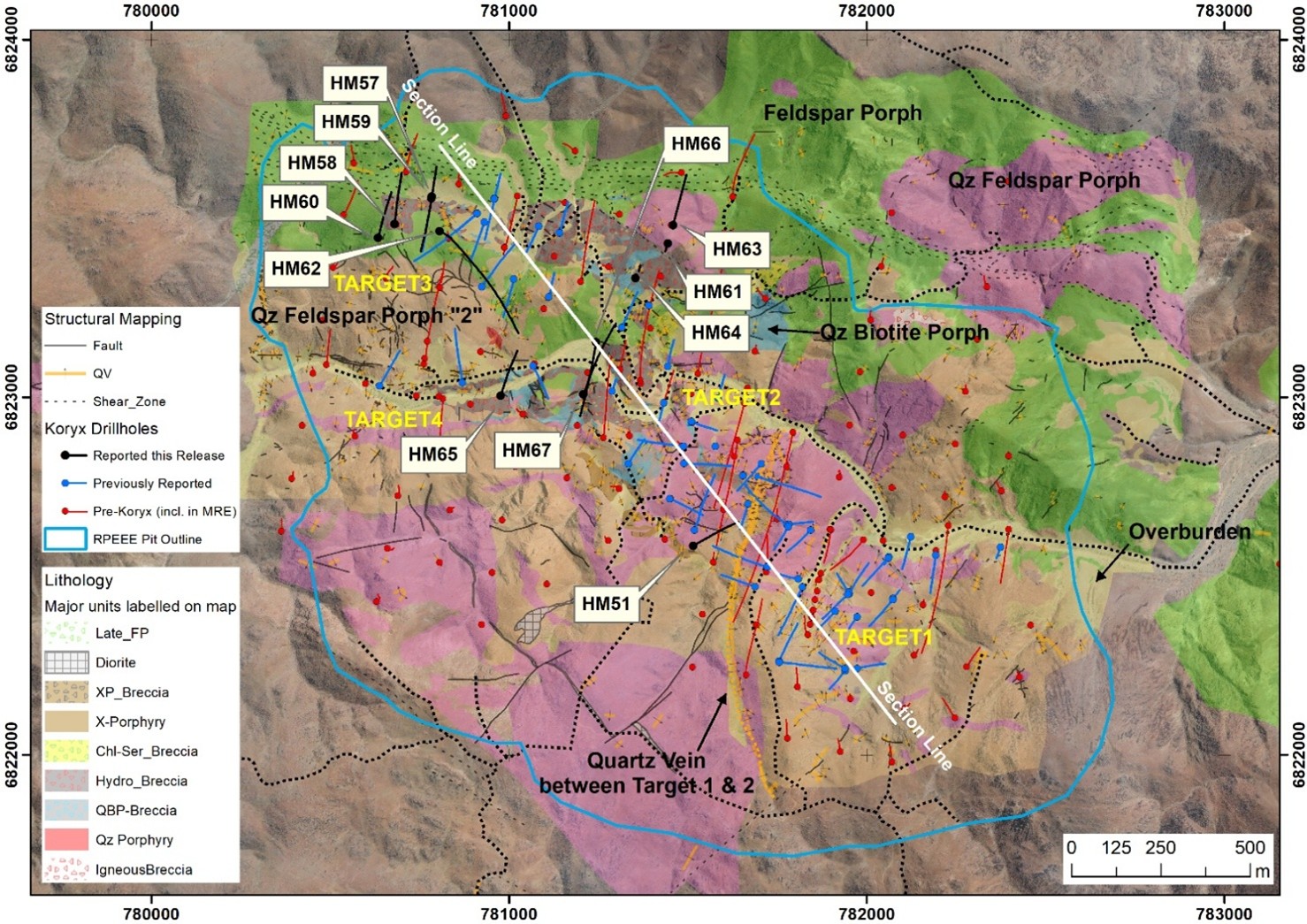
VANCOUVER, British Columbia, May 26, 2025 (GLOBE NEWSWIRE) -- Koryx Copper Inc. (“Koryx” or the "Company") (TSX-V: KRY) is pleased to announce assay results from 12 drill holes (3,603m) received as part of the Phase 2 drill program for its 2025 exploration and project development strategy on the wholly-owned Haib Copper Project (“Haib” or the “Project”) in southern Namibia. Haib is an advanced-stage copper/molybdenum/gold project that is envisaged to produce a copper concentrate via a conventional crushing/milling/flotation metallurgical process, with the potential for additional copper production via heap leaching.
Judge approves $500M settlement in Loblaw, parent company bread-fixing case Global NewsView Full Coverage on Google News

European shares are poised to open in positive territory on Monday, after U.S. President Donald Trump said he would delay the roll out of 50% tariffs on the European Union.DAX futures were trading 1.6% higher at 7:35 a.m. in London, while French CAC 40 futures were up by 1.3%.U.K. markets are closed for a public holiday.Trump initially called on Friday for a 50% tariff on EU goods, saying in a post on his Truth Social platform that the duties would begin from June 1. He accused the bloc of being “very difficult to deal with,” and said trade negotiations with the EU were “going nowhere.”On Sunday, Trump then said he had agreed to delay the 50% tariffs to July 9 following a call from EU Commission President Ursula von der Leyen.Von der Leyen said in a post on X over the weekend that the EU was “ready to advance talks swiftly and decisively.”Overnight in Asia, shares were trading in mixed territory, with Japanese and South Korean stocks moving higher as Chinese and Hong Kong-listed shares saw losses.U.S. markets are closed on Monday for the Memorial Day holiday. Stocks on Wall Street sold off on Friday after Trump’s threat to impose new tariffs on the EU and tech giant Apple.— CNBC’s Erin Doherty contributed to this report.

Dems Mull $20 Million Plan To Figure Out Why Young Men Don't Like Them Six months after a stinging nationwide rejection that handed Donald Trump a commanding reelection and fractured their core coalition, the Democratic Party is turning to a new solution: spending $20 million to figure out why young men don’t like them.The project, codenamed SAM — short for “Speaking with American Men: A Strategic Plan” - is described in a prospectus obtained by the New York Times. It outlines a massive push to decode the language and culture of disaffected young men, particularly in online spaces, and includes a proposal to buy ads inside video games.“Above all, we must shift from a moralizing tone,” the document urges.The effort comes amid widespread Democratic soul-searching after a loss that wasn’t just electoral, but cultural. A recent NBC News poll placed the party’s favorability at just 27 percent, its worst showing in the poll’s 34-year history.Focus groups show the branding problem is dire. One Georgia man recently summed it up succinctly: "A deer in headlights." According to messaging consultant Anat Shenker-Osorio, Democrats are consistently described in her focus groups as "sloths," "tortoises," and now, apparently, roadkill."You stand there and you see the car coming," the man explained. "But you’re going to stand there and get hit with it anyway."Democratic leaders are scrambling to reassemble a coalition that used to be rock-solid: young voters, working-class Americans, Latinos, and Black voters all shifted toward Trump in 2024 - and this time, he won the popular vote, too."There is fear, there is anxiety, and there are very real questions about the path forward - all of which I share," said Rep. Jason Crow (D-CO), who is charged with recruiting candidates to help win back the House in 2026. “We are losing support in vast swaths of the country.”Even the long-standing gender gap, which typically favored Democrats, flipped in key districts as men swung harder to the right. It’s one of the driving reasons behind the $20 million SAM initiative.Meanwhile, the party is facing open rebellion from within. Progressive activists are outraged at what they see as a lack of fight. Moderate Democrats are openly warning that cultural messaging - on issues like immigration, gender, and economic elitism - is alienating the very voters the party once claimed as its base."We’ve pushed, in so many ways, these people away from our party," Crow said.Former DNC Chair Jaime Harrison, who stepped down in February, admitted "The party has to find ways to compete in states where it’s not."But instead of barnstorming in battleground counties, Democratic donors are reportedly huddling in luxury hotels, commissioning focus groups and digital rebrand efforts that - to some - look more like anthropology than campaigning.Democratic pollster Zac McCrary said Trump’s declining approval ratings may create openings in 2026, but warned against reading too much into a potential midterm bounce."A good 2026 midterm - we should not let that mask a deeper problem," McCrary said, adding that the party’s brand is 'repellent' in so much of the country.'He blamed a credibility gap: "Democrats have lost credibility by being seen as alien on cultural issues."For many in the party’s activist and base circles, the appetite for bold messaging and confrontation remains strong."Voters are hungry for people to actually stand up for them - or get caught trying," said Shenker-Osorio. "The party is doing a lot of navel-gazing and not enough full-belly acting."Whether Democrats will rediscover their spine, or waste millions more studying why they don’t have one, remains to be seen. Tyler DurdenSun, 05/25/2025 - 22:45

Apple Inc. (NASDAQ:AAPL) isn't a company usually associated with national security, but it is in the crosshairs of President Donald Trump, now an expert has given his take on the situation.What Happened: On Friday, Ming-Chi Kuo, an analyst at TF Securities, took to X, formerly Twitter, and outlined three key reasons why Trump persistently targets Apple in public.First, he noted, Trump knows that pressuring a global brand like Apple guarantees widespread media attention. "Forcing Apple, the world’s most famous company, and its iconic iPhone to adopt ‘Made in America' policies generates maximum exposure."See Also: $4 A Month? Gene Munster Unpacks Trump’s iPhone Tariff Math – Says ‘Market Appears To Be Miscalculating the Impact’Second, Apple rarely pushes back publicly, making it a low-risk target. "Apple is reluctant to openly contest Trump's statements or mount significant opposition," Kuo added, stating that it makes it easier for Trump to apply pressure without ...Full story available on Benzinga.com
PERTH, Australia, May 25, 2025 (GLOBE NEWSWIRE) -- Canyon Resources Limited (ASX: CAY) (‘Canyon' or the ‘Company') is pleased to announce that its wholly owned in-country subsidiary, Camalco Cameroon SA (‘Camalco') has signed a binding agreement with AFG Bank Cameroon (‘AFG Bank CM') for a medium-term syndicated credit facility of XAF 82,000,000,000 (~US$140M) (‘Credit Facility').Canyon will use the credit facility for the acquisition of locomotives, wagons, the development of rail, ore transport infrastructure and the port facility for the flagship Minim Martap Bauxite Project (‘Minim Martap' or ‘the Project'), located in Cameroon. Importantly, the ~US$140 million Credit Facility, along with the Company's major shareholder and long-term supporter Eagle Eye Asset Holdings Pte Ltd advising its intention to exercise 350 million options for AU$24.5 million, to fund Stage One operations at Minim Martap.The key terms for the credit facility are summarised in Schedule 1. Canyon anticipates drawdown on the Credit Facility occurring in Q3, 2025.AFG Bank CM is the banking subsidiary in Cameroon of Atlantic Group, the conglomerate founded by the successful Ivorian businessman Mr. KONE DOSSONGUI. This subsidiary is among the top three banks in Cameroon in terms of deposits collected from customers and loans granted to customers. This realization demonstrates its expertise in the field of structured financing. The main architects of this operation are Mr. Léon KOFFI KONAN, Chairman of the Board of Directors of AFG Holding (the company in charge of the supervision of the banking companies of the group), and AFG Bank Cameroon team, led by its Managing Director, Mr. Eric Valery ZOA. Established in 2008 in Douala under the initial name of "Banque Atlantique Cameroun", AFG Bank CM is committed to providing innovative financial solutions tailored to the needs of its clients, leveraging its deep understanding of both local and international markets.Since receiving the Mining Licence for Minim Martap in September 2024, Canyon has successfully and rapidly developed Minim Martap, achieving critical key milestones, including securing key port and inland rail facility land. The Company is now focused now on making a Final Investment Decision for the Project and completing the Definitive Feasibility Study, which is assessing a two-stage development pathway aimed at expediting operations, which would see Canyon make its first shipment of bauxite from Minim Martap in the 1H 2026.Mr Mark Hohnen, Canyon Executive Chairman commented: "The progress the team has made since we received our Mining License in September 2024 is truly impressive and I would like to thank the Canyon team, Eagle Eye and our key stakeholders for their continued efforts, advice and support in placing Canyon in the position we are today. "AFG Bank Cameroon is an excellent partner for Canyon and through the ~US$140 million credit facility in place, along with the AU$24.5 million in funds to be received from the option exercise by Eagle Eye, Canyon is now in a strong financial position to fund Stage One operations at Minim Martap."Importantly, the potential and world-class nature of Minim Martap is now being recognised ...Full story available on Benzinga.com

European shares are poised to open in positive territory on Monday, after U.S. President Donald Trump said he would delay the roll out of 50% tariffs on the European Union.DAX futures were trading 1.6% higher at 7:35 a.m. in London, while French CAC 40 futures were up by 1.3%.U.K. markets are closed for a public holiday.Trump initially called on Friday for a 50% tariff on EU goods, saying in a post on his Truth Social platform that the duties would begin from June 1. He accused the bloc of being “very difficult to deal with,” and said trade negotiations with the EU were “going nowhere.”On Sunday, Trump then said he had agreed to delay the 50% tariffs to July 9 following a call from EU Commission President Ursula von der Leyen.Von der Leyen said in a post on X over the weekend that the EU was “ready to advance talks swiftly and decisively.”Overnight in Asia, shares were trading in mixed territory, with Japanese and South Korean stocks moving higher as Chinese and Hong Kong-listed shares saw losses.U.S. markets are closed on Monday for the Memorial Day holiday. Stocks on Wall Street sold off on Friday after Trump’s threat to impose new tariffs on the EU and tech giant Apple.— CNBC’s Erin Doherty contributed to this report.
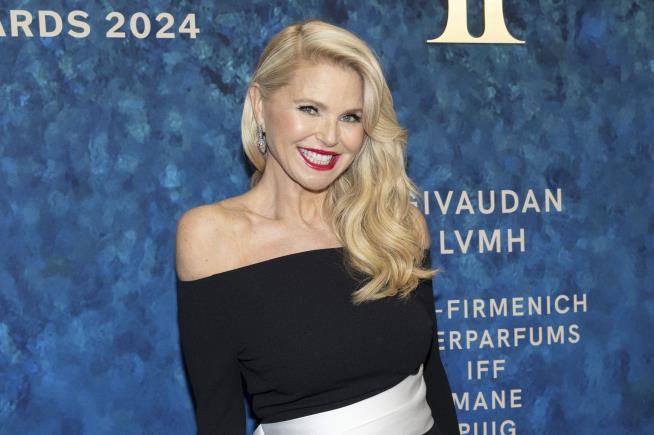
Christie Brinkley's ultra-amicable relationship with her ex-husband Billy Joel was on full display following Joel's announcement that he's canceling his upcoming shows after having been diagnosed with a brain disorder. "Dear Billy ,The whole Brinkley gang is sending you lots of love and good wishes for a full and speedy...

Over 42 million Shiba Inu (CRYPTO: SHIB) tokens were pulled out of circulation Sunday, putting additional deflationary pressure on the popular dog-themed meme coin.What happened: The burn rate blasted 1866% in the last 24 hours, resulting in a supply squeeze of 42.122 million SHIB tokens, according to Shibburn, the coin's official burn tracker.As per the latest available data, over 137 million SHIB were burned in the last week, reflecting an increase of 13.78%.HOURLY SHIB UPDATE$SHIB Price: $0.00001415 (1hr 0.46% ▲ | 24hr -2.08% ▼ )Market Cap: $8,330,462,667 (-2.14% ▼)Total Supply: 589,251,364,169,654TOKENS BURNTPast ...Full story available on Benzinga.com
_7.jpg?itok=hOTFDYHE)
Electric Vehicles: Are They Good, Bad, Or Ugly? Authored by Ronald Stein via The Epoch Times,The recently released “Electric Vehicles: The Good, The Bad and The Ugly” isn’t just another documentary that lazily cheerleads the industry, though there is a fair amount of marveling at the technology and underscoring its benefits and potential. It’s an enlightening, educational, and entertaining 90-minute documentary that is a must-view for those who wish to enhance their energy literacy and decide for themselves if EVs are good, bad, or ugly.It raises serious concerns that policymakers—in wealthy countries only—are setting “green” policies that continue to support human-rights atrocities and environmental degradation in poorer, developing countries where the exotic minerals and metals needed for EVs are mined.Some challenges remain with wind and solar power, which can only generate occasional electricity and are unreliable. This issue has drawn federal legislative attention, with the U.S. Senate voting to discuss a resolution to roll back California’s EV mandate, citing concerns about energy infrastructure and consumer readiness.“Electric Vehicles: The Good, The Bad and The Ugly,” narrated by political commentator and author Larry Elder, who also appears in the film, demonstrates the environmental degradation and human-rights atrocities caused by mining the components needed for EVs, while presenting a thorough analysis of the pros and cons of the vehicles.Planet Earth’s Resources Are LimitedElder’s documentary educates viewers about how the critical minerals and metals needed to support the much-touted “energy transition” to EVs, wind turbines, solar panels, and batteries come from unreliable countries such as China, some poorer African nations, and others. Those countries have minimal labor laws and poor environmental controls, so that their production of the critical minerals and metals needed for going “green” results in serious environmental degradation and dire social consequences.All this, just to support “clean” electricity in wealthier countries.The extraction rates and R/P (reserves to production) ratio for many of the critical minerals and metals needed for going “green” are alarming, and most of these natural resources are not being replenished. This suggests a worrisome possibility of an unsustainable approach to the current policies of subsidies for “green” energies. Furthermore, even countries with the largest reserve base face important challenges to increasing production growth to meet projected future demand.Lithium: In 2024, the world mined about 240,000 tons of lithium, almost three times the amount mined in 2020. The International Energy Agency projects that demand for lithium will increase to 450,000 tons per year by 2030. Despite a significant world resource base, production of those resources remains a major challenge.Cobalt: In 2024, the world produced an estimated 280,000 metric tons of cobalt, the highest amount ever recorded. The Democratic Republic of the Congo was the world’s leading producer, accounting for 74 percent of the global total, while the country is known for the major problems with child labor and poor working conditions of its mineral sector.A typical EV battery for a Tesla sedan requires substantial raw material extraction for the battery’s minerals and metals of lithium, cobalt, nickel, manganese, copper, aluminum, graphite, plus the steel, plastic, and other metals for battery casings.The documentary raises concerns about these “blood minerals,” which come mostly from developing countries—mined at locations in the world that are never inspected or seen by policymakers and EV buyers.The mining and refining to support the demands for EV batteries, wind, and solar involve large quantities of raw materials. The estimated total mass of raw materials mined and processed for an EV battery, including overburden and waste rock, can range from 50,000 to 100,000 pounds, depending on battery size, chemistry, and mining efficiency.Elder’s documentary should be viewed by so-called zero-emission policymakers in the few wealthy countries that have disrupted the delivery of continuous and uninterruptible electricity with strict regulations, preferential subsidies, and cancellation of proven baseload sources like coal, nuclear, and natural gas.Those who watch “Electric Vehicles: The Good, The Bad and The Ugly” will learn about the shell game some are using to exploit developing countries to support so-called clean and green electric vehicles, and can evaluate for themselves whether global economies and the environment can sustain EVs to meet transportation needs for all, not just for a select few.“Electric Vehicles: The Good, The Bad and The Ugly” starts streaming May 23 on Ganjing World. It is available for purchase at $12.99, and available for a 72-hour lease for $9.99.Views expressed in this article are opinions of the author and do not necessarily reflect the views of The Epoch Times or ZeroHedge. Tyler DurdenSun, 05/25/2025 - 22:10
Concerts coming to Toronto in summer 2025 CTV NewsColdplay, Oasis and other big acts booked for summer shows in Toronto Toronto Sun

In what had long been celebrated every May 30 to honor America’s fallen soldiers, Memorial Day officially became a federal holiday in 1971, observed on the last Monday in May
Iconic retailer returns after 13 years to take on Amazon TheStreetHigh street legend set to return 13 years after all stores were shut for good The MirrorOnBuy acquires Comet brand to resurrect as marketplace channelx.worldHigh street store that closed all UK stores in 2012 set to return online Bristol LiveIconic high street store returning after shutting 236 stores 13 years ago MSN
Here’s Where a 64,000% Rally Like 2017 Could Take XRP Price The Crypto BasicCan Cryptocurrency XRP (Ripple) Reach $3 Again? The Globe and MailXRP’s Textbook Bear Flag Pattern Hints At Further Selloffs in May FXEmpirePundit Says You Can Accumulate XRP Cheap Now, Soon Its Price Will Be $1,000 per Coin BinanceXRP To $27: Timeline Leaked – Are You Ready? TradingView

A nondescript brick building in SoBro conceals the nerve center of a system that keeps some of Music City's most famous venues running smoothly.
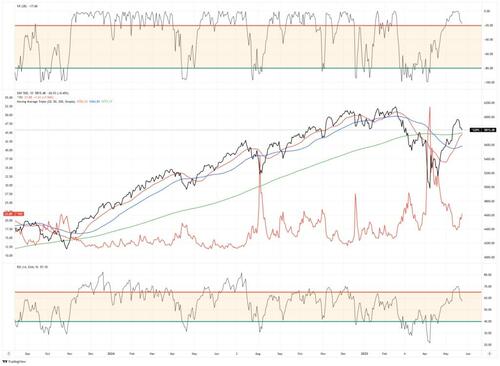
An Unstoppable Bull Market? Authored by Lane Roberts via RealInvestmentAdvice.com,Even Trump Can’t Kill The RallyLast week, we discussed how the rally had repaired much of the previous damage following the correction. As we noted:“This past week, the market continued its advance. There is little reason to be bearish with key overhead resistance levels broken. However, as shown, the markets are reaching decently overbought levels after being extremely oversold. This suggests that at least for now, the “easy money” has been made. With the market above the 200, and above the 50 and 20-DMA, pullbacks should be between 5600 and 5800. Investors can use such a pullback to increase portfolio equity exposures and reduce hedges accordingly. Conversely, 5000 to 5200 becomes the next critical target if those lower supports are violated. Notably, such would require some unexpected event to unfold.”Several times this past week, we discussed that the market was due for a corrective pullback after reaching more overbought conditions. On Friday, the market gave way early in the morning on fresh comments by President Trump instituting 25% tariffs on Apple (AAPL) on any product not manufactured in the U.S. and 50% tariffs on the EU, as trade talks are not going well. As is always the case, amid a bull run, sellers are still unwilling to sell over fear of “missing out” on rising asset prices. It takes some “event” to bring sellers into the market, which we saw early on Friday.However, by late afternoon, markets bounced off the 200-DMA and clawed their way higher as comments from Scott Bessent took the sting out of Trump’s announcements. Most importantly, he made two significant statements to alleviate concerns over the recent yield rise. First, he expects the US budget deficit “to be something with a 3% in front of it by 2028,” with revenue from tariffs to be used to solve the deficit. This is crucial as the CBO projections of never-ending deficits do not consider the effects of policy changes that can lead to economic growth. Tax cuts, deregulation, the coming productivity boost from Artificial Intelligence, or the infrastructure demand for power can significantly impact future growth rates.Secondly, he specifically mentioned the SLR. The Supplementary Leverage Ratio (SLR) is a rule imposed after the 2008 financial crisis that increased bank capital requirements. This is particularly interesting to the bond market, where reversing that requirement will allow banks to purchase more Treasury Bonds. Bessent noted in his interview that the Treasury is close to “moving the SLR requirement and could see that move by the summer.” That shift in the SLR requirement is very bond-friendly and will work to bring rates lower. (For more, read our Daily Market Commentary from last week.)Technically SpeakingEven with Bessent’s comments, that market remains overbought short-term, and a further consolidation process is likely into next week. At the end of this week, we removed our short-market hedge, added to bonds, and reduced equity exposure. If the market is going to consolidate, we can allow cash to act as the primary hedge. However, if the 200-DMA is violated, the 50-DMA will become the next critical support. From a bullish perspective, the 20 and 50-DMAs are now sloping positively, which should provide rising support levels. Overall, we suspect that the market will stabilize. Of course, there are always risks to be aware of, so increased cash levels are essential now.We are not “bearish” on the market because buybacks remain a powerful market influence over the next month. The recent surge has been the largest since the October 2022 market lows. However, those will begin to fade in the middle of June, which could weigh on markets into the Q2 earnings reports.For now, this seems to be an “unstoppable” bull market, and investor spirits have become substantially more bullish. However, all rallies eventually end. That doesn’t mean a “crash” is coming, and as noted last week, the market is holding the 200-DMA for now. This suggests the previous correction phase is likely complete with support gathering at slightly lower levels. However, there is never a guarantee, so we have taken some recent gains and raised cash levels. We will be patient for a much better entry point soon.With that said, let’s discuss how to navigate a seemingly “unstoppable” bull market.Retail Buyers Go “All In”Last week, we started the market update by analogy between the COVID pandemic decline and this year’s correction. As we noted:“It is worth remembering that there are many competing differences between the current macroeconomic backdrop and 2020.”“However, as we discussed in that previous analysis, even a “unstoppable bull market” gives those who can be patient better risk/reward opportunities to increase equity exposures. For example, after the initial rally off the March 2020 lows, the market pulled back and consolidated briefly before rallying further. Then, another longer consolidation process that year provided another entry point for bullish investors.”“The weekly Technical Gauge we produce each week in this newsletter below follows the same path as 2020. While not yet back to bullish technical extremes, it is moving quickly higher to more elevated levels. When those readings reached 80, the market went through a longer consolidation process in 2020.”Most interesting is that retail investors have been fueling the market’s advance. As noted in our #DailyMarketCommentary:“Monday was a record-setting day. Stocks opened down 1% on news that Moody’s downgraded the US credit rating to AA. While some perceived the downgrade as problematic, retail investors, aka individuals, bought stocks at the highest rate ever. Per JP Morgan, retail investors purchased a net of $4.1 billion of US stocks in the first three hours of trading. As their graph below shows, Monday’s retail buying stampede dwarfs prior instances”While the retail net inflow was quite impressive, it does leave the bulls and bears with a consideration. We should ask ourselves who the retail investors bought the stock from. The answer, by default, is institutional investors. This trend of retail buying from institutional investors has been ongoing. As we wrote in “Smart Money or Dumb Money: Who Will be Right?“Smart money (institutions and hedge funds) is aggressively selling this market while individual investors, aka dumb money, are aggressively buying. The difference in opinions is stunning.The data below confirms that view, with the recent stretch of Hedge Fund short selling remaining unprecedented and reflective of some skeptics. Over the past 3 COT reports, Hedge Fund shorts surged ~$25bn – the largest amount for at least the past 10 years. Viewed through another lens, Hedge Fund shorts as a percentage of total open interest reached 41% – the max dating back to February of 2021.Typically, institutional investors tend to be right. However, in the short term, particularly over the last few years, retail investors have been heavy buyers of corrections. The only question is whether retail investors run out of money before institutions are forced to cover?Valuations Take A Back SeatThat said, the rally so far seems unstoppable. Every time the market opens lower, as on Friday following Trump’s tariff increase, buyers step in. As such, the patience needed to wait for a correction has been hard to come by. As noted previously, we remain bullishly biased but expect a pullback.“We must remember that market advances can only go so far before an eventual correction occurs. My best guess is that if the markets are to reach all-time highs this year, we will likely have a correction to reset some of the more extreme overbought conditions, as shown below. Any pullback to the 50-DMA is likely a good entry point to increase exposure on a better risk/reward basis.”The bull market that started in October 2022 has surprised many, given the number of traditionally more bearish indicators, such as inverted yield curves, leading economic indicators, and rising interest rates. For many individuals, trading a rising stock market is difficult because they expect the inevitable resumption of the “bear market.” However, as the market continues to rise, investors are pressured to buy equities, creating more demand, thereby pushing asset prices even higher.The bullish bias is evident in the long-term relationship between stocks and bonds. The ratio of stocks to bonds has far exceeded that of the “Financial Crisis,” and is now on par with the “Dot.com” bubble peak, with a similar sharp slope higher.Does that mean the market is about to “crash?” No, but there is an apparent correlation between the detachment of stocks to bonds and historical valuation metrics. However, in the short term, all that matters is price. As discussed in “Technical Measures,“ valuations are a terrible market timing tool. Valuations only measure when prices are moving faster or slower than earnings. In the short term, valuations are just a measure of psychology. To wit:“Valuation metrics are just that – a measure of current valuation. More importantly, when valuation metrics are excessive, it is a better measure of ‘investor psychology’ and the manifestation of the ‘greater fool theory.’ As shown, there is a high correlation between our composite consumer confidence index and trailing 1-year S&P 500 valuations.”The chart indeed suggests that investors should sell everything immediately. However, given that this is monthly data, these turns can and do take much longer than expected. This “lag” leads investors in the short term to believe that “valuations” no longer matter. Such is a dangerous assumption that investors paid dearly for in the past. Valuations do matter, and they matter a lot, just not today.Therefore, when investors are caught in an “unstoppable” bull market, we must revert to price analysis and trading rules to navigate the markets.Navigating An Unstoppable Bull MarketThere are millions of ways to approach technical analysis, and investors use millions of combinations of technical indicators to decipher market movements.I am only going to discuss how we do it with you.Notably, technical analysis does NOT predict the future. It is the study of historical price action, which is the purest representation of the psychology of market participants. From that study, we can make statistical observations about the behavior of market participants in the past. Those assumptions can help form a “guess,” assuming similar variables, about how they may act in the near term.For our portfolio management needs, we keep our analysis very simple. We use one indicator to indicate if prices are overbought or oversold, two moving averages to determine the trend of prices, and Bollinger bands to warn of significant deviations from those moving averages. I show the technical setup in the sample chart below from SimpleVisor.com.When markets rise, we look for “warning signs” that stocks could be due for a short—or intermediate-term corrective period. Conversely, during market declines, we look for indications that markets are oversold and ready to advance. Currently, we are dealing with the former.Historically, when prices move toward the upper bands of 2- or 3-standard deviations above the 50-day moving average (dma), the Williams %R is overbought, and the MACD is crossing lower from a high level, stock prices generally correct to some degree. Such is the potential environment we will likely deal with in the next few weeks as earnings season concludes and the corporate buyback window closes. This is also why we have suggested holding off trading portfolios and increasing cash levels until some of these more overbought conditions are corrected.But that is difficult to do in an “unstoppable” market advance.Trading An Unstoppable MarketIt’s not as hard as you think, once you conquer the emotional side of the equation.Commandment #1: “Thou Shall Not Trade Against the Trend.” – James P. Arthur HuprichLet me be very clear. We are discussing risk management. You must understand the market’s overall trend and when it is changing. The negative price trend of 2022 is now over, and since then, the market has continued to trend positively. While you can argue, fight, and provide all the reasons why “the game is rigged,” the fact is that the market continues to push higher. Those participating are building wealth, those who aren’t...well...aren’t. You have a choice.We are in a “bull market.”. As such, we want to maintain our exposure to equity risk. However, this does not mean we should ignore what the market tells us and let the ebbs and flows wash over us. Eventually, another “ebb” will come, and we will want to reduce risk accordingly. That does not mean selling everything and going to cash.“In a bull market, you can be either long or neutral. In a bear market, you can only be neutral or short.” – Dennis GartmanThe market will eventually pull back, and likely soon. During that correction, prices will likely remain confined to the 50-dma, as noted above. Could a correction be larger? Yes. The market is currently overbought and extended, so we suggest that investors manage risk and remain cautious about committing cash reserves to the market. However, we will want to use corrections that reverse those overbought and extended conditions as an opportunity to increase equity exposure.“Willingness and ability to hold funds uninvested while awaiting real opportunities is a key to success in the battle for investment survival.” – Gerald Loeb Tyler DurdenSun, 05/25/2025 - 10:30

The Nasdaq-100 is nearly flat year to date, but don't tell these three red-hot technology stocks.

In the top 10 overall cities ranked, vets can find a mix of big-city living, small-town calm, and at the very top of the list, a relaxing beach vibe that also provides plenty of community support.

Linda Perry returns to the stage with reunited 4 Non Blondes at BottleRock Napa Valley.

Yonatan Angel Loaeza, 34, is a member of a transnational burglary ring that has targeted homes throughout the country, police said.

ATHENS, May 23 (Reuters) – A Greek naval court has charged 17 coast guard officers over one of the Mediterranean’s worst shipwrecks two years ago, in which hundreds of people are believed...
Congress Is On Track To End America's Battery Boom InsideEVsThe Tax Increase Tucked Into Trump’s ‘Big Beautiful Bill’ Inside Climate NewsHow Electric Vehicles are Targeted by the Republican Policy Bill The New York TimesNew Republican Tax Bill Could Devastate EV Sales by Removing Incentives Car and DriverThe House of Representatives Sends Bill to Senate With EV-Targeting Fees, Tax Credit Elimination MotorTrend
Doug Kass is not impressed by the House of Representatives' tax bill passed this week.

Ours Is A System Of Fraud, Swindles, And Corruption Authored by Charles Hugh Smith via OfTwoMinds blog,But all bubbles pop, and there are no tricks left to fund both the greed of the few and the needs of the many.Every society / economy is a distribution mechanism that distributes:1. Gains2. Losses3. Risk4. The costs of securing the sources of gains.As a general rule, markets / economies don't really care who ends up with the losses, and this is why markets / economies are fundamentally pathological structures: the single-minded focus is to maximize gains and minimize costs and losses by distributing them to others by any means available.As a general rule, societies have to manage the distribution in a slightly less pathological manner to keep the status quo from being overthrown by those forced to bear the costs and losses. As Mao famously observed, "political power grows out of the barrel of a gun," and so the sociopaths sluicing the gains into their own pockets and dumping the costs and losses on the economically / politically powerless without regard for social stability find the way of the Tao is reversal as those getting the crumbs eventually have nothing left to lose.In other words, markets / economies are embedded in a social structure, not the other way round. And the social structure has to balance the distribution fairly enough to keep the majority from concluding they have nothing left to lose by throwing their lot into overthrowing the status quo.We can gussy this structure up with a lot of theorizing and references to Plato, Marx and Machiavelli and hundreds of other players in the longstanding drama, but these are the fundamental forces in play: do the sociopaths have enough political and financial power to channel most of the gains to themselves and dump the costs and losses on others, or is the system capable of enforcing some limits on the sociopaths?I submit that the United States is in the firm grip of the single-minded few focused solely on maximizing their gains and distributing costs and losses to others by any means available. The social and political restraints that placed modest limits on the aggregation of power and wealth into the hands of the few have crumbled, and this structural collapse has been hidden behind flimsy billboards hyping the latest in distractions: AI, tariffs, stablecoins, Rich Mom fashions, etc.These flimsy distractions are about to be blown over by the windstorm of recession and social disorder as the American households clinging on to the fantasy of The American Dream as all the costs and losses are dumped on them as the gains flow to the top 10% finally throw in the towel on the status quo.The entire bloated, distorted beast has been living on buy now, pay later skims and scams, and the debt pushers have turned enough of the populace into debt-junkies that there's few new customers left to addict.The entire travesty of a mockery of a sham is out of balance and cannot be restored with the usual magic tricks. The interests of the citizenry--supposedly respresented by elected officials--have been trampled underfoot by a thundering herd of fraud, swindles and corruption, the means by which the sociopaths control the distribution of gains, losses, costs and risks.This systemic dominance of fraud, swindles and corruption has been not just normalized but hyper-normalized: we all know the entire system is hopelessly compromised by corruption, but since we're powerless to change this distribution, we act as if this is normal, and go about our business, debating AGI (artificial general intelligence) and other absurdities to pass our time while we await the inevitable reversal of fortunes.Here is the real distribution of gains, losses, costs and risks in America: the gains go to the most corrupt few and the losses, costs and risks are distributed to the many. Here are three of the latest manifestations of fraud, swindles and corruption among a seemingly countless stream of self-serving outrages that are no longer outrages, they're just the way things work now.Here's how Corporate America takes care of its customers: the gains are ours, the risks are yours. It's taboo to call things what they are, so we can't say that Corporate Anerica is pathological--even when it is:A Devastating New Expose of Johnson & Johnson Indicts an Entire System.Revealed: UnitedHealth secretly paid nursing homes to reduce hospital transfers.Owner-Occupancy Fraud and Mortgage Performance. (rampant mortgage fraud... again)As always, I am honored to share a remarkable data base of Corporate Fines and Settlements from the early 1990s to the present compiled by Jon Morse. There are 2700 entries, updated through December 2024.What's finally happening is the system can no longer collect enough resources to fund the minimum required to satisfy the sociopaths and the minimum required to satisfy the bottom 90%, so something's gotta give. The solution has always been straightforward: print or borrow another couple trillion dollars to fund the greed of the sociopaths and whatever it takes to keep the herd from stampeding.The trillions are getting harder to print/borrow, and so it's finally squeeze-time. Gosh, this is actually kinda hard: do we squeeze the sociopaths, who scream bloody murder at any reduction of their gains, or do we squeeze the bottom 60% who are already on the cliff edge? Can we sorta kinda squeeze both enough to keep the status quo intact?This isn't sustainable stability: it's entropy dressed up in the finery of stability. The sociopaths have concentrated sufficient financial and political power to stave off any real reductions in their distribution of the gains, and so the costs and losses will be distributed to the bottom 90% in various forms, as usual. Only some percentage of the bottom 90% no longer has sufficient credit or income buffers to absorb more losses, costs and risks.The last trick in the status quo's hat is a credit-asset bubble that generates an illusion of unending wealth for everyone: wealth for those who own the assets, of course, and wages for everyone below due to the trickle down effect where you buy a $1 million vacation home and I live in my car in a parking lot working in town:In a Snow Paradise, They Live in This Parking Lot: People experiencing homelessness can sleep in their cars in this wealthy ski town in Colorado, but only if they have a job.But all bubbles pop, and there are no tricks left to fund both the greed of the few and the needs of the many. The top 0.01% own five times as much as the bottom 50%--170 million Americans. That's some very pretty entropy dressed up as stability.Look, I wish it were different, but the facts speak for themselves:Do we hear the chorus of complaints of the top 0.1%? Why oh why aren't the bottom 50% delighted to own 2.5% of total household net worth? It's more than enough, right?This makes the impossible--a reshuffling of the social order on a grand scale--not just possible but inevitable. Nobody saw it coming, etc. Um, yeah, sure, whatever.* * *Become a $3/month patron of my work via patreon.com.Subscribe to my Substack for free Tyler DurdenSat, 05/24/2025 - 22:10

U.K. Prime Minister Keir Starmer has achieved some major economic wins for the U.K., but his popularity is at a record low. The latest survey by pollster YouGov showed that 69% of voters now have an unfavorable view of Starmer. Cost of living pressures continue to worry ordinary British voters, while businesses reckon with Labour-led tax rises.A year into the job, U.K. Prime Minister Keir Starmer has scored some key wins, including recently signing major trade deals with the U.S., India and European Union that will boost the British economy and wages.Opinion polls paint a different picture of his success.A survey by pollster YouGov, published in mid-May, showed that the British public’s approval the prime minister has plummeted to a record low, with 69% of voters now having an unfavorable view of Starmer, while just 23% regard him enthusiastically.More worryingly for the Labour Party leader, the fall in popularity is concentrated among Labour voters, half of whom (50%) now have an unfavorable view of Starmer — a 17-point increase from the last poll in mid-April. The share of Labour voters with a favorable opinion of him has meanwhile fallen from 62% to 45% over the month.With things seeming to point in the right direction for the British economy, what’s going wrong for its prime minister?Trade deals amid domestic pressuresThe U.K.’s leadership might be touting their impressive record on trade deals recently, but cost-of-living pressures continue to worry ordinary British voters, and businesses are reckoning with Labour-led tax rises.The U.K.’s annual inflation rate hit a hotter-than-expected 3.5% in April, up sharply from 2.6% in March, according to data released by the Office for National Statistics (ONS) on Wednesday.The data highlighted increasing pressures on British households, as prices of electricity, gas and other fuels rose by 6.7% in the year to April. The prices of water and sewerage meanwhile added 26.1% in the month to April, marking the largest monthly hike since at least February 1988, the ONS said.Read moreTrump unveils United Kingdom trade deal, first since ‘reciprocal’ tariff pauseUK and European Union agree to post-Brexit reset dealUK and India strike a trade deal amid U.S.-led tariff tensionsBritish businesses now face a higher tax burden as a result of government policies introduced in the “Autumn Budget,” as well as other measures deemed be many economists to be “anti-growth.” These include limits on immigration set to affect foreign workers — who are key to a number of sectors — a rise in the national minimum wage and reforms to workers’ rights, which put pressure on many small and medium-sized firms.As such, lofty trade deals promising economic growth and investment that will take time to feed through are cold comfort for many British consumers and businesses struggling right now.“On domestic policy, this government hasn’t scored well so far; let’s give it a C-minus,” Kallum Pickering, chief U.K. economist at Peel Hunt, told CNBC’s “Europe Early Edition” on Wednesday. “[We’ve seen] mostly anti- growth measures and that’s the thing that disrupted bond markets over the past few months.”On foreign and international policy, the government is “doing a fairly good job,” with its latest trade deals a testament to that, Pickering said.“Starmer has contained the downside risk that the U.K. and the U.S. could really escalate on trade. It’s not a good deal, but it contains downside risk. The U.K.-India deal is actually a strong signal that the U.K. is open for business. And if you read the press, people that are unhappy with the deal that the U.K. and the EU is striking but, actually, what’s the alternative?” he asked.Big business leaders say they’re happy with the British government’s general direction of travel, with C.S. Venkatakrishnan, group chief executive of Barclays, telling CNBC Thursday that it was “absolutely on track.”“If you look at if you look at what they’ve achieved over the last few weeks, they’ve had trade deals with the U.S., with India, with Europe, important trading partners. They continue to be repairing relationships with Europe, which they need to,” he told CNBC’s Steve Sedgwick.Inflationary pressures, he noted, were evident but were not yet leading to “consumer distress,” the Barclays exec believed.“We’re in fact seeing conduit continued consumer strength, but it’s coming because of people managing their balances and their finances prudently. So [they’re] economizing. The job market is still strong. But as you see ... people are worried about inflation. People are worried about cost, whether it’s winter fuel bills or whether it’s more generalized inflation from tariffs, and the only real answer to that is growth, which is what this government is focused on, and what we want to help them.”Personality problemAlthough some quarters welcome Keir Starmer’s calmer and less bombastic approach to leadership than politicians like Reform UK leader Nigel Farage or former Prime Minister Boris Johnson, he continues to face criticism that his leadership style and personality hold him and the Labour Party back.CNBC has contacted the Labour Party for comment on Starmer’s poll ratings and is awaiting a reply.“Starmer has great positives — [signing] the trade deals” for one, Bill Blain, strategist and founder of Wind Shift Capital, said that the prime minister’s lack of charisma is a deficit.“But he is dull, boring and precise. He is competent, but he is not a personality and lacks political charisma ... Farage has it in spades. So did Boris Johnson,” he told CNBC Tuesday.Phil Noble | ReutersBritish opposition Labour Party leader Keir Starmer and Shadow Chancellor of the Exchequer Rachel Reeves react during a campaign event at a farm in Oxfordshire, Britain, July 1, 2024. “A additional problem is Starmer lacks able cabinet colleagues able to create the illusion of a cabinet of smart, leaders. Some are settling into their roles but most look out their depth. This is particularly true of Rachel Reeves ... who is naturally not a risk taker,” Blain added.“The bigger issue is the narrative — Labour present it as doing the right thing to control spending, but it’s backfired as insensitivity to their voters. They are perceived as cruel,” he said.Starmer is coming “under pressure,” Blain noted, increasing the risk that rank and file Labour lawmakers “will revolt if the polls bite.”“That may be happening — [meaning] mutiny!,” he said.

A man was arrested Friday after being accused of kidnapping an Italian tourist and torturing him for weeks inside a Manhattan home in a bid to steal the alleged victim’s Bitcoin.
"Completely Insane": Wired Posts DIY Video For Mangione's Ghost Gun YouTube's content rules apparently don't apply to corporate media darlings. Case in point: Wired (Publisher: Condé Nast) recently published a video walking viewers through the exact process of building a copycat version of the untraceable 9mm "ghost gun" allegedly used in the UnitedHealth CEO shooting by Lugi Mangione. Completely insane. Wired publishing a How To guide for attention starved lunatics to commit high-profile political murders. They're practically begging for a copycat. pic.twitter.com/QGPLDw7gRc— Lomez (@L0m3z) May 23, 2025"So, armed with a shopping list and a credit card, we ordered everything we needed. A 3D printer, plastic filaments, and household products like epoxy were all just a few clicks away on sites like Lowe's or Amazon. And the more specialized components were available on sites that sell gun parts, just not the guns themselves," Wired's Andy Greenberg explained to viewers in the video. Greenberg continued, "A few days later, every ingredient I needed to make Mangione's gun arrived in the mail for the grand total of $1,144.67 plus shipping. And that includes the price of the 3D printer. This is like Christmas Day. This looks like a slide, very much like an obvious gun part. Kind of crazy that you can just order this." The video then spent five minutes showing viewers the printing and assembly processes. He outsourced the assembly of the pistol to YouTube Print Shoot Repeat. After assembling the 3D-printed pistol, Greenberg took it to a shooting range and fired several magazines through it; the weapon performed as expected.Meanwhile, YouTube explicitly prohibits content that provides instructions on manufacturing firearms, including ghost guns. The policy even states:"Don't post content on YouTube if the purpose is to do one or more of the following: Provide instructions on manufacturing any of the following: Firearms."Meanwhile, independent firearm enthusiasts regularly get their videos pulled, age-restricted, or demonetized for far less. The double standard is obvious: if you're mainstream media, you get a pass — but if you're just a gun hobbyist or DIY engineer, the censorship hammer comes down hard.Why is Wired effectively providing a how-to guide on building a copycat weapon, especially when it's being served up to Luigi Mangione's fanbase of unhinged Marxist leftists? * * * Watch the video Tyler DurdenSat, 05/24/2025 - 21:35
The Schall Law Firm, a national shareholder rights litigation firm, announces that it is investigating claims on behalf of investors of Flowco Holdings ("Flowco" or "the Company") (NYSE: FLOC) for violations of the securities laws.The investigation focuses on whether the Company issued false and/or misleading statements and/or failed to disclose information pertinent to investors. Flowco reported its financial results for Q1 2025 on May 13, 2025. The Company missed consensus estimates on revenue and GAAP earnings. The ...Full story available on Benzinga.com
The Schall Law Firm, a national shareholder rights litigation firm, announces that it is investigating claims on behalf of investors of Fulgent Genetics, Inc. ("Fulgent" or "the Company") (NASDAQ: FLGT) for violations of the securities laws.The investigation focuses on whether the Company issued false and/or misleading statements and/or failed to disclose information pertinent to investors. Fulgent disclosed as part of its annual report filed with the SEC on February 28, ...Full story available on Benzinga.com
Trump news at a glance: don’t trade threats with us, EU warns The GuardianTrump threatens 25% import tax on Apple unless iPhones are made in the US MSNTrump's tariff threat ignites EU countermeasures on tech giants MSNEurope is standing up to Trump tariffs – it could impact the UK MSNTrump suggests 50% tariff on EU goods starting in June MSN
Bitcoin HODLers refuse to sell $11B in profits – Will their patience be rewarded? AMBCryptoBitcoin rally takes largest cryptocurrency past US$111,000 for first time Financial Post4 Crypto Stocks to Ride Bitcoin's Bullish Surge to New Highs YahooBitcoin Outlook: BTC Reaches $111,000 FOREX.comBitcoin’s Current Trend Echoing Past Cycle Moves After Making History - Here’s How | Bitcoinist.com Bitcoinist.com

Doug Casey On The Neocons And Their Push For The Next Big War Via InternationalMan.com,International Man: Who exactly are the neoconservatives—where did this movement originate, what do they fundamentally believe, and why does their ideology seem so relentlessly focused on promoting war and global intervention?Doug Casey: Most of the neocons have a background as socialists or hardcore leftists. But the neocons are smarter than the average statist in that they could see that socialism was a failure—it wasn’t working anywhere. So what they did was adopt conservative-seeming economic policies, while maintaining all the other trappings of socialism.Neocons are universally state worshipers. They don’t believe in principles as a matter of principle. You could say that a foundational thinker for the neocons is Niccolò Machiavelli, who promoted the idea in his book The Prince that whatever works and accomplishes the goal of the ruler should be done—that it’s counterproductive to think in terms of right, wrong, or morality.Many neocons self-identify as Wilsonians. Woodrow Wilson was one of the very worst presidents, responsible for the income tax, the Federal Reserve, US participation in WW1, and trying to “make the world safe for democracy,” among other things.International Man: The neocon agenda appears to be intellectually rooted in figures like Leo Strauss and even Trotsky. How do you explain the rise of this ideological blend within what many still call the “conservative” movement?Doug Casey: They only seem conservative because they’ve found it useful to adopt free market–seeming economic policies. This goes back to the long-standing confusion between capitalists and fascists.Socialists believe in state ownership of the means of production—factories, farms, mines, and the like. Capitalists, however, believe in private ownership of the means of production, as well as private control over them. Fascists—a word that was coined by Mussolini, incidentally—also believe, or at least tolerate, the private ownership of the means of production. That’s why they’re easily confused with capitalists. But fascists believe in complete state control over the means of production, while leaving ownership in private hands.This is why there’s so much confusion in the public’s eyes between capitalism and fascism. The key difference is control, and a strong partnership between the private and public sectors. That greatly enhances the ability of business owners to enrich themselves, at the expense of the average worker.In point of fact, neocons are all fascists—in every way. They worship the state, just like in fascist Germany and Italy, where industries were privately owned but completely tied to the interests of the state. Almost all the world’s economies are fascist; there are no pure capitalist or socialist countries. We really should call the neocons fascists.They also have an aggressive foreign policy, which fascists are known for. They’re fascists in every way, including their support for substantial welfare programs for the populace.International Man: Despite a track record of costly failures—from endless wars to ballooning government power—why do neoconservatives still wield such influence? Why does anyone in Washington or the media continue to take them seriously?Doug Casey: I’d say it’s because of their outspoken belief that the State should be the central influence in society. That the government should be the country’s dominant force, not the family, religion, business, or other civil institutions. People now go along with that. It’s understandable that everybody wants a big brother to kiss all their problems and make them better. The average person, who wants something for nothing, a free lunch, is morally weak. And he’s intellectually confused by statist propaganda.If you create a powerful state which promises to not only take care of you, but also to “win” against other states, a lot of people will respond. Many treat the State the same way football fans treat their favorite teams: “we” will win against “them.” It’s easy to get the hoi polloi hooting and panting like chimpanzees against some fabricated enemy.Intellectuals have coined arguments that cater to this kind of mass psychology, and people go for it. They like the idea of being protected and being part of a powerful, winning team.I’ve met any number of well-known neocons personally. Charles Krauthammer, Bill Bennett, and Paul Wolfowitz among them. They’re intellectuals and quite civilized on the surface. But all of them promote completely evil and destructive ideas. The fascist system we have has treated them very well. They’ve become much wealthier than they could have under socialism or capitalism.International Man: Trump and his envoy, Steve Witkoff, have recently called out the neocons by name.Figures like Douglas Murray have suggested the term ‘neocon’ is the new n-word. Mark Levin has gone so far as to label its use anti-Semitic.Why are some neocons using accusations of racism to shut down legitimate and important discussions?Doug Casey: A great way to shut down any discussion today is to call your opponent a racist. And this has some grounding with neocons because a large majority of them—just like a large majority of intellectuals in general—are Jews. Neocons are reflexively pro-Israel as well. I listened to Mark Levin go on a rant about this on his show recently; he was practically frothing at the mouth in anger.It’s odd that people consider it racist to stereotype any group and decry that as a bad thing. It’s not. Stereotypes develop because they reflect reality. Members of stereotyped groups often prefer to pretend that we’re all equal, and their group is just like anyone else. But it’s a fact that birds of a feather flock together.It’s unfortunate that almost all the leading neocon intellectuals are Jews.International Man: The neocons have long pushed for US war with Iran. What would the geopolitical fallout be if they succeed, and how might such a war impact global markets, energy prices, and economic stability?Doug Casey: It would be a huge mistake for the US to attack Iran, as they seem to be planning to do. They’re moving B-52 and B-2 bombers to Diego Garcia, which is within easy striking distance of Iran, while Trump thumps his chest and threatens war. It’s a mistake because Iran is a somewhat advanced society with about 92 million people; it’s hunting big game, not like the pipsqueak countries the US has been losing against for the last 75 years. But also because any outside attack always unites a domestic population. It would unite them against the US, and further empower the Mohammedan ideologues now in charge.It would also be a mistake because it would be immoral—not that anyone cares. The Iranians have never attacked the US. The world is, I think, getting tired of the US promiscuously bombing anyone they like. In fact, almost all of the Islamic terrorism over the last 30 or 40 years has come from Sunni Muslims. The Iranians are Shia Muslims. They don’t get along well with the Sunnis—much like Irish Catholics never got along with Irish Protestants, or Protestants and Catholics in Europe generally never got along back in the days when religion was a factor.It’s suspicious, now that Trump has become so cozy with the Gulf States and Saudi Arabia, which are all run by Sunnis. It makes sense that they’d like to use the US as a cat’s paw to steal Iran’s oil. Just as Israel would like to use the US as a means of taking out their enemy. It looks like the US, and Trump, are being used to do the bidding of the Arabs and the Israelis. Although we’re in no way threatened by the Iranians.If a war did happen, the Iranians are in a perfect position to close the Strait of Hormuz, which is the conduit for around 40% of global oil exports—about 21 million barrels transit the Strait daily. None of it, incidentally, goes to the US. It’s genuinely not our problem.The smart thing for the US is simply to leave Iran alone. If they have problems with their neighbors— Saudi Arabia and particularly Israel—let them sort it out among themselves.Because Iran is a theocracy, making many economic decisions based on religion rather than economics, the current regime will eventually collapse, and the country will reorient. The last thing we need is to carry somebody else’s water by starting a potentially catastrophic war where the US has absolutely nothing to gain, but a lot to lose.* * *As Doug Casey makes clear, the neocon agenda is not only reckless but deeply tied to the growing economic and geopolitical instability we face today. The consequences of their actions could trigger a crisis unlike anything we’ve seen in decades. Read our special dispatch: Guide to Surviving and Thriving During an Economic Collapse — a crucial resource for those who want to not only protect themselves, but come out ahead when the system buckles. Click here to download it now. Tyler DurdenSat, 05/24/2025 - 21:00
Horror as manic passenger tries to kill all onboard flight to Houston with terrifying move Daily MailHouston-bound flight diverted after unruly passenger tried to open emergency door, officials say ABC13 HoustonPassengers and crew restrain passenger who tried to open emergency exit door on Houston-bound flight, airport officials say KHOUHouston-bound flight diverted after passenger allegedly tried to open cabin door Houston ChronicleFlight to Houston forced to land in Seattle after passenger tries to open exit door mid-flight Click2Houston

Did Sam Altman just figure out what AI's been missing? Or did he get locked into the very thinking he's spent his career avoiding?

The Pentagon restrictions on media covering the military follow a series of moves by the Trump administration to curtail press access. The changes overhaul historic access for the press.

Nvidia Reportedly Prepares Mass Production Of Cheaper China-Centric Blackwell AI Chip Nvidia's market share in China has cratered from 95% to 50% over the past four years, driven by the Biden administration's super-aggressive chip export restrictions. The restrictions opened the door for Chinese rival Huawei to seize market share quickly with its Ascend 910B chip.According to Reuters, Nvidia is preparing to launch a new lower-spec AI chip based on a Blackwell architecture design to comply with U.S. regulations and reclaim lost market share in the world's second-largest economy. Those sources say Nvidia's new chip will be priced significantly lower than its recently restricted H20 chip. Those familiar with the production timeline say series production is set for next month.The new chip, expected to begin mass production in June, stays within Washington's 1.7–1.8 TB/s memory bandwidth cap using GDDR7 memory, compared to the H20's 4 TB/s. The sources say a second China-specific Blackwell GPU will be released around September. Sources provided more color on pricing and chip specs:The GPU or graphics processing unit will be part of Nvidia's latest generation Blackwell-architecture AI processors and is expected to be priced between $6,500 and $8,000, well below the $10,000-$12,000 the H20 sold for, according to two of the sources.. . .It will be based on Nvidia's RTX Pro 6000D, a server-class graphics processor and will use conventional GDDR7 memory instead of more advanced high bandwidth memory, the two sources said.They added it would not use Taiwan Semiconductor Manufacturing, opens new tab advanced Chip-on-Wafer-on-Substrate (CoWoS) packaging technology.In recent weeks, Nvidia CEO Jensen Huang secured multi-billion-dollar AI chip deals in Saudi Arabia after President Trump rolled back chip restrictions. Nvidia CEO Sees "No Evidence" Of AI Chip Diversion To China As Trump Rolls Back RestrictionsHuang blasted Biden-era chip curbs, calling them a "failure." Nvidia CEO Calls Biden-Era AI Curbs A "Failure" With ChinaThe clear takeaway: Nvidia aims to reclaim lost market share in China's $50 billion AI chip sector. Tyler DurdenSat, 05/24/2025 - 20:25
SAN DIEGO, May 24, 2025 (GLOBE NEWSWIRE) -- The law firm of Robbins Geller Rudman & Dowd LLP announces that the Organon class action lawsuit – captioned Hauser v. Organon & Co., No. 25-cv-05322 (D.N.J.) – seeks to represent purchasers or acquirers of Organon & Co. (NYSE:OGN) securities and charges Organon as well as certain of Organon's top executives with violations of the Securities Exchange Act of 1934.If you suffered substantial losses and wish to serve as lead plaintiff of the Organon class action lawsuit, please provide your information here:https://www.rgrdlaw.com/cases-organon-co-class-action-lawsuit-ogn.htmlYou can also contact attorneys J.C. Sanchez or Jennifer N. Caringal of Robbins Geller by calling 800/449-4900 or via e-mail at [email protected]. Lead plaintiff motions for the Organon class action lawsuit must be filed with the court no later than July 22, 2025.CASE ALLEGATIONS: Organon develops and delivers health solutions through prescription therapies and medical devices.The Organon class action lawsuit alleges that defendants throughout the class period made false and/or misleading statements and/or failed to ...Full story available on Benzinga.com

President Donald Trump delivered remarks to graduates of the U.S. Military Academy at West Point. He touted his administration’s changes to the military, including eliminating diversity, equity and inclusion programs. “You are the first West Point graduates of the golden age of America,” Trump told the graduates.President Donald Trump touted his administration’s changes to the military during a commencement address at the U.S. Military Academy at West Point on Saturday that at times resembled a campaign-style speech.“You are the first West Point graduates of the golden age of America,” Trump, wearing his trademark red, ‘Make America Great Again’ hat, said to the graduating class.“This is the golden age, and you are going to lead the army to summits of greatness that has never reached before,” he added.During remarks that spanned almost an hour, Trump promoted an “America First” worldview and he touted the strength of the U.S. military, which he claimed credit for bolstering.He told the graduates they are becoming “officers in the greatest and most powerful army the world has ever known.”“And I know, because I rebuilt that army, and I rebuilt the military, and we rebuilt it like nobody has ever rebuilt it before in my first term,” Trump said.His remarks mixed elements of a traditional graduation speech, such as advice to the students, with aspects reminiscent of his 2024 campaign speeches, including criticisms of his predecessors.Trump also used the remarks to highlight his administration’s achievements.“The military’s job is to dominate any foe and annihilate any threat to America, anywhere, anytime and any place,” he said.“A big part of that job is to be respected again, and you are, as of right now, respected more than any army anywhere in the world,” he continued. Harvard sues Trump administration over ban on international student enrollmentMusk’s DOGE expanding his Grok AI in U.S. government, raising conflict concernsTrump’s 5% NATO defense spending target ‘very difficult,’ Greece’s PM saysHarvard blocked by Trump administration from enrolling international studentsTrump recommends 50% tariff on European Union starting June 1Firm tapped to modify gift jet into AF1 settles false claims case for $62MSupreme Court insulates Fed board while backing Trump firing of agency leadersHe accused past administrations of sending some U.S. soldiers “on nation building crusades to nations that wanted nothing to do with us.”Trump’s remarks come as his administration has zeroed in on military academies as part of its broader crackdown on diversity, equity and inclusion programs (DEI) across the country.He praised those efforts during his address. “We’ve liberated our troops from divisive and demeaning political trainings,” Trump said.West Point eliminated a number of cultural clubs, such as the Asian-Pacific Forum Club, the Japanese Forum Club and the Latin Cultural Club, following Trump’s executive order removing DEI programs from the military, NBC News reported.The Pentagon has also directed military academies, including West Point, to remove books that include mentions of racism or sexism from their libraries, according to the New York Times.
What to Expect (and Not Expect) From OpenAI and Jony Ive's AI-Centric 'Screenless Phone' CNETSam and Jony introduce io OpenAIExclusive | What Sam Altman Told OpenAI About the Secret Device He’s Making With Jony Ive WSJSteve Jobs once called designer Jony Ive his 'spiritual partner' at Apple—OpenAI just bought his tech startup for $6.4 billion CNBCOpenAI Unites With Jony Ive in $6.5 Billion Deal to Create A.I. Devices The New York Times

"Hope Out of Fire," on display at the Shops in Santa Anita and at the Nixon Library, features 40 compelling images from photojournalists who covered the Eaton and Palisades wildfires.
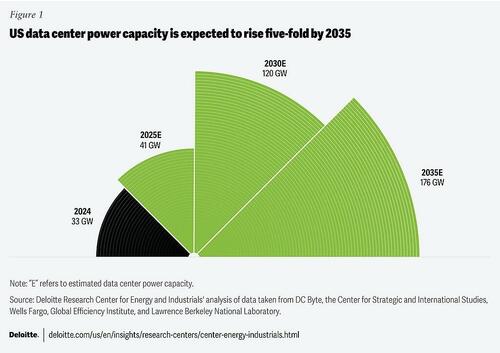
New Nuclear Power Could Meet 10% Of Projected Data Center Demand Increase By 2035 By Brian Martucci of UtilityDiveSummary: New nuclear power capacity could meet about 10% of the projected increase in data center electricity demand by 2035, Deloitte said in an April 9 report.Deloitte expects data centers to consume about 30%, or 11 GW to 19 GW, of the estimated 35 GW to 65 GW of new nuclear capacity added over the next decade through a combination of power uprates at operational plants, restarts of recently-retired reactors, and new reactor deployments at greenfield and existing power plant sites.Existing nuclear power plants and retired or retiring coal power plant sites will support the vast majority of new nuclear capacity interconnection, with respective contributions ranging from 10 GW to 20 GW and 20 GW to 30 GW, Deloitte said.Deloitte expects total U.S. data center electricity demand to increase five-fold from 33 GW in 2024 to as much as 176 GW in 2035, based on its analysis of recent projections from DC Byte, Wells Fargo and others, it said in the report.Along with transportation electrification, data center growth will drive an expected 50% increase in U.S. electricity demand through 2050, the National Electrical Manufacturers Association said earlier this month in a separate report.Deloitte’s forecast is sensitive to changes in the rate and scale of data center deployment, but nuclear has inherent advantages — reliability, high capacity factor, low emissions, compact physical footprint and competitive energy costs over assets’ multi-decade operational lives — that make it attractive across a range of scenarios, the consultancy said.“We think you’re going to see people looking at existing nuclear infrastructure and adding capacity through those assets, then placing bets on technology development,” said Martin Stansbury, report co-author and principal in Deloitte’s Energy, Resources & Industrials practice.The tech-giant “hyperscalers” driving the data center boom have already done both. In September, Microsoft and Constellation Energy announced a 20-year power purchase agreement that would enable the undamaged, 835-MW reactor at Constellation’s Three Mile Island plant to resume operations by 2028. The reopening of the Pennsylvania plant, since renamed the Crane Clean Energy Center, is ahead of schedule, Constellation said earlier this year.Also last fall, Amazon, Google and Meta each announced significant efforts to meet future energy demand with new nuclear capacity. Amazon could deploy more than 5 GW of new capacity by 2039 using X-energy’s small modular reactor technology, Google tapped Kairos Power to provide 500 MW of SMR capacity by 2035, and Meta issued a request for proposals for up to 4 GW of new nuclear deployments beginning in the early 2030s.Despite those long lead times and recent Trump administration efforts to prop up the U.S. coal industry, new nuclear is likely to find a niche as a reliable source of increasingly cost-competitive baseload power, Stansbury said.“SMRs have a major role to play in future grid reliability,” he said.SMRs have additional benefits for data centers in particular, including more secure fuel forms, self-starting and grid “islanding” capabilities, and the ability to operate continuously for long periods of time, Deloitte said.Existing nuclear and coal-fired power plants could support much of the new generation capacity the U.S. data center industry needs in the coming decade. The U.S. Department of Energy projected last year that U.S. nuclear and coal power sites could host up to 269 GWe of new nuclear, and at least 11 states have expressed interest in supporting coal-to-nuclear conversions, Deloitte said.But with 2024 construction costs ranging from $6,417/kW to $12,681/kW, compared with $1,290/kW for new gas-fired power plants, nuclear developers have a lot of work to do to bring down costs in the coming years, Deloitte said. To scale, the industry needs to invest in advanced project management processes, design innovations like digital twinning, and further improvements in modular construction, it said. Tyler DurdenSat, 05/24/2025 - 10:30

"UndocuGraduation" Ceremonies For Illegal Aliens Include Guidance On ICE Raids By Emily Sturge of CampusReformThis graduation season, three universities in California and a university in Washington will hold “UndocuGraduation” ceremonies to celebrate illegal immigrant students. Universities paired the event announcements with commitments to protect the identities of student attendees by not releasing any “data related to immigration status” unless presented with a “judicial warrant, subpoena, or court order,” according to a message on behalf of the California State University system. “Immigration enforcement is the responsibility of U.S. Immigration and Customs Enforcement, not the university,” a message from California State University Long Beach states. California State University, Longbeach (CSULB) will host a “Beyond Borders Graduation Celebration” for illegal immigrant students on May 10, according to a university webpage. California State University, Northridge (CSUN) will host an “UndocuGraduation” ceremony May 3, according to an Instagram post. “Join us at UndocuGraduation to honor your achievement as an undocumented, DACAmented, or mixed status graduating Matador,” the event page states. The event will be hosted by CSUN’s DREAM Center, which is part of the university’s student union and provides resources such as an “Immigration Preparedness Toolkit.”CSUN is also instructing students to report “ICE sighting[s] on campus” and sharing guidelines explaining what to do if you are an illegal immigrant approached by immigration officers. The university is providing “red cards” that direct illegal immigrants on how to act if approached by law enforcement and instructing illegal immigrant students to “give the red card to the agent,” per a social media post. “Do not open the door...do not answer any questions...do not sign anything,” the red card reads. California State University, Fullerton (CSUF) will host an “Undocu Recognition Celebration” May 3.The website describes the ceremony as “an event where we celebrate the undocumented graduating students and their accomplishments through their higher education career.”It will be hosted by the university’s “Titan Dreamers Resource Center,” a campus resource dedicated to providing resources to illegal immigrant students, including “immigration legal services, personal and professional development programs, and connecting students to financial and academic resources.”The Titan Dreamers Resource Center at CSUF is also holding a “Pan-Afrikan Recognition Celebration” in partnership with the university’s Black Faculty and Staff Association, an “Asian Pacific Islander South Asian American Recognition Celebration,” a “Nuestra Graduación” for “Latinx students,” and a Lavender graduation ceremony for LGBTQ+ students. In a nearby state, the University of Washington (UW) in Seattle will hold an “Undocu Graduation Celebration” on May 23. The ceremony will be hosted by the university’s Samuel E. Kelly Ethnic Cultural Center, which previously held an “Undocu Student Wellness Day” event for illegal immigrant students in January.At the January event, the university invited illegal immigrant students to “Join us for destressing through arts and crafts, grabbing a snack, and watching a movie,” the Ethnic Cultural Center shared on Instagram. UW will also hold a Black Graduation Celebration, Filipino Graduation Celebration, Latine Graduation Celebration, Native Graduation Celebration, and Pasifik Graduation Celebration. “CSU Fullerton and all Cal State Universities work to ensure all students feel welcomed and have the tools they need to succeed, regardless of immigration status,” a message from the university states. Tyler DurdenFri, 05/23/2025 - 22:35

Alphabet Inc.'s (NASDAQ:GOOG) (NASDAQ:GOOGL) Google DeepMind CEO Demis Hassabis has offered a more cautious outlook on the arrival of artificial general intelligence (AGI) than the tech giant's co-founder, Sergey Brin. What Happened: In a conversation on the Hard Fork podcast by the New York Times this week, the interviewer pointed out that Brin thinks AGI will come before 2030, while Hassabis says just after 2030.This raised an intriguing question: given that both individuals likely have access to similar data, roadmaps, and insights into the state of AI development, what accounts for their differing forecasts on AGI's arrival? What is one seeing that the other is not?In response, Hassabis said that he is sticking to a timeline he's maintained since DeepMind's founding in 2010."We thought it was roughly a 20-year mission, and amazingly, we're on track," Hassabis said. "It's somewhere around there, I would think."See Also: Sundar Pichai Reveals Google-Parent Once Super Intensely Debated About ...Full story available on Benzinga.com

It is very rare — if not outright unheard-of — for a subdivision homeowners association to shell out capital to act as a developer.
Justice Department reaches deal to allow Boeing to avoid prosecution over 737 Max crashes
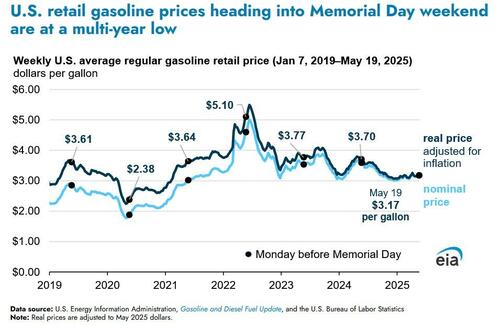
US Gasoline Prices Heading Into Memorial Day Weekend Are The Lowest Since COVID The retail price for regular-grade gasoline in the United States on May 19, the Monday before Memorial Day weekend, averaged $3.17 per gallon (gal), 11% (or 41 cents/gal) lower than the price a year ago. Thanks to the ongoing slide in oil prices, after adjusting for inflation (real terms) average U.S. retail gasoline prices going into Memorial Day weekend are 14% lower than last year, according to EIA calculations. They are in fact, lower than where they were coming into Memorial Day every year this decade except 2020, in the immediate aftermath of covid.Memorial Day weekend is one of the biggest travel weekends of the year, and many of those travelers will go by car. The American Automobile Association (AAA) expects 39.4 million people will travel by car over Memorial Day weekend this year, an increase of 3% compared with last year.Substantially lower crude oil prices, the main component of retail gasoline prices, have kept retail gasoline prices lower than usual going into spring. From May 1 to May 19, Brent crude oil prices averaged $64 per barrel (b), 20% less in real terms than in January and 26% less than in May 2024. Concerns about future economic growth, record-high U.S. crude oil production, and, more recently, announcements that OPEC+ will accelerate crude oil production increases have contributed to falling crude oil prices.Retail gasoline prices on the Monday before Memorial Day weekend are only 4% (or 13 cents/gal) higher than on the first Monday of January. Retail gasoline prices typically increase much more than that as gasoline demand increases going into the summer driving season and retailers are required to start selling more expensive summer-grade gasoline. Over the last 10 years and excluding 2020, retail gasoline prices increased 19% (or 49 cents/gal) on average from January to May.U.S. gasoline prices vary regionally, reflecting local supply and demand conditions, state fuel specifications, and state taxes. Retail gasoline prices are usually the highest on the West Coast because of:The region’s limited connections with other major refining centersTight local supply and demand conditionsHigher-than-average state taxes in several West Coast statesGasoline specifications for California that make gasoline more costly to manufactureOn May 19, West Coast prices averaged $4.29/gal, down 10% in real terms from this time last year.Gasoline prices on the Gulf Coast are usually the lowest of any U.S. region. Gulf Coast states are home to more than half of U.S. refining capacity, and more gasoline is produced than is consumed in the region. Gulf Coast states also have lower gasoline taxes than the national average. Gulf Coast prices on May 19 averaged $2.79/gal, down 13% from this time last year.On the East Coast, which has the most gasoline demand of the five regions, retail gasoline prices averaged $2.99/gal, down 17% from 2024.Prices are also down in the Midwest and the Rocky Mountains compared with last year. Midwest prices averaged $3.03/gal, down 15% from the previous year, and Rocky Mountains prices averaged $3.13/gal, down 12% from 2024 after adjusting for inflation. Tyler DurdenFri, 05/23/2025 - 22:10
SAN DIEGO, May 23, 2025 (GLOBE NEWSWIRE) -- Robbins LLP informs stockholders that a class action was filed on behalf of investors who purchased or otherwise acquired Red Cat Holdings, Inc. (NASDAQ:RCAT) securities between March 18, 2022 and January 15, 2025. Red Cat, together with its subsidiaries, provides various products, services, and solutions to the U.S. drone industry.For more information, submit a form, email attorney Aaron Dumas, Jr., or give us a call at (800) 350-6003.The Allegations: Robbins LLP is Investigating Allegations that Red Cat Holdings (RCAT) Misled Investors Regarding its Production CapacityAccording to the complaint, during the class period, defendants failed to disclose that: (i) the Salt Lake City Facility's production capacity, and defendants' progress in developing the same, was overstated; and (ii) the overall value of the SRR (U.S. Army's Short Range Reconnaissance Program of Record) Contract was overstated.The complaint alleges that ...Full story available on Benzinga.com
Apple CEO Tim Cook’s Bad Year Keeps Getting Worse WSJ
Justice Department reaches deal to allow Boeing to avoid prosecution over 737 Max crashes

Tech firms are using AI to analyze how their clients’ global supply chains are affected by U.S. President Donald Trump’s reciprocal tariffs. Salesforce developed an AI tariff agent that it says can “instantly process changes for all 20,000 product categories in the U.S. customs system.” Uncertainty from the U.S. tariff measures “presents AI’s moment to shine,” according to Zack Kass, a former OpenAI executive.Businesses are turning to artificial intelligence tools to help them navigate real-world turbulence in global trade.Several tech firms told CNBC say they’re deploying the nascent technology to visualize businesses’ global supply chains — from the materials that are used to form products, to where those goods are being shipped from — and understand how they’re affected by U.S. President Donald Trump’s reciprocal tariffs.Last week, Salesforce said it had developed a new import specialist AI agent that can “instantly process changes for all 20,000 product categories in the U.S. customs system and then take action on them” as needed, to help navigate changes to tariff systems.Engineers at the U.S. software giant used the Harmonized Tariff Schedule, a 4,400-page document of tariffs on goods imported to the U.S., to inform answers generated by the agent.“The sheer pace and complexity of global tariff changes make it nearly impossible for most businesses to keep up manually,” Eric Loeb, executive vice president of government affairs at Salesforce, told CNBC. “In the past, companies might have relied on small teams of in-house experts to keep pace.”Firms say that AI systems are enabling them to take decisions on adjustments to their global supply chains much faster.Andrew Bell, chief product officer of supply chain management software firm Kinaxis, said that manufacturers and distributors looking to inform their response to tariffs are using his firm’s machine learning technology to assess their products and the materials that go into them, as well as external signals like news articles and macroeconomic data.“With that information, we can start doing some of those simulations of, here is a particular part that is in your build material that has a significant tariff. If you switched to using this other part instead, what would the impact be overall?” Bell told CNBC.‘AI’s moment to shine’Trump’s tariffs list — which covers dozens of countries — has forced companies to rethink their supply chains and pricing, with the likes of Walmart and Nike already raising prices on some products. The U.S. imported about $3.3 trillion of goods in 2024, according to census data.Uncertainty from the U.S. tariff measures “actually probably presents AI’s moment to shine,” Zack Kass, a futurist and former head of OpenAI’s go-to-market strategy, told CNBC’s Silvia Amaro at the Ambrosetti Forum in Italy last month. Microsoft employees say emails with ‘Gaza,’ ‘Palestine,’ or ‘genocide’ won’t sendOpenAI CFO says AI hardware will boost ChatGPT subscriptions in ‘new era of computing’Founders of Amazon’s PillPack launch health-care marketplace startup General MedicineHinge Health shares climb 17% in NYSE debut“If you wonder how hard things could get without AI vis-a-vis automation, and what would happen in a world where you can’t just employ a bunch of people overnight, AI presents this alternative proposal,” he added.Nagendra Bandaru, managing partner and global head of technology services at Indian IT giant Wipro, said clients are using the company’s agentic AI solutions “to pivot supplier strategies, adjust trade lanes, and manage duty exposure dynamically as policy landscapes evolve.”Wipro says it uses a range of AI systems — both proprietary and supplied by third parties — from large language models to traditional machine learning and computer vision techniques to inspect physical assets in cross-border transit.‘Not a silver bullet’While it preferred to keep company names confidential, Wipro said that firms using its AI products to navigate Trump’s tariffs range from a Fortune 500 electronics manufacturer with factories in Asia to an automotive parts supplier exporting to Europe and North America.“AI is a powerful enabler — but not a silver bullet,” Bandaru told CNBC. “It doesn’t replace trade policy strategy, it enhances it by transforming global trade from a reactive challenge into a proactive, data-driven advantage.”AI was already a key investment priority for global firms prior to Trump’s sweeping tariff announcements on April. Nearly three-quarters of business leaders ranked AI and generative AI in their top three technologies for investment in 2025, according to a report by Capgemini published in January.“There are a number of ways AI can assist companies dealing with the tariffs and resulting uncertainty. But any AI solution’s success will be predicated on the quality of the data it has access to,” Ajay Agarwal, partner at Bain Capital Ventures, told CNBC.The venture capitalist said that one of his portfolio companies, FourKites, uses supply chain network data with AI to help firms understand the logistics impacts of adjusting suppliers due to tariffs.“They are working with a number of Fortune 500 companies to leverage their agents for freight and ocean to provide this level of visibility and intelligence,” Agarwal said.“Switching suppliers may reduce tariffs costs, but might increase lead times and transportation costs,” he added. “In addition, the volatility of the tariffs [has] severely impacted the rates and capacity available in both the ocean and the domestic freight networks.”WATCH: Former OpenAI exec says tariffs ‘present AI’s moment to shine’
Trump threatens tariffs on Apple, European Union in trade war escalation The Washington PostTrump threatens steep tariffs on European Union goods, targets iPhones; live updates Central New Jersey NewsEU calls for US trade deal based on 'respect' after Trump's tariff threats BBCTrump threatens 50% tariffs on EU and 25% penalties on smart phones as his trade war intensifies AP NewsStocks Slide on Deficit and Tariff Concerns The New York Times
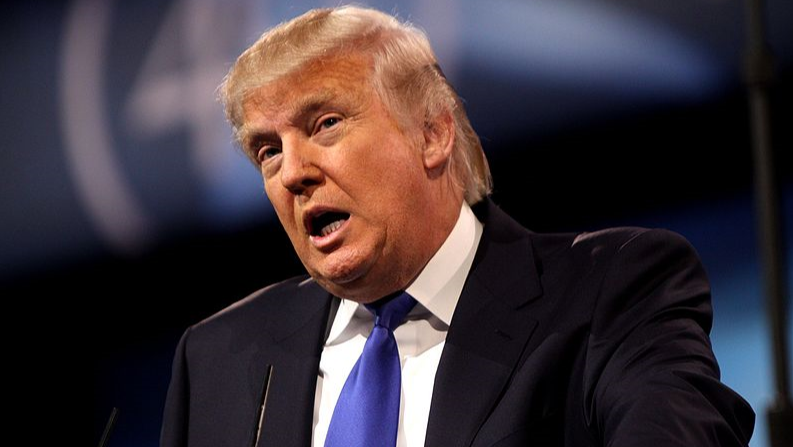
The rally comes after Trump dropped another surprise trade bombshell by recommending 50% tariffs on the European Union.
Kura Oncology said one-quarter of patients with certain forms of advanced acute myeloid leukemia went into complete remission after receiving its targeted therapy. In 112 patients from both its Phase 1b and Phase 2 studies ...

It's not every day you can score a cordless stick vacuum for $320 off. Take advantage of this popular deal while you still can.

Vistra (NYSE:VST) has outperformed the market over the past 5 years by 37.19% on an annualized basis producing an average annual return of 51.26%. Currently, Vistra has a market capitalization of $52.99 billion. Buying $1000 In VST: If an ...Full story available on Benzinga.com

Tim Hodgson also pledged to work quickly with provinces and territories, industry and Indigenous partners to diversify trade
Nation needs oil and gas infrastructure to boost energy security in Eastern Canada, says Hodgson The Globe and Mail'Energy is Canada's power': New federal energy minister touts past Alberta oilpatch ties CBCFederal energy minister to speak at Calgary Chamber of Commerce CTV NewsCarney's Energy Chief Pushes Oil Sands to Build Carbon-Capture Systems Financial PostOn a visit to Calgary, energy minister says he'll be a 'voice for Alberta' National Post
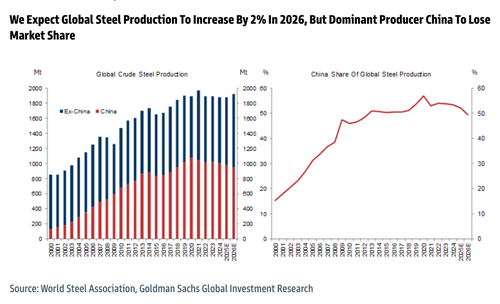
China's Two-Decade Global Steel Expansion "Has Now Ended" In Goldman's latest global steel outlook, analysts Aurelia Waltham, Eoin Dinsmore, and others highlight a key inflection point: China's share of global steel production has declined for the first time in over two decades, reversing a multi-decade expansion period. "After more than two decades of China increasing its share of global steel production, we believe this structural trend has now come to an end as China's domestic demand continues to falter and barriers to steel exports intensify," Waltham and her team wrote in a note published on Friday morning.The analysts noted that their global steel supply and demand model forecasted a 3% and 4% year-over-year increase in ex-China steel demand for 2025 and 2026, respectively. As Chinese steel exports are expected to decline, ex-China crude steel production is projected to rise by 3% in 2025 and 8% in 2026. "While we are bearish on US and European steel prices on the three-to-six month horizon, we expect a re-acceleration in demand growth and lower Chinese steel exports to provide price upside in 2026," Waltham said. They outlined the biggest risk to their forecast of China losing global market share:We see the biggest risk to our call that China will start to lose market share of global steel production to the rest of the world over the next two years being indirect[1] Chinese steel exports continuing to climb, pushing down rest of world apparent steel demand. This would likely see China steel demand from the manufacturing sector exceeding our current expectations, preventing a decline in Chinese steel output and apparent domestic demand, while at the same time meaning rest of world steel production growth would fall below end use consumption growth. However, this would be at odds with China's policy to reduce steel output.Following a 25-year expansion that saw China increase its share of global steel production from approximately 15% in 2000 to about 55% by 2020, analysts now forecast a decline to about 50% by 2026.China's steel production for 2025 already peaked in March. Key takeaways about China's declining influence in global steel markets: Peak Reached: China's steel production likely peaked in March 2025 and is expected to decline by 2–3% YoY through 2026.Domestic demand slowdown: A continued decline in construction activity, especially new housing starts (forecasted to drop 24% in 2025), will more than offset gains from manufacturing (e.g., autos and appliances).Export headwinds: Chinese finished and semi-finished steel exports are forecast to drop 33% YoY in 2026, from 12% to under 8% of ex-China steel consumption.Policy risk: If exports or output stay elevated, the Chinese government may impose mandated production cuts (likely via emissions controls) in Q4 2025 to meet policy targets.China's economy is still a mess. Property sector will continue to weigh on steel demand. However, the analysts view a rebound in ex-China steel:Ex-China growth: Production outside China is expected to rise 3% in 2025 and 8% in 2026, helped by recovering demand and lower competition from Chinese exports. Regional demand: Demand in the U.S., EU, and India will gradually improve. Apparent demand outside China is forecast to rise 3–4% annually into 2026.Global Steel Price Outlook: Near-term weakness: U.S. and European prices face further downside in the next 3–6 months due to lackluster demand and high inventories.2026 upside: Prices are forecast to rise in 2026 as Chinese exports fall and global demand picks up, particularly in Asia and the EU. Anti-dumping measures and trade friction will help contain Chinese supply abroad.European Steel Price ForcastUS Hot Rolled Coil Price ForecastThe long-standing concern over China flooding global markets with steel may finally be easing—a shift that could pave the way for Western producers to ramp up output. We anticipate this trend will be evident in the U.S amid President Trump's 'America First' era. Tyler DurdenFri, 05/23/2025 - 10:45

Can OPEC+ Reclaim Lost Market Share from Shale? - As OPEC+ members are expected to gather for their monthly ministerial meeting on June 1, another expedited production hike of 411,000 b/d is on the table, in line with Saudi Arabia’s stated intent to slash voluntary output cuts. - WTI is currently trading around $60 per barrel, which is lower than the $61-62 per barrel breakeven cost for a new well in the Permian basin, an almost exclusive source of US crude supply increments. - OPEC+ is seeking to regain market share lost to shale producers...
Trump threatens 50% tariffs on EU and 25% penalties on Apple as his trade war intensifies

President Donald Trump announced Friday that the Apple technology company faces a 25% tariff on iPhones unless the devices are manufactured in the United States.

President Donald Trump announced Friday that the Apple technology company faces a 25% tariff on iPhones unless the devices are manufactured in the United States.

On Thursday, the Dow Jones finished nearly flat at 41,859.09. The S&P 500 dipped slightly, losing 0.04% to close at 5,842.01. Meanwhile, the Nasdaq edged higher, gaining 0.3% to end the day at 18,925.73.These are the top stocks that gained the attention of retail traders and investors throughout the day:GameStop Corp. (NYSE:GME)GameStop shares rose 10.02%, closing at $30.86. The stock hit an intraday high of $31 and a low of $28.49, with a 52-week range of $48 to $17.70. The surge occurred despite no specific company news, potentially fueled by retail enthusiasm and momentum in the crypto market, as Bitcoin (CRYPTO: BTC) reached a record high. Earlier this year, speculation about GameStop’s involvement with Bitcoin was sparked by a photo of CEO Ryan Cohen with Strategy Chairman Michael Saylor.IonQ Inc. (NYSE:IONQ)IonQ’s stock soared 36.52% to close at $45.79, ...Full story available on Benzinga.com
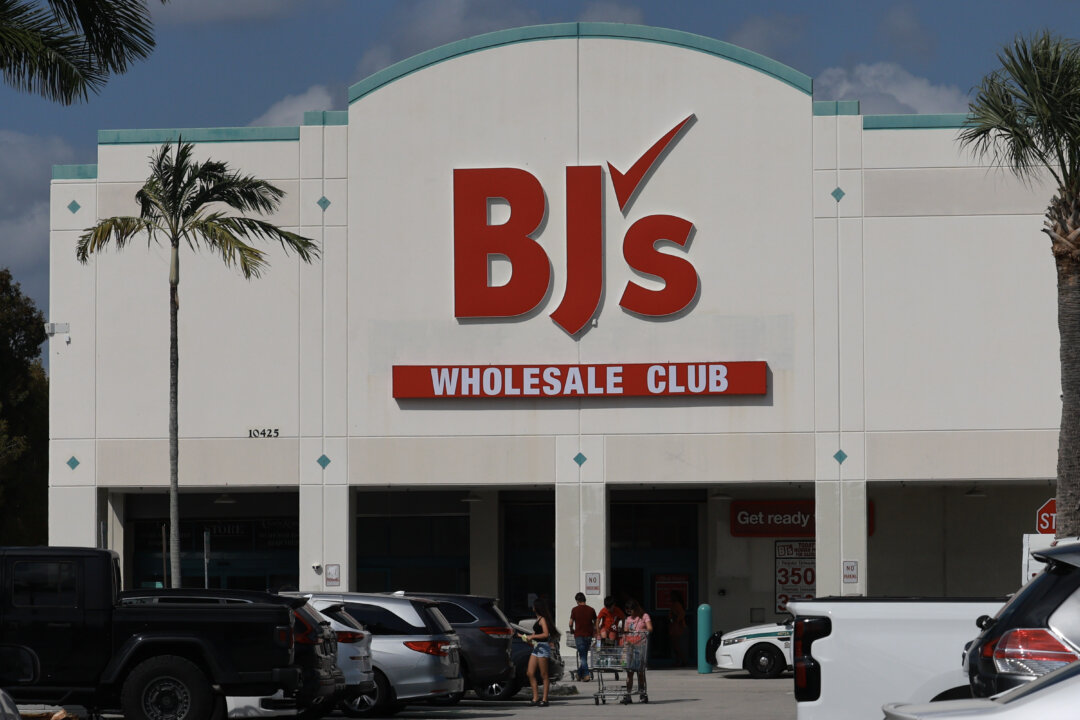
The company, on track to open 25-30 new clubs over the next two years, benefits from the growing popularity of clubs and superstores.

Phase 1/2 first-in-human clinical study planned this yearSHANGHAI and SAN DIEGO, May 22, 2025 /PRNewswire/ -- Duality Biotherapeutics ("DualityBio", HKEX:09606) partner Avenzo Therapeutics, Inc. ("Avenzo"), a clinical-stage biotechnology company developing next-generation oncology therapies, today announced clearance by the U.S. Food and Drug Administration (FDA) of its investigational new drug application (IND) for AVZO-1418/DB-1418, a potential best-in-class, novel EGFR/HER3 bispecific antibody-drug conjugate (ADC). ...Full story available on Benzinga.com

The bullish energy of the yacht party, complete with open bars, teppanyaki grills and Vegas-style feather headdress-wearing belly dancers, matched the unbridled optimism currently pulsing through the global crypto community. The gathering was hosted during Dubai’s TOKEN2049 conference, which drew more than 10,000 crypto enthusiasts and investors from all over the world. “I think Dubai and Abu Dhabi both really embrace crypto, kind of at every level – and they’re leading the way in regulation,” DogeOS CEO Jordan Jefferson told CNBC.Natasha Turak | CNBCA yacht party hosted by DogeOS during the Token2049 Dubai conference week. Dubai, United Arab Emirates, May 1, 2025DUBAI, United Arab Emirates — On a humid Dubai night in early May, I joined guests gathered on the five-storey, 220-foot long Lotus megayacht to celebrate the culmination of TOKEN2049, a major crypto conference held in the glitzy desert emirate I call home. The party was hosted by DogeOS, the app developer behind the blockchain for Dogecoin, the shiba inu-faced meme coin that saw a rip-roaring rally in 2021 and briefly turned a few bullish buyers into millionaires. It’s part of a long string of high-profile UAE-based industry events and feels like a prescient symbol of the ever-growing exuberance around cryptocurrencies in the Middle East — and globally — right now.The attendees around me spanned a colorful mix; crypto investors and startup founders, programmers, influencers – and those who, after half an hour of conversation, still wouldn’t really explain what they do. “You’ve probably heard of me. Elon retweets me a lot,” one guest said as he introduced himself. I later heard him say the exact same line to three other people. One pair of female attendees promoted their Dubai-based startup that designs business plans for corporates and entrepreneurs “by calculating their astrology and birth chart numerology.” They told me that “millionaires often look down on this science ... but billionaires love it.” Natasha Turak | CNBCBartenders serve guests aboard the 220-foot long Lotus megayacht in the Dubai Marina, May 1, 2025The guests hailed from all over the world, sharing a common passion for the future of decentralized digital currency and the revolutionizing of finance. A microcosm of Dubai itself, the boat was a melting pot of nationalities and characters. One American passenger wearing a cowboy hat and a ninja turtle backpack hawked a meme token featuring a shiba inu in a cowboy hat called $WIT coin, standing for “what in tarnation.” Between shots of tequila he discussed collaboration with crypto enthusiasts who’d flown in from China. Natasha Turak | CNBCAn organizer of the DogeOS yacht party welcomes guests aboard the Lotus in Dubai, United Arab Emirates, on May 1, 2025The guestlist also featured Olaf Carlson-Wee, the bleach-blonde original “bubble boy” of crypto, who was Coinbase’s first employee and later founded Polychain Capital, one of the world’s largest crypto hedge funds. Carlson-Wee, whose net worth is estimated to be in the hundreds of millions, said he is frequently flown in from Los Angeles to work with the UAE government. The Trump crypto train comes to DubaiThe bullish energy of the yacht party — complete with open bars, teppanyaki grills and Vegas-style belly dancers wearing feather headdresses — matched the unbridled optimism currently pulsing through the global crypto community.Posts of “WE’RE SO BACK” have abounded on social media in the months following U.S. President Donald Trump’s return to the White House and his pledge to make America the “crypto capital of the world.” His son Eric Trump, executive vice president of the Trump Organization and board member of Trump-family-owned crypto platform World Liberty Financial, was a keynote speaker at Dubai’s Token2049. He was joined by Zack Witkoff, World Liberty Financial’s co-founder, and the son of Steve Witkoff, the Trump administration’s Middle East envoy.“Smart people, low taxes ... and the willingness to actually look forward and realize that the modern financial system is broken” is part of what makes the UAE so attractive for cryptocurrency enthusiasts like himself, the younger Trump told CNBC during the conference. Speaking onstage at the event on May 1, Eric Trump also announced that the Trump family’s World Liberty Financial would provide the stablecoins for Abu Dhabi state-backed investment firm MGX’s mammoth $2 billion investment into Binance, the world’s largest crypto exchange.“We thank MGX and Binance for their trust in us,” Zack Witkoff told the audience. “It’s only the beginning.”‘Everybody was here’Jordan Jefferson, CEO of MyDoge, the team behind DogeOS, moved from Canada to Dubai in 2022 in search of a more crypto-friendly regulatory environment. At a time when North America was cracking down on the industry, he said the UAE was “embracing it and leading regulation.”“I came out here because it was at the forefront of the industry. And everybody was here – the energy was amazing,” he told CNBC at the yacht party. Jefferson and his colleagues had donned shirts emblazoned with a picture of the Doge shiba inu wearing an Emirati headdress, the kandura, which they dubbed “Habibi Doge.”Natasha Turak | CNBCPart of the Dubai skyline as seen from the DogeOS yacht party on May 1, 2025, in the United Arab EmiratesMajor crypto exchanges like Binance, Crypto.com, OKX, Bybit, and Kraken have received approvals or provisional licenses to operate in the UAE, with many choosing to open offices and regional headquarters there. The Gulf country has also established a “UAE blockchain strategy,” hosts several major crypto events annually and offers visas to remote workers and entrepreneurs along with streamlined procedures for starting businesses.“They’re leading the way in regulation, definitely trying to be one of the premier jurisdictions where everything is fully regulated,” Jefferson said of Dubai and Abu Dhabi. Dubai in 2022 established the Virtual Assets Regulatory Authority, or VARA — the world’s first independent crypto regulator — which oversees virtual asset activities in the emirate and provides licensing and supervision to crypto businesses.Abu Dhabi Global Market in the UAE capital also updated its digital asset framework in 2023, providing a clearer licensing and regulatory environment for crypto exchanges, custodians, and other virtual asset service providers. Scandals and regulationDespite enjoying a rally in prices in recent years, the crypto industry has faced numerous scandals and controversies over time, from the collapse of FTX to the jailing of the crypto exchange’s founder Sam Bankman-Fried and former Binance CEO Changpeng Zhao.Before declaring bankruptcy in November of 2022, FTX had established its regional headquarters in Dubai and was one of the early firms issued a license by VARA in March of that year, as the emirate worked to entice crypto businesses.Zhao, a Dubai resident, has since been released from prison after serving a four-month term on charges of money laundering. He was granted UAE citizenship, though the timing of his Emirati naturalization has not been publicly disclosed.In February, Dubai-based digital currency exchange Bybit revealed it was the victim of a hack that saw cybercriminals make off with $1.5 billion worth of tokens — the largest-ever crypto heist in history.The UAE has learned from its experiences, Token2049 attendees told CNBC.“It’s not easy” to implement robust regulation, Jefferson of DogeOS said. “It’s easy to say, ‘hey, you can do anything here’. It’s harder to do a regulatory framework where other countries around the world will accept it and realize that if you’re a company built here [in the UAE] and under these regulations, it’s legit. So I think that’s probably the most important part.”Natasha Turak | CNBCWalkway of the Dubai Marina, May 1, 2025Several crypto investors described due diligence work in the UAE as having become more sophisticated, but say regulation is at a level that still makes it friendlier to the industry than the U.S. or Europe.“People really feel much safer building crypto companies in Dubai versus in the United States — the U.S. is very over-regulated,” said William Athanas, Miami-based founder of xMarkets, a new prediction market launching on DogeOS. “And that’s something they’re working on – Trump and Elon [Musk] suggested that they would like to remove 10 regulations for every one they add. But we just haven’t really seen that yet.”On the night of the yacht party, May 1, Bitcoin was trading at $94,808. At the time of publishing, it is trading at $110,538.Danni Liu, a Chinese national currently based in Sweden who co-founded LIFE Protocol — a platform that uses the blockchain to enable community-driven scientific research — was in Dubai for the first time to attend the crypto conference and DogeOS boat party.“Before I got here, it felt like the market sentiment was not that high, people were less willing to take risks,” Liu said. “But I came to Dubai, and I see that people are still dancing. I was surprised. The show is going on.”— CNBC’s Ryan Browne contributed to this report.
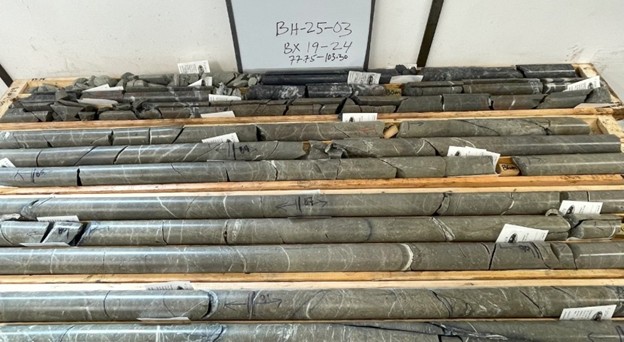
Antimony Resources (CSE: ATMY) reported that James Atkinson, CEO of Antimony Resources, visited the drilling site at the Bald Hill project in New [...]The post Antimony Resources reports massive antimony bearing stibnite mineralization at Bald Hill appeared first on Canadian Mining Journal.
New York, May 22, 2025 /PRNewswire/ -- ProCap Acquisition Corp (the "Company") announced today the closing of its upsized initial public offering of 25,000,000 units, which includes 3,000,000 units issued pursuant to the partial exercise by the underwriters of their over-allotment option....

At Upper Bound conference, Turing Award winner says human-like AI is “inevitable.”The post Richard Sutton warns against “centralized control” of AI regulation based on fear first appeared on BetaKit.

New car registrations data from JATO Dynamics shows that BYD’s Europe volumes rose 359% in April from last year. BYD’s success in the EU comes despite the economic bloc’s imposition of punitive tariffs on battery electric vehicles made in China last October.BYD sold more pure battery electric vehicles in Europe than Tesla for the first time ever last month — a “watershed moment” for the region’s car market, according to a report from JATO Dynamics. New car registrations data from the automotive intelligence firm shows that BYD’s Europe volumes rose 359% in April from last year as the company continues its global expansion efforts.Over the same period, Tesla reported yet another monthly drop, with total volumes down 49%, JATO said. That follows protests against CEO Elon Musk and the company in the region. According to Felipe Munoz, global automotive analyst at JATO, though the difference between the two brands’ monthly sales totals is relatively small, the implications of BYD beating out Tesla “are enormous.” “This is a watershed moment for Europe’s car market, particularly when you consider that Tesla has led the European BEV market for years, while BYD only officially began operations beyond Norway and the Netherlands in late 2022,” Munoz said. JATO added that BYD is also beating well established European car brands across the region, outselling Fiat and Seat in France, for example.That growth comes even before production begins at its new plant in Hungary, which is expected to become the center of European production operations. Tariff shrugBYD’s success in the EU comes despite the economic bloc’s imposition of punitive tariffs on battery EVs made in China last October. It attributed the move to unfair trade practices.The punitive tariffs appeared to be favorable to Tesla, assigning its made-in-China vehicles a 7.8% duty compared with BYD’s 17%. Other Chinese EV makers were given tariffs as high as about 35%. The EU also has a standard 10% car import duty.JATO’s report said that while tariffs had an initial impact on the sales of Chinese automakers, the companies have mitigated it by expanding and diversifying their European line-ups with the introduction of plug-in hybrids.“China is not only the world leader in BEVs; its automakers are global leaders in plug-in hybrid vehicles too,” Munoz said. Battery EVs run entirely on electricity, while hybrid vehicles combine an electric battery with an internal combustion engine. Hybrid vehicles have not yet been targeted by EU tariffs.Meanwhile, there has been growing demand in the region’s EV segment, with JATO data showing that registrations of battery EVs and plug-in hybrid electric vehicles are up by 28% and 31%, respectively, despite declines among internal combustion engine vehicles. Registrations of all electric vehicles made by Chinese automakers in April rose by 59% year on year, reaching almost 15,300 units in April, the report added.Ahead of the EU’s tariff decision last year, Rhodium had predicted that tariffs would need to be as high as 55% for the European market to be unattractive for Chinese EV exporters.In March, it was revealed that Tesla, which only sells pure battery vehicles, fell behind BYD in total annual sales. Tesla’s shares have fallen over 10% over the same period amid blowback from Musk’s involvement with the administration of U.S. President Donald Trump. The CEO recently committed to leading Tesla for the next five years. BYD shares were up 3.9% in Hong Kong trading on Friday and have surged about 78% year to date.
America's most powerful banker Jamie Dimon stuns with warning US faces something worse than recession Daily MailJamie Dimon warns that stagflation, an economic nightmare scenario, is still a risk CNNJPMorgan CEO Jamie Dimon says markets are too complacent on tariffs, expects S&P 500 earnings growth to collapse CNBCNew US tax bill will 'stabilise things' but increase deficit, JPMorgan's Dimon says ReutersJamie Dimon Says He Never Bought Into American Exceptionalism. He Blames Regulation And 'Stupid Bureaucracy' For Slowing The Country Down Yahoo Finance
Asian shares make cautious gains as beaten-down Treasuries find support ReutersAsian Equities Advance While Treasuries Hold Gains: Markets Wrap BloombergAsia-Pacific markets mostly climb as investors assess slew of economic data CNBCAsian stocks rise and oil prices slip after Treasury yields ease Yahoo FinanceAsian markets shudder on US national debt fears Asia Times

Skeena Gold and Silver has chosen Sandvik Mining to supply four Leopard DI650i down-the-hole (DTH) drill rigs for early works construction activities [...]The post Skeena advances Eskay Creek with acquisition of Leopard DI650i drill rigs from Sandvik appeared first on Canadian Mining Journal.
The Treasury unveils its plan to kill the penny CNNExclusive | Treasury Sounds Death Knell for Penny Production WSJU.S. Treasury Department to end production of pennies by early 2026 AxiosTreasury Department set to phase out the penny CBS NewsChange is coming for the penny as Treasury Department makes final order of the coin USA Today

Learn the core principles of this misunderstood strategy — and how to use it to build resilient business plans.The post How to do scenario planning the right way appeared first on MarTech.

BlackBerry Limited (NYSE:BB) (TSX:BB) announced on Thursday that Direct ChassisLink, Inc. (DCLI) will deploy its asset-tracking technology across 100,000 domestic chassis as part of a fleet-wide digital upgrade.The expansion of BlackBerry Radar into DCLI’s DCL53 fleet marks a significant step in their five-year partnership. The move aims to enhance operational efficiency, asset visibility, and customer value across the intermodal freight network.DCLI CEO Lee Newitt called the rollout a reflection ...Full story available on Benzinga.com

Saw will trim along high-voltage transmission lines in 19 counties through end of yearFAIRMONT, W.Va., May 22, 2025 /PRNewswire/ -- FirstEnergy Corp. (NYSE:FE) subsidiary Mon Power is using a helicopter equipped with an aerial saw to trim trees and ensure proper clearance around more than 230 miles of high-voltage power lines in its West Virginia service area. The work is expected to be completed by the end of this year. The aerial saw will be trimming along transmission lines located in Berkeley, Doddridge, Hampshire, Harrison, Jefferson, Mineral, Monongalia, Morgan, Nicholas, Full story available on Benzinga.com
Stocks drift as worries about the U.S. government’s soaring debt continue to weigh BNN BloombergNorth American stock markets struggle for direction after Trump’s tax bill narrowly clears House test The Globe and MailTrump’s Next Hurdle: The Bond Market Hates His ‘Beautiful Bill’ Bloomberg.comPosthaste: Trouble is brewing in the world's largest bond market — and that's not good for anyone Financial PostDow Jones Falls On Trump Tax Bill; AI Player Snowflake Soars On Earnings Investor's Business Daily
Antwerp, May 22, 2025 (GLOBE NEWSWIRE) -- CMB.TECH NV (NYSE: CMBT & Euronext: CMBT) (“CMBT”, “CMB.TECH” or “the Company”) announces that today the General Meeting of Shareholders has approved the annual accounts for the year ended 31 December 2024. All other resolutions proposed by CMB.TECH’s Supervisory Board have also been approved.
Philip Morris Intl (NYSE:PM) has outperformed the market over the past 5 years by 4.94% on an annualized basis producing an average annual return of 19.22%. Currently, Philip Morris Intl has a market capitalization of $270.40 billion. Buying $1000 In PM: ...Full story available on Benzinga.com

BRANSON, Mo., May 22, 2025 /PRNewswire/ -- The landscape of affordable housing is set to transform with the completion of Elevate Community, an innovative tiny home development aimed at providing sustainable and supportive living for individuals facing poverty in Branson, Missouri. After years of planning and months of site preparation, the first tiny homes have arrived on property. On Full story available on Benzinga.com
_6.jpg?itok=DYozEJIA)
90% Of US Companies Plan To Reshore Amid Tariffs, Allianz Survey Finds Authored by Tom Ozimek via The Epoch Times,Nine out of 10 U.S. companies say they expect to bring some or all of their production or sourcing back home in response to new tariffs imposed under President Donald Trump’s trade policy, according to the latest Allianz Trade Global Survey.The survey, published on May 20, hints at an acceleration in reshoring efforts as U.S. firms adapt to the tariffs, as Trump pursues a global trade reset to boost domestic manufacturing and correct what he says are decades of unfair practices by other countries that put the United States at a disadvantage.Allianz researchers found that roughly 90 percent of U.S. companies plan to reshore or switch to domestic suppliers in the wake of the April 2 global tariff announcement. U.S. firms ranked among the most likely in the world to pursue domestic sourcing, alongside companies in Italy and Spain.“That said, it may be easier said than done,” the Allianz report’s authors wrote. “When asked about the top hurdles standing in the way of reshoring, supplier-related issues and no longer higher costs was the top choice compared to last year. Labor-related issues round up the top three hurdles.”More than three-quarters of companies pointed to supply chain structure—their complexity, concentration, or competition—as a key threat to offshore production, with the high share of declared reshoring intentions suggesting that firms see clear benefits to simpler, domestic supply chains in the face of Trump’s trade policies.At the same time, a majority of U.S. firms say they plan to raise prices to offset the effects of tariffs. Fifty-four percent of U.S. companies said they would increase prices following the April tariff hike, up from 46 percent beforehand.“In sharp contrast to the optimism seen before the April 2 tariff wave, this year’s Global Survey confirms what we’re observing across markets: uncertainty and fragmentation are becoming structural,” Aylin Somersan Coqui, CEO of Allianz Trade, said in a statement, adding that companies with highly concentrated supply chains and export markets have the highest risk exposure to the administration’s tariff policies.Since taking office in January, Trump has sought to reshape global trade to protect American workers and encourage domestic manufacturing. He has imposed a baseline 10 percent tariff on nearly all imports, with steeper rates for certain countries, including China, where tariffs remain at 30 percent after a temporary 90-day reprieve from a 145 percent levy.Trump administration officials argue that, over time, foreign exporters will absorb most of the tariff burden once markets adjust. The Allianz survey paints a different picture—at least for now—with only 15 percent of American companies saying they intend to absorb the higher expenses themselves, well below the 22 percent global average.While supporters see Trump’s tariffs as a long overdue reckoning, critics say the president’s trade policies risk economic turbulence and higher consumer prices. Some companies—such as Walmart—have said they'll be forced to pass on some tariff-related costs to consumers, while others—such as Home Depot—have said they won’t, with the Allianz survey pointing to a range of tariff mitigation strategies besides price hikes.Businesses are rerouting shipments to avoid high-duty ports, sourcing from lower-tariff countries, frontloading imports to beat further hikes, and renegotiating contracts to push customs and currency risk onto suppliers and clients.“Companies are not standing still,” Coqui said. “Having navigated successive shocks since 2020, they are once again adapting, diversifying partners, reconfiguring logistics, and embedding risk-sharing across the value chain. In today’s trade environment, success depends increasingly on adaptability.”Tariff revenues, meanwhile, are surging. The U.S. Treasury reported a record $16.3 billion in customs duties collected in April—more than double the amount recorded a year earlier. The increase helped boost the monthly federal budget surplus to $258 billion, a 23 percent rise from April 2024.Economists warn that the fiscal gains may be offset by reduced trade volumes over time. The Tax Foundation estimates that a 10 percent universal tariff could raise $2.2 trillion over a decade on a static basis, but only $1.7 trillion after accounting for the expected decline in imports and broader macroeconomic effects.“The relative price increase in imports will cause a drop in imports as people substitute away from higher-priced tariffed goods toward non-tariffed alternatives,” the group wrote in an April report.A recent poll of Epoch Times readers shows strong support for Trump’s trade reset, with the majority seeing the tariffs as a fair and necessary step to protect U.S. industry and bolster the nation’s long-term economic independence. Tyler DurdenThu, 05/22/2025 - 10:45

Hims & Hers Health, Inc (NYSE:HIMS) is facing heavy selling pressure Thursday morning as the U.S. Food and Drug Administration’s (FDA) ban of compounded drugs with semaglutide takes effect.What To Know: Semaglutide, the active ingredient in popular weight-loss drugs like Ozempic, can no longer be offered in compounded drugs by outsourcing facilities as the agency’s grace period comes to a close on Thursday. Hims & Hers Health shares are under pressure as the firm sells cheaper versions of popular weight-loss drugs, known as compounded drugs. Regulators allow compounded versions of drugs to enter the market to meet demand when there is a shortage.The FDA announced earlier this year that semaglutide had been removed from ...Full story available on Benzinga.com
House Republicans strike a bigger blow against Democrats’ clean energy tax credits PoliticoGOP Tax Bill Revisions End Clean Energy Credits Years Earlier BloombergThe jobs and tax credits that could disappear if the ‘big, beautiful’ House GOP bill passes CNNWhat happens if the Inflation Reduction Act goes away? The EconomistIn Trump’s war on clean energy, China (and everyone else) wins politico.eu
Greenland on Wednesday handed a 30-year mining permit to a Danish-French mining group aiming to extract a moon-like rock that could offer a climate-friendly alternative in aluminium production.The Arctic island rich in minerals, oil and natural gas, and long seen as a potential resource frontier, has drawn international attention since US President Donald Trump expressed an interest in purchasing it earlier this year.
Bitcoin continues rally to surpass $110K for the first time CointelegraphBitcoin hits new record high above $111,000 as rally marches on CNBCBitcoin Price Surges Into Uncharted Territory. The Next Catalysts for the Crypto. Barron'sBitcoin trims gains after surging to new record above $109,500 Yahoo FinanceBitcoin Hits All-Time High Before Crashing. Ethereum and Dogecoin Are Along for the Ride Down. Nasdaq

The proposal has widespread support from the public, lawmakers in both parties and employers who believe such a law will bring relief to the working class. But many critics say that it would come with an enormous cost to the government while doing little to help the workers who need it most.

The trials are determining the amount of economic damages to be paid out to individuals after the wildfires that killed five and destroyed thousands of homes.

The KGB Spy Who Predicted Our Future Authored by Adam Sharp via DailyReckoning.com,My dear friends, I think you are in very big trouble. Whether you believe it or not, YOU ARE AT WAR. And you may lose this war very soon together with all your affluence and freedoms unless you start defending yourselves.–Yuri Bezmenov, 1984In 1970, a Soviet KGB agent named Yuri Bezmenov defected to the West. His story is fascinating. Yuri shared key details on how USSR propaganda and subversion worked.But first we need to discover why Yuri came over to the West...Since the 1960s, Yuri had been stationed in India. His cover assignment was as a journalist for the Novosti Press Agency.But his real job as a KGB agent was to influence policymakers, academics, and journalists. Yuri’s mission was to infect these targets with Marxist-Leninist ideology.He planted stories about how benevolent and fair the USSR was. He charmed diplomats and politicians with vodka (and less tasteful means). He planted stories to discredit the United States.He built relationships with influential Indians with a goal of shaping the narrative around the Soviet Union. He worked with students, recruiting future Indian leaders to study in Moscow and Saint Petersburg.His job was to corrupt both individuals and institutions.Eventually Yuri became disillusioned with his work. He realized that his efforts were actively harming the Indian people, whom he had become quite attached to.So he decided to defect to the West. He disguised himself as an American hippie, and joined one of the wandering groups of backpackers which frequented India at the time.Yuri slipped his Soviet handlers and made his way to the American embassy. They granted him asylum, and he was debriefed by the CIA and FBI.Lessons in Ideological SubversionOnce in North America, Yuri Bezmenov changed his name to Tomas Schuman and worked as a producer for the Canadian Broadcasting Company (CGC). Ironically, part of his job was now to target Russian-speaking countries with Western views.Yuri wrote books and lectured all over North America, warning that if the United States didn’t guard its values closely, they would be overwhelmed by the same type of social warfare he used in India.Bezmenov described this process as “ideological subversion”. He claimed that 85% of the KGB counterintelligence budget was used to subvert countries. Less than 15% of KGB spending was on the cloak-and-dagger stuff we see in movies.The USSR ran the same playbook in countless countries, and Yuri warned Americans that we were now the primary target.He explained that ideological subversion generally has 4 stages.Demoralization (15-20 year process) – begin to undermine a society’s values, religion, and institutions.Destabilization (2-5 years) – encourage political polarization, unrest, inflation.Crisis (sudden but with lasting effects) – enacting change by taking advantage of a major destabilizing event such as war or economic crisis.Normalization (indefinite) – The now authoritarian and demoralized society becomes normal to citizens, and they barely notice its negative aspects.Yuri said that it takes 15-20 years to demoralize a nation because that’s how long it takes to propagandize one generation with socialist ideals.Bezmenov also said that once someone is subverted, it is extremely difficult to reverse the process. You can show them all the factual information you want, but it won’t change their views. They have become completely demoralized.I would argue that America’s crisis stage was 9/11. It was a war combined with an economic collapse. Interestingly, this date also coincides with America’s declining religiosity. In 2000, 68% of Americans reported belonging to a church, synagogue, temple, or mosque. Today it’s just 45%.Source: GallupAmericans of all religions have been losing faith. Yuri predicted this. Disrupting a country’s religious values is a key part of the subversion playbook. However, we’re beginning to see signs of a religious reawakening. Many of my kids’ friends have actually encouraged their parents to join a church, which is a positive sign.If you can’t guess, we are still in the midst of the normalization stage. However, Americans do finally appear to be waking up.The only thing that will wake fully demoralized people from their slumber is a “kick in the balls” as Yuri said. In other words, conditions have to get bad before the brainwashed population wakes up. We’re reaching that stage now and I suspect we’ll hit the tipping point over the next decade.Set in Motion Long AgoTo be clear, modern Russia is not actively subverting America. This plan was set in motion many decades ago during the peak of the cold war with the USSR.Subversion is a “set it and forget it” type of operation. Once you influence one generation, the effect is self-perpetuating (up to a point).It’s a disturbingly brilliant form of warfare. Silent, effective, and cheap.Fortunately, there is a way out of demoralization. Yuri encouraged Americans to vote conservative, and basically said the only way out is through strong right-wing leaders. We have that in Donald Trump, and his return to the Presidency is a good sign for the country.The left tried everything to prevent the re-election of Donald J. Trump. Fake criminal charges, lawsuits, slander, and more. Yet Americans saw through the lies. This is encouraging.Additionally, young Americans are increasingly conservative. The old demoralized political left is withering away. Their appeal amongst young voters has plummeted, and the DNC is rudderless.Our country will get out of this demoralized phase in time. We’ve already made good progress over the past decade and this should continue.For those who wish to learn more, here are my favorite interviews, books, and lectures featuring Yuri Bezmenov:Socialist Subversion Explained (Youtube)Full Interview with G. Edward Griffin (Youtube)A Love Letter to America (PDF)1983 Lecture on Subversion (Youtube) Tyler DurdenWed, 05/21/2025 - 22:35

Gov. Tim Walz signed a compact Tuesday that outlines how the state of Minnesota and the White Earth Nation will work together to regulate the sale of cannabis. The agreement clears the way for White Earth’s cannabis products company Waabigwan Mashkiki to open an off-reservation dispensary for cannabis products in Moorhead, which could happen as [...]
America's top-selling car finally gets a redesign after eight years... and ditches the gas engine Daily MailThree...Two...One: Toyota Debuts Amazing All-New RAV4 Toyota USA NewsroomView Exterior Photos of the 2026 Toyota RAV4 Hybrid Car and DriverToyota redesigns America's top-selling RAV4 SUV to exclusively be a hybrid CNBC2026 Toyota RAV4 vs. Honda CR-V: How the Popular Compact SUVs Stack Up on Paper MotorTrend

U.S. markets tumbled Wednesday on worries over the country’s deteriorating fiscal health. The U.S. debt-and-deficit situation is bad and facing real prospects of getting worse. Bitcoin prices touched a new high of $111,416, breaking its January record. OpenAI said it’s buying Jony Ive’s artificial intelligence devices startup Io for about $6.4 billion. Nvidia CEO Jensen Huang on Wednesday said that U.S. chip export controls are a “failure.” Abu Dhabi’s Etihad Airways says it can navigate the turbulence surrounding Boeing’s delivery delays.It’s one bad headline after another coming from the White House these days. Just as the tariff-related turmoil rocking markets subsided — and only temporarily, since the clock is still ticking on the pause on “reciprocal tariffs” — fears of ballooning U.S. debt are sparking another broad sell-off in markets. This time, investors are wary because President Donald Trump’s tax bill is projected to add $3 trillion to $5 trillion to the U.S. debt, reported Reuters, citing nonpartisan analysts.A fiscally challenged U.S. means investors will demand higher returns to hold the country’s debt. Indeed, Treasury yields jumped Wednesday. The 30-year Treasury bond yield crossed the 5% level for the second time this week and the 10-year traded at 4.61%, the highest since February. While rising yields mean bond prices drop, they also promise higher returns at potentially lower risks, dulling the allure of stocks.Under pressure from spiking Treasury yields — which mean elevated borrowing costs for companies and consumers — U.S. markets sold off Wednesday, a sharp reversal from the rally beginning May 12 which gave the S&P 500 a six-day win streak. Unlike tariffs, which Trump seems to be able to conjure or dismiss unilaterally at a wave of his hand, a tax bill needs to pass through the different layers of the government and be agreed on by fractious politicians. It’s hard to imagine a “Trump put” happening here.What you need to know todaySell-off in U.S. marketsU.S. markets tumbled Wednesday on worries over the country’s deteriorating fiscal health. The S&P 500 lost 1.61%, the Dow Jones Industrial Average fell 1.91% and the Nasdaq Composite gave up 1.41%. Treasury yields spiked, with the 30-year yield hitting 5.085%, the highest since October 2023, while the 10-year yield traded at 4.607%, a level not seen since February.Threat of U.S. debt widening The U.S. debt-and-deficit situation is bad and facing real prospects of getting worse, triggering a high-profile credit rating downgrade from Moody’s and another selling stampede in stocks and bonds, writes CNBC’s Jeff Cox. If U.S. President Donald Trump’s “big, beautiful” spending bill passes, there are concerns the U.S. deficit could widen even more and keep Treasury yields high.Bitcoin surpasses previous highBitcoin prices popped 3.2% during Asia trading hours to hit a new high of $111,416, according to Coin Metrics, breaking its January record. Elsewhere in markets, Asia-Pacific markets fell Thursday. Hong Kong’s Hang Seng Tech index, which comprises the 30 largest Hong Kong-listed technology companies, declined around 1.4%. That’s despite shares of Chinese electric vehicle maker Xpeng surging roughly 6.6% Thursday following upbeat earnings and stronger-than-expected guidance for the second quarter, which prompted analysts to grow more optimistic on its stock.OpenAI snaps up Jony Ive’s startupOpenAI said in a blog post Wednesday that it’s buying former Apple Chief Design Officer Jony Ive’s artificial intelligence devices startup io for about $6.4 billion in an all-equity deal. OpenAI said it’s paying $5 billion in the transaction, as it already owns 23% of the company. The deal brings OpenAI into the world of hardware, and underscores the growing sense in Silicon Valley that smart AI assistants could upend the gadget world.U.S. chip export controls a ‘failure’: Nvidia CEONvidia CEO Jensen Huang on Wednesday said at an AI trade show in Taiwan that U.S. chip export controls are a “failure” and warned that the restrictions are doing more damage to American business than to China. Huang added that the policies have cut the AI chip leader’s China market share from 95% to 50% and motivated Beijing to make its own chips faster.[PRO] Boeing can deliver: EtihadAbu Dhabi’s Etihad Airways says it can navigate the turbulence surrounding Boeing‘s delivery delays, even as it doubles down on a major wide-body order and a multibillion-dollar fleet overhaul. Here’s why the gulf carrier is confident in working with the embattled American aircraft manufacturer.And finally...Bloomberg | Bloomberg | Getty ImagesTraffic outside the Central Bank of Brazil headquarters in Brasilia, Brazil, on Monday, June 17, 2024.Emerging markets said to see the next bull run as the ‘sell U.S.’ narrative gains groundEmerging markets stocks are in the spotlight again as the “sell U.S.” narrative gained fresh momentum, following Moody’s recent downgrade of the U.S. credit rating.“Weaker U.S. dollar, U.S. bond yield top, China economic recovery ... nothing will work better than emerging market stocks,” Bank of America’s team, led by investment strategist Michael Hartnett, said in a note. Similarly, JPMorgan upgraded emerging market equities from neutral to overweight on Monday, citing thawing U.S.-China trade tensions and attractive valuations.Erosion of confidence in U.S. assets, with a sell-off in U.S. Treasurys, equities and greenback, has fueled the bullishness for emerging markets.

A global bonds selloff is accelerating on the heels of a U.S. Treasurys rout. “Markets do not find Trump’s “big, beautiful tax bill” beautiful at all,” an analyst said. Unease with worsening fiscal trajectories is driving the global bond selloff, experts said.A sell-off in global bonds is accelerating as Moody’s downgrade of U.S. credit rating and President Donald Trump’s tax bill has brought to fore investors’ fiscal concerns globally.Events such as credit rating downgrades or budgets that risk expanding deficits tend to bring fiscal concerns front and center of investors’ minds, forcing them to reprice long-end risk, said Rong Ren Goh, Portfolio Manager, Fixed Income, Eastspring Investments.While Trump was unable to sway GOP dissenters to support his broad tax bill that could drive U.S. debt higher by a projected $3 trillion to $5 trillion, it appears to have triggered a global bond rout.“Markets do not find Trump’s “big, beautiful tax bill” beautiful at all,” said Vishnu Varathan, a managing director at Mizuho Securities. “USTs were beaten up in an ugly sell-off.”The U.S. 30-year Treasury yield broke above the key 5% mark for the second straight day, breaching the level last reached in November 2023. It is currently holding at 5.088%. The benchmark 10-year Treasury yield has climbed over 15 basis points since the start of the week.The sell-off in Treasurys comes on the back of the exodus in American assets in April, and is largely owed to investors’ declining confidence in U.S. assets, said market watchers.When investors dumped U.S. Treasuries last month, they turned to bonds in Japan and Germany. This time, the Treasury sell-off is accompanied by investors exiting bonds across several major markets.Contagion effect — and moreThe sell-off in long-duration bonds in each market has been driven by distinct factors, with the common thread being a growing unease with worsening fiscal trajectories. “These concerns are prompting a reassessment of the term premium required to hold longer-dated bonds,” said Goh.Japan’s 40-year government bond yield hit a record high of 3.689% Thursday. The country’s 30-year government bond yield has also been hovering near all-time highs at 3.187%.The yield on Japan’s benchmark 10-year government bond has climbed 9 basis points to 1.57% so far this week.The rapid steepening of Japan’s government bond yield curve is owed to several reasons, but the key one is structural. Japanese life insurance companies, who used to buy long-term bonds in droves to comply with certain solvency regulations are no longer doing that, as they have largely met the regulatory criteria, according to Bank of America.Additionally, the Bank of Japan’s inclination to tighten its monetary policy, which collides with the Asian nation’s fiscal woes, also have a hand in fueling the bond sell-off, said Varathan.The sell-off in Japanese government bonds poses a bigger problem for U.S. sovereign debt. “By making Japanese assets an attractive alternative for local investors, it encourages further divestment from the U.S.,” George Saravelos, Deutsche Bank’s global head of FX strategy wrote in a note.German government bonds — known as bunds — are also being dumped. Yield on 30-year German debt are up over 12 basis points, while the 10-year yield is up over 6 basis points.“The removal of the German debt brake in tandem with continental re-armament, alluding to an end of Europe’s pro-austerity bias and a revival of regional growth prospects were, arguably, the catalyst for the process [bond sell-off],” said Philip McNicholas, Asia strategist of the global macro fixed income team at Robeco.German bunds are also pressured by wider deficits, which are likely to be structural, Mizuho Securities’ Varathan said. The 30-year Europe government bond yields have climbed over 12 basis points this week, and the 10-year yields are up about 7 basis points.“Investors don’t really have much love for long duration bonds right now,” Steve Sosnick, chief strategist at Interactive Brokers told CNBC.Concerns about global inflation are also a “killer” for longer bonds, said Sosnick, adding that shorter duration bonds are typically influenced by central bank policy, while longer duration debt is influenced more by investor expectations about the future of the economy.Bonds in some emerging market have bucked the wider trend though, with their yields dropping.India and China’s 10-year bond yields have slipped, largely as they are more domestically-oriented markets, and in part because of their capital controls, said McNicholas.India’s 10-year government bond yield inched lower by about 2 basis points since Monday, while China’s 10-year yield also slipped marginally.“Foreign investors and global factors are far less relevant determinants for their respective yield curves,” he said.