Want to read more in 2026? Here's how to revive your love of books
People stop reading in adulthood for lots of reasons. But it's never too late to turn the page on old habits and start again.
As an Amazon Associate I earn from qualifying purchases.
Know what the Bible says and understand why it matters with the fully revised NIV Study Bible featuring updated notes, full-color design, and Comfort Print typography designed for immersive reading.
A trusted companion for deep personal study, sermon prep, and devotional reading highlighted in our faith and leadership coverage.
People stop reading in adulthood for lots of reasons. But it's never too late to turn the page on old habits and start again.
Scientists discovered that how quickly a ligand pushes a GPCR-G protein through activation correlates with the strength of its effect - with implications for drug development.
NASA's Chandra X-ray Observatory is sending out a holiday card with four new images of cosmic wonders. Each of the quartet of objects evokes the winter season or one of its celebratory days either in its name or shape.
New 3D genome maps reveal how DNA folding controls gene activity, offering fresh clues into disease and cell function.
SUGAR LAND, Texas--(BUSINESS WIRE)--Dec 22, 2025--
Ancient Nubians who lived between the 7th and 9th centuries tattooed the cheeks and foreheads of their infants and toddlers. This surprising discovery was made during a systematic survey of more than 1,000 human remains from the Nile River Valley, an area once part of ancient Nubia and now in present-day Sudan.
Starlight and stardust are not enough to drive the powerful winds of giant stars, transporting the building blocks of life through our galaxy. That's the conclusion of a new study from Chalmers University of Technology, Sweden, of red giant star R Doradus. The result overturns a long-held idea about how the atoms needed for life are spread.
How climate swings shaped the bodies of cats, dogs, and bears Earth.com
This study presents a laser-engineered ruthenium-carbon core-shell catalyst that dramatically lowers the energy barrier for hydrogen production. The material accelerates both the hydrogen evolution reaction and the hydrazine oxidation reaction, enabling large hydrogen yields at exceptionally low voltages. Its optimized Ru@C-200 configuration exhibits rapid reaction kinetics, high durability, and effective degradation of toxic hydrazine. When integrated into a hydrazine-splitting electrolyzer or a rechargeable zinc-hydrazine battery, the catalyst supports stable hydrogen output while simultaneously purifying contaminated hydrazine-containing streams. The findings highlight a promising strategy to combine green energy generation with pollutant removal using a single multifunctional electrocatalyst.
A Cornell research team has introduced a new method that helps machines make connections between what’s on the ground and how it represented on a map – an advance that could improve robotics, navigation systems and 3D modeling.
In a new book, “Purpose in Life as Ancient but Nascent,” psychology professor Anthony Burrow and colleagues explore purpose through the lens of psychology, philosophy and human development to help readers cultivate a sense of purpose.
Proven, Scalable, Instrumented Cyber PaaS Enablement for All Academic Institutions to Conduct Hundreds of Virtual Cyber Internships/Capstone Programs and Big Data Research & DevelopmentPERTH, Australia, and RESTON, Va., Dec. 22, 2025 (GLOBE NEWSWIRE) -- WhiteHawk CEC Inc., the first global online, AI/ML-based Cyber Risk PaaS and Cybersecurity Exchange, and Carahsoft Technology Corp., The Trusted Government IT Solutions Provider®, today announced the launch of WhiteHawk's Cyber Risk Program, Cyber Risk Radar and Cyber Analyst PaaS. As WhiteHawk's Master Government Aggregator®, Carahsoft will bring the next generation Cyber Analyst PaaS to the Public Sector through Carahsoft's reseller partners and National Association of State Procurement Officials (NASPO) ValuePoint, The Interlocal Purchasing System (TIPS) and OMNIA Partners contracts.WhiteHawk's Cyber Analyst PaaS is tailored to clients of all sizes, to enable cost-effective, informed action that addresses cyber risk for Academic, State & Local, Critical Infrastructure and Supply Chain Risk Management needs. The program moves beyond traditional cyber internships, capstones and courses, providing continuous access to hands-on experiential education across risk, compliance, vulnerability, mitigation and action plans. It ensures all cyber academic programs and degrees have an impactful, 360 Cyber Internship or Capstone, connecting and practicing more than 14 key frameworks to include NIST 800-171, CMMC, FAIR and maturity models. The program runs a mentor-to-intern ratio of 1:20, supported by subject matter experts and scaling to hundreds of internships or capstones per year. It is based on a secure, scalable PaaS that supports ongoing experiential learning and can be tailored to complement any cyber academic programs, degrees and certifications."We are proud to partner with ...Full story available on Benzinga.com
This Fungus Grew Inside Chernobyl's Nuclear Reactor, Feeding on Radiation, Now NASA Wants to Use It for Space Travel Indian Defence Review
It’s always fun when scientific research confirms something we’ve always suspected. It turns out that dropping a well-timed swear word might actually help you push harder, thus boosting your physical performance. A new study published in American Psychologist adds to what is clearly a growing body of evidence that isn’t just suggesting, but is screaming [...]The post Swearing Might Actually Make You Stronger, Science Says appeared first on VICE.
A new study by researchers at the Icahn School of Medicine at Mount Sinai suggests that artificial intelligence (AI) could help predict which critically ill patients on ventilators are at risk of underfeeding, potentially enabling clinicians to adjust nutrition early and improve patient care. Details of the study were published in the December 17 online issue of Nature Communications [https://doi.org/10.1038/s41467-025-66200-1].
(MENAFN - EIN Presswire) EINPresswire/ -- Facial Rejuvenation Inspired by Architecture: A New Paradigm in Plastic SurgeryImagine walking through the curves of the Museum of Contemporary Art in ...
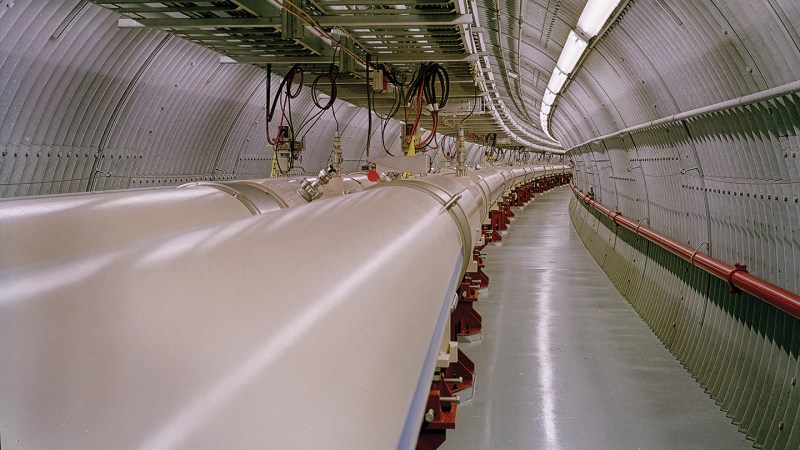
Lawrence Livermore National Laboratory (LLNL) and Germany's Fraunhofer Institute for Laser Technology (ILT) are joining forces to transition laser-ignited inertial fusion from experiments to industrial applications in a collaboration called ICONIC-FL (International Cooperation on Next-gen Inertial Confinement Fusion Lasers).
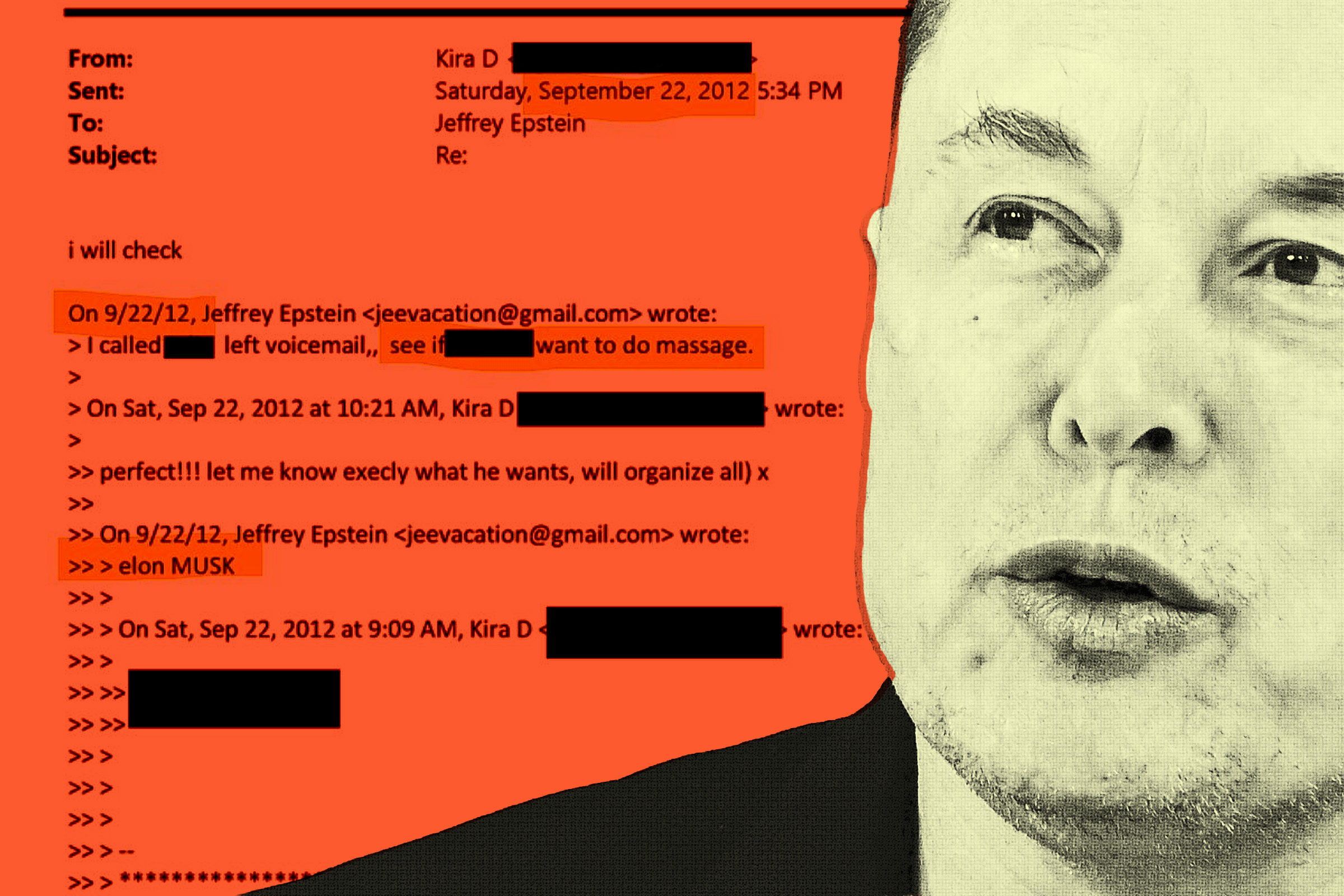
"What else is being covered up?"The post Photos Are Being Deleted From the Epstein Files appeared first on Futurism.
These ambitious expeditions could radically change our understanding of the global ocean Canadian Geographic
A new UNSW-led global meta-analysis shows that PFAS concentrations can double at every step up the food chain, leaving top predators—and humans—potentially exposed to higher chemical loads.
Using a specially developed simulation model, researchers at the University of Cologne have traced and analyzed the dynamics of possible encounters between Neanderthals and anatomically modern humans on the Iberian Peninsula during the Paleolithic period for the first time.
Chemical reactions are the breaking and forming of chemical bonds, which are fundamental to the creation of new technologies. Inevitably, discovering and developing new chemical reactions is a time-intensive process of trial and error.
A 400-mile blanket of fog has socked in California's Central Valley for weeks. Scientists and meteorologists say the conditions for such persistent cloud cover are ripe: an early wet season, cold temperatures and a stable, unmoving high pressure system.
A US–German project aims to turn fusion lasers into industrial systems capable of 15 shots per second for 24/7 power plants.
The 2025 National Defense Authorization Act, signed into law, embeds provisions to accelerate advanced nuclear reactors like SMRs for military and energy security, fostering innovation amid surging demands. It promotes public-private partnerships, domestic fuel chains, and oversight, signaling a bipartisan push for a U.S. nuclear revival.
(MENAFN - EIN Presswire) EINPresswire/ -- CCRPS announced today that its Advanced Clinical Research Coordination program, leading to the ACRCC credential, has been formally evaluated and approved ...
In 2025, global data center investments reached a record $61 billion, fueled by AI-driven demand for computing power from tech giants like Microsoft, Amazon, and Google. This surge involves mergers, expansions, and sustainable innovations amid energy and regulatory challenges. The trend signals ongoing massive growth in AI infrastructure.
Yesterday I took the MBTI test again for the first time in eight months: ISTJ-T. I didn't think much of the four letters themselves - I've seen them enough times by now. What caught my attention was the last letter, a subtle change from A (assertive) to T (turbulent). It made me stop and think about when I became more worried and prone to overthinking, not because I believe in a personality test like it's my Roman Empire, but because some of the prompts in the test do reflect my current feelings toward my own stage of growth. For context, assertive people are usually calm and self-assured, while turbulent people tend to be more anxious and self-critical.Lately, I've noticed that much of my mood is tied to external validation. What I look forward to most days isn't necessarily rest after all my classes, hanging out with friends or even small forms of comfort. It's the possibility of opening my Gmail or Outlook and seeing the word "congratulations." An interview... An acceptance... Even just a results notification. Some sort of sign from the universe - or a selection committee - that I'm doing things right. It's embarrassing to admit how much power a subject line can have over my day. A rejection can sting for an hour or two, and then I move on to the next thing to chase after. On the surface, this looks like resilience, but sometimes it feels more like I'm just hopping from one potential source of validation to another, trying not to sit still long enough to feel the emptiness in between.I've been asking myself a lot of questions because of this. Am I not mature enough to be secure about my abilities? Am I not working hard enough or working in the wrong direction? None of these questions have clear answers. I know that facing these undesired results over and over isn't a bad thing at all. In some ways, it has made me less fragile. But it also feels like I'm avoiding processing my emotions and feelings by jumping into a new resume edit or application page. It feels unhealthy - like I'm constantly trying to prove myself to a ghost, and I'm never fully satisfied with who I am without some validation on paper to back it up.When I was in China this past summer for a summer camp, I thought I had become more confident in a place I spent 10 years of my life in. It was my first solo trip abroad. I was making decisions on my own and navigating the thousands of changes that had happened in the area over the last six years. I was eager to speak up about my experiences and excited to meet new people. I felt more independent and confident about myself. But after coming back, tripping into the cycle of classes, deadlines, applications, a lot of that confidence felt more shallow than I expected.It was easy to feel strong when my life looked different and I had distance from the routine here at Hopkins. In the familiar setting of school, with everything running aside me in their own directions, I was quickly reminded that confidence built only on small achievements and "new experiences" is still pretty fragile if it isn't rooted in something deeper. However, as I'm writing this article, I know that I am thinking about what I truly value and what these new experiences actually meant to me; it feels empowering to be able to let this out.I don't think ambition is the problem. I really want to see how far I can go in my twenties. These years are dramatic life transitions - from school to work, from being a student to being some undefined "adult in society," from being guided to guiding others. Every step feels a bit uncomfortable. What worries me more is how narrow my definition of "doing well" has become. If I only recognize my own growth when it's confirmed by someone else that I have never interacted with, I'm always going to be one email away from feeling like I'm not enough.I'm still trying to find ways to show myself that a lot of important growth occurs every day: learning to communicate effectively, setting boundaries or even just being content with not doing anything "productive" for a day. However, I'm still the same person checking my emails a little too often, constantly switching between being proud of myself and feeling like I have so much left to improve on. But I like to imagine my future self, maybe at 25 or 27, stumbling across my current state through this article. I hope she can look back at these words and smile, not because I figured everything out at 19 years old, but because I was honest enough to reflect and write this down and keep trying.I don't know what my life will look like then. I've always had an idealized vision of my future, but the more I experience, the more I realize how unpredictable life is. Every month, every year, I change a little. I meet new people, own new things, have new jobs and identities on campus. Maybe the one thing I can be confident about is this: I will keep going, keep learning and keep reflecting. Even if the MBTI says I'm "turbulent" now, that could just be another way of saying I'm still in the middle of becoming who I want to be.Linda Huang is a sophomore from Rockville, Md. majoring in Biomedical Engineering. Her column celebrates growth and emotions that define young adulthood, inviting readers to live authentically.
Entry-level job postings in the United States have dropped by about 35% over the past two years, a decline researchers say is being driven in part by the rapid adoption of artificial intelligence.
Despite considerable geopolitical tensions, Chinese open-source AI models are winning.The post As US battles China on AI, some companies choose Chinese appeared first on Digital Journal.
In a parallel reality, Queen Elizabeth II gushes over cheese puffs, a gun-toting Saddam Hussein struts into a wrestling ring, and Pope John Paul II attempts skateboarding. Hyper-realistic AI videos of dead celebrities — created with apps such as OpenAI’s easy-to-use Sora — have rapidly spread online, prompting debate over the control of deceased people’s [...]The post AI resurrections of dead celebrities amuse and rankle appeared first on Digital Journal.
David Wolpert's new mathematical framework from the Santa Fe Institute redefines the simulation hypothesis, enabling mutual or cyclic simulations and challenging hierarchical assumptions. Contrasting a UBC study debunking it via Gödel's theorems, this work elevates debates on reality, with implications for AI, quantum computing, and philosophy.
The Korean crime thriller series follows KCIA agent Baek Kitae, played by Hyun Bin, who leads a double life as a smuggler in South Korea's “turbulent” 1970s.
22 December 2025 - Biotechnology company T-MAXIMUM Pharmaceutical announced on Sunday that it has received IND clearance from the US Food and Drug Administration (FDA) to commence a Phase II clinical ...
Department of Physics – Laboratory Manager – Search and Screen Committee See Microsoft Teams Link Below, 08:50 am Purpose of Meeting: Microsoft Teams Link to join the meeting: https://teams.microsoft.com/l/meetup-join/19%3ameeting_NmZlMGQyNGEtZGRjMy00NWEwLTk0M2QtOTBkOGRkZDI2Y2E1%40thread.v2/0?context=%7b%22Tid%22%3a%220bca7ac3-fcb6-4efd-89eb-6de97603cf21%22%2c%22Oid%22%3a%2238d60a2c-890b-429d-b049-76fad7c740d4%22%7d Meeting ID: 289 036 956 760 78 Passcode: 6QV7TA3q ________________________________________ Dial in by phone +1 414-253-8850,,75068040# United States, Milwaukee Phone conference ID: 750 680 40# For [...]The post Department of Physics – Laboratory Manager – Search and Screen Committee, 12/22/2025 appeared first on UWM REPORT.
As of December 22, 2025, the U.S. CHIPS and Science Act has officially transitioned from a series of ambitious legislative promises into a high-stakes operational reality. What began as a $52.7 billion federal initiative to reshore semiconductor manufacturing has evolved into the cornerstone of the American AI economy. With major manufacturing facilities now coming online [...]
22 December 2025 - Animal health company ECO Animal Health Group plc (AIM: EAH) reported on Monday that the European Commission has granted EU marketing authorisation for ECOVAXXIN MS, its poultry vac...
As of December 22, 2025, the U.S. CHIPS and Science Act has officially transitioned from a series of ambitious legislative promises into a high-stakes operational reality. What began as a $52.7 billion federal initiative to reshore semiconductor manufacturing has evolved into the cornerstone of the American AI economy. With major manufacturing facilities now coming online [...]
22 December 2025 - Swedish biopharmaceutical company Hansa Biopharma AB (STO:HNSA) announced on Friday that it has submitted a Biologics License Application (BLA) to the US Food and Drug Administratio...
Harvard has been Trump's top target in a campaign to leverage federal control of research funding to push for reforms at elite colleges he has decried as overrun by “woke” ideology.The post Trump administration will appeal judge’s order reversing federal funding cuts at Harvard appeared first on Boston.com.
I recently finished the latest season of Dancing With the Stars. For those who weren't keeping up, Robert Irwin and his professional ballroom partner, Witney Carson, brought home the highly coveted Mirrorball trophy.Every year, a new season of this show premieres, and it becomes one of the only things I can talk about and the thing I look forward to the most on Tuesday evenings. This year, I was rooting for Whitney Leavitt from The Secret Lives of Mormon Wives. Sadly, I couldn't text "WHITNEY" to 21523 because voting is only available to the United States and Canada, and I'm in... Scotland. But I was supporting her from afar!In case Reality TV isn't your forte, or you decided to skip this season of Dancing With the Stars, Leavitt was eliminated during the semi-finals due to a lack of fans voting for her to stay in the competition. The third season of The Secret Lives of Mormon Wives had aired right before the semi-finals, and to say it hadn't been to Leavitt's benefit would be an understatement. But this was the first time I had seen a vast number of people on social media band together and actively decide to vote for every other couple except her (I think psychologists call this groupthink).While I am not one to lecture people on the dangers of obsessing over Reality TV or developing a black-and-white form of thinking, I had never quite seen how social media could be wielded as a destructive tool in real time.Naturally, as a Political Science student, I began to think about how easy it has become for our society to succumb to dangerous forms of thinking - seeing things not on a spectrum, but as either all-or-nothing. We've already begun to see this mentality infiltrate our politics.The recent government shutdown, the longest in U.S. history, serves as a prime example - Congressional Republicans largely refused to compromise with Democrats on a spending budget and vice versa. Throughout the entire shutdown, I would see comments on TikTok or Instagram either blaming Democrats for the shutdown entirely or insisting Republicans were single-handedly responsible for the stalemate. Very few people seemed willing to admit what political scientists seem to repeat like a broken record: that a gridlock is rarely the fault of one person or party, but rather the product of institutional incentives, polarized media ecosystems and elected officials who ultimately benefit from refusing to budge.But that kind of nuance doesn't trend.What does trend, however, are the posts that declare "This side is evil" or "That side ruined everything." Social media rewards outrage, certainty and villians to point at, because life is always a little easier when you have someone else to blame. And once the algorithm finds the narrative you're most likely to engage with, it feeds it back to you until your entire worldview feels confirmed - no matter how distorted it becomes.This is how we get from voting against a contestant on Dancing With the Stars because TikTok told us she's "problematic" and a "horrible person" (when most of us don't really know her at all), to voters insisting that one political party alone is responsible for government dysfunction. It's the same impulse dressed up in different stakes: we want someone to blame, someone to cancel, someone to remove, so we don't have to wrestle with complexity.And the political system thrives on this. Politicians don't get reelected if they make things complicated for their constituency. They know that if they provide a simple enemy - a person, a party, a scapegoat - social media will do the rest of the work for them. Outrage spreads faster than any policy briefing ever could.In the end, maybe the real Mirrorball trophy goes to the platforms themselves. They've mastered the art of choreographing our attention, pushing us into neat little corners where the world makes sense only if there's a hero and a villain, a winner and a loser, a right and a wrong. No shades of gray and definitely no middle ground.But politics - like people, like ballroom dance - has always lived in the in-between: the messy, complicated, imperfect spaces where the real work actually happens. We need to dive into the nitty-gritty and actually understand what is going on. Or else we risk becoming victims of the very system we claim we want to fix.If we want a healthier political culture, maybe the first step is learning to log off once in a while and touch some grass. Remember that not every conflict needs a villain. It takes more energy to think about nuances and retrain yourself to look at the shades of gray, but it's worth it.Sometimes it's a controversial semi-final round of Dancing With the Stars, a broken Congress or a system that needs more cooperation and less choreography.And unfortunately, you can't fix all that by texting "WHITNEY" to 21523.Alyssa Gonzalez is a junior majoring in Political Science and International Studies.Her column approaches the political atmosphere through an individual lens, grounding the conversation in empathy and clarity in an attempt to humanize the field.
NASA is gearing up to send four Artemis astronauts on looping test flight around the moon in 2026.
The interstellar visitor Comet 3I/ATLAS passed Earth with Harvard astrophysicist Avi Loeb saying it could be an alien probe.
IEEE Spectrum’s most popular biomedical stories of the last year centered both on incorporating new technologies and revamping old ones. While AI is all the rage in most sectors—including biomed, with applications like an in-brain warning system for worsening mental health and a model to estimate heart rate in real time—biomedical news this past year has also focused on legacy technologies. Tech like Wi-Fi, ultrasound, and lasers have all made comebacks or found new uses in 2025.Whether innovation stems from new tech or old, IEEE Spectrum will continue to cover it rigorously in 2026.1. Next-Gen Brain Implants Offer New Hope for Depression Georgia Institute of Technology, Icahn School of Medicine at Mt. Sinai and TeraPixel When Patricio Riva Posse, a psychiatrist at Emory University School of Medicine, realized that his patient’s brain implants were sending him signals about her worsening depression before she even recognized anything was wrong, he wished he could have taken action sooner. That experience led him and colleagues to develop “an automatic alarm system” for signs of changing mental health. The tool monitors brain signals in real time, using implants to record electrical impulses, and AI to analyze the outputs and flag warning signs of relapse. Other research groups across the United States are experimenting with different ways to use these stimulating brain implants to help treat depression, both with and without the help of AI. “There are so many levers we can press here,” neurosurgeon Nir Lipsman says in the article.2. These Graphene Tattoos Are Actually Biosensors Dmitry Kireev/University of Massachusetts Amherst In Dmitry Kireev’s lab at the University of Massachusetts Amherst, researchers are developing imperceptibly thin graphene tattoos capable of monitoring your vital signs and more. “Electronic tattoos could help people track complex medical conditions, including cardiovascular, metabolic, immune system, and neurodegenerative diseases. Almost half of U.S. adults may be in the early stages of one or more of these disorders right now, although they don’t yet know it,” he wrote in an article for IEEE Spectrum.How does it work? Graphene is conductive, strong, and flexible, able to measure features like heart rate and the presence of certain compounds in sweat. For now, the tattoos need to be plugged into a regular electronic circuit, but Kireev hopes that they will soon be integrated into smartwatches, and thus simpler to wear.3. How Wi-Fi Signals Can Be Used to Detect Your Heartbeat Erika Cardema/UC Santa Cruz Wi-Fi can do more than just get you connected to the internet—it can help monitor your heart inexpensively and without requiring constant physical contact. The new approach, called Pulse-Fi, uses an AI model to analyze heartbeats to estimate heart rate in real time from up to 10 feet away. The system is low cost, totaling around US $40, easy to deploy, and doesn’t introduce discomfort. It also works regardless of the user’s posture and in all kinds of environments. Katia Obraczka, a computer scientist at the University of California, Santa Cruz who led the development of Pulse-Fi, says the team plans to commercialize the technology.4. Doctors Could Hack the Nervous System With Ultrasound Shonagh Rae Sangeeta S. Chavan and Stavros Zanos, biomedical researchers at the Institute of Bioelectronic Medicine in New York, hypothesize that ultrasound waves may activate neurons, offering “a precise and safe way to provide healing treatments for a wide range of both acute and chronic maladies,” as they write in an article for Spectrum. Targeted ultrasound could then serve as a treatment for inflammation or diabetes, instead of medication with wide-ranging side effects, they say.It works by vibrating a neuron’s membrane and “opening channels that allow ions to flow into the cell, thus indirectly changing the cell’s voltage and causing it to fire,” they write. The authors think that activating specific neurons can help address the root causes of specific illnesses.5. Scientists Shine a Laser Through a Human Head Extreme Light group/University of Glasgow If a doctor wants to see inside your head, they have to decide whether they want to do so cheaply or deeply—an electroencephalograph is inexpensive, but doesn’t penetrate past the outer layers of the brain, while functional magnetic resonance imaging (fMRI) is expensive, but can see all the way in. Shining a laser through a person’s head seems like the first step towards technology that accomplishes both.For many years, this kind of work has seemed impossible because the human head is so good at blocking light, but researchers have now proven that lasers can send photons all the way through. “What was thought impossible, we’ve shown to be possible. And hopefully...that could inspire the next generation of these devices,” project lead Jack Radford says in the article.6. Robots Are Starting to Make Decisions in the Operating Room Jiawei Ge In the not-to-distant future, surgical patients may hear “The robot will see you now,” as the authors of this story suggest. The three researchers work at the Johns Hopkins University robotics lab responsible for developing Smart Tissue Autonomous Robot (STAR), which performed the first autonomous soft-tissue surgery in a live animal in 2016.While there are certainly challenges remaining in the quest to bring autonomous robots into the operating room—like developing general purpose robotic controllers and collecting data within strict privacy regulations—the end goal is on the horizon. “A scenario in which patients are routinely greeted by a surgeon and an autonomous robotic assistant is no longer a distant possibility,” the authors write.
A new NASA study challenges the long-held belief that Saturn's moon Titan has a global ocean beneath its surface, suggesting instead layers of ice and slush with pockets of water
Over the past 12 months, we saw multiple spaceflight records broken, the debut of a powerful new rocket and the first-ever fully successful private moon...
NASA Installs Game-Changing Thruster Tech to Power Its Return to the Moon Indian Defence ReviewL3Harris Delivers Most Powerful Thrusters for NASA's Lunar G ASDNewsNASA's Lunar Gateway gets a massive boost as its revolutionary electric engines pass testing supercarblondie.comThrusters for the Most Powerful Spacecraft Ever Flown Are Ready, But Where's the Ship? autoevolutionUS firm delivers 12-kilowatt thrusters that offer higher efficiency for NASA’s lunar gateway Interesting Engineering
Step aside, Doomguy.The post Rats Successfully Trained to Shoot Demons in “Doom” appeared first on Futurism.
Scientists Confirm the Incredible Existence of ‘Second Sound’ Yahoo
Scientists have imaged heat traveling as a wave, called "second sound," in superfluid quantum gas. It may unlock mysteries of neutron stars and...
Navigation algorithms designed for Earth fail in orbit. A new approach fixes the drift.The post Lost in space: How ’digital twins’ saved NASA’s robots appeared first on Popular Science.
There's a new Terminator robot in China, and other humanoids are allegedly strong enough to "fracture a human skull." Let's weigh the claims, facts and true risks.
This giant bubble on the island of Sardinia holds 2,000 tonnes of carbon dioxide. But the gas wasn’t captured from factory emissions, nor was it pulled from the air. It came from a gas supplier, and it lives permanently inside the dome’s system to serve an eco-friendly purpose: to store large amounts of excess renewable energy until it’s needed.Developed by the Milan-based company Energy Dome, the bubble and its surrounding machinery demonstrate a first-of-its-kind “CO2 Battery,” as the company calls it. The facility compresses and expands CO2 daily in its closed system, turning a turbine that generates 200 megawatt-hours of electricity, or 20 MW over 10 hours. And in 2026, replicas of this plant will start popping up across the globe.We mean that literally. It takes just half a day to inflate the bubble. The rest of the facility takes less than two years to build and can be done just about anywhere there’s 5 hectares of flat land.The first to build one outside of Sardinia will be one of India’s largest power companies, NTPC Limited. The company expects to complete its CO2 Battery sometime in 2026 at the Kudgi power plant in Karnataka, in India. In Wisconsin, meanwhile, the public utility Alliant Energy received the all clear from authorities to begin construction of one in 2026 to supply power to 18,000 homes.And Google likes the concept so much that it plans to rapidly deploy the facilities in all of its key data-center locations in Europe, the United States, and the Asia-Pacific region. The idea is to provide electricity-guzzling data centers with round-the-clock clean energy, even when the sun isn’t shining or the wind isn’t blowing. The partnership with Energy Dome, announced in July, marked Google’s first investment in long-duration energy storage.“We’ve been scanning the globe seeking different solutions,” says Ainhoa Anda, Google’s senior lead for energy strategy, in Paris. The challenge the tech giant has encountered is not only finding a long-duration storage option, but also one that works with the unique specs of every region. “So standardization is really important, and this is one of the aspects that we really like” about Energy Dome, she says. “They can really plug and play this.”Google will prioritize placing the Energy Dome facilities where they’ll have the most impact on decarbonization and grid reliability, and where there’s a lot of renewable energy to store, Anda says. The facilities can be placed adjacent to Google’s data centers or elsewhere within the same grid. The companies did not disclose the terms of the deal.Anda says Google expects to help the technology “reach a massive commercial stage.”Getting creative with long-duration energy storageAll this excitement is based on Energy Dome’s one full-size, grid-connected plant in Ottana, Sardinia, which was completed in July. It was built to help solve one of the energy transition’s biggest challenges: the need for grid-scale storage that can provide power for more than 8 hours at a time. Called long-duration energy storage, or LDES in industry parlance, the concept is the key to maximizing the value of renewable energy.When sun and wind are abundant, solar and wind farms tend to produce more electricity than a grid needs. So storing the excess for use when these resources are scarce just makes sense. LDES also makes the grid more reliable by providing backup and supplementary power.The problem is that even the best new grid-scale storage systems on the market—mainly lithium-ion batteries—provide only about 4 to 8 hours of storage. That’s not long enough to power through a whole night, or multiple cloudy and windless days, or the hottest week of the year, when energy demand hits its peak. After the CO2 leaves the dome, it is compressed, cooled, reduced to a liquid, and stored in pressure vessels. To release the energy, the process reverses: The liquid is evaporated, heated, expanded, and then fed through a turbine that generates electricity. Luigi AvantaggiatoLithium-ion battery systems could be increased in size to store more and last longer, but systems of that size usually aren’t economically viable. Other grid-scale battery chemistries and approaches are in development, such as sodium-based, iron-air, and vanadium redox flow batteries. But the energy density, costs, degradation, and funding complications have challenged the developers of those alternatives.Researchers have also experimented with storing energy by compressing air, heating up blocks or sand, using hydrogen or methanol, pressurizing water deep underground, and even dangling heavy objects in the air and dropping them. (The creativity devoted to LDES is impressive.) But geologic constraints, economic viability, efficiency, and scalability have hindered the commercialization of these strategies.The tried-and-true grid-scale storage option—pumped hydro, in which water is pumped between reservoirs at different elevations—lasts for decades and can store thousands of megawatts for days. But these systems require specific topography, a lot of land, and can take up to a decade to build.CO2 Batteries check a lot of boxes that other approaches don’t. They don’t need special topography like pumped-hydro reservoirs do. They don’t need critical minerals like electrochemical and other batteries do. They use components for which supply chains already exist. Their expected lifetime stretches nearly three times as long as lithium-ion batteries. And adding size and storage capacity to them significantly decreases cost per kilowatt-hour. Energy Dome expects its LDES solution to be 30 percent cheaper than lithium-ion.China has taken note. China Huadian Corp. and Dongfang Electric Corp. are reportedly building a CO2-based energy-storage facility in the Xinjiang region of northwest China. Media reports show renderings of domes but give widely varying storage capacities—including 100 MW and 1,000 MW. The Chinese companies did not respond to IEEE Spectrum’s requests for information.“What I can say is that they are developing something very, very similar [to Energy Dome’s CO2 Battery] but quite large in scale,” says Claudio Spadacini, Energy Dome’s founder and CEO. The Chinese companies “are good, they are super fast, and they have a lot of money,” he says.Why is Google investing in CO2 Batteries?When I visited Energy Dome’s Sardinia facility in October, the CO2 had just been pumped out of the dome, so I was able to peek inside. It was massive, monochromatic, and pretty much empty. The inner membrane, which had been holding the uncompressed CO2, had collapsed across the entire floor. A few pockets of the gas remained, making the off-white sheet billow up in spots.Meanwhile, the translucent outer dome allowed some daylight to pass through, creating a creamy glow that enveloped the vast space. With no structural framing, the only thing keeping the dome upright was the small difference in pressure between the inside and outside air.“This is incredible,” I said to my guide, Mario Torchio, Energy Dome’s global marketing and communications director.“It is. But it’s physics,” he said.Outside the dome, a series of machines connected by undulating pipes moves the CO2 out of the dome for compressing and condensing. First, a compressor pressurizes the gas from 1 bar (100,000 pascals) to about 55 bar (5,500,000 pa). Next, a thermal-energy-storage system cools the CO2 to an ambient temperature. Then a condenser reduces it into a liquid that is stored in a few dozen pressure vessels, each about the size of a school bus. The whole process takes about 10 hours, and at the end of it, the battery is considered charged.To discharge the battery, the process reverses. The liquid CO2 is evaporated and heated. It then enters a gas-expander turbine, which is like a medium-pressure steam turbine. This drives a synchronous generator, which converts mechanical energy into electrical energy for the grid. After that, the gas is exhausted at ambient pressure back into the dome, filling it up to await the next charging phase. Energy Dome engineers inspect the dryer system, which keeps the gaseous CO2 in the dome at optimal dryness levels at all times.Luigi AvantaggiatoIt’s not rocket science. Still, someone had to be the first to put it together and figure out how to do it cost-effectively, which Spadacini says his company has accomplished and patented. “How we seal the turbo machinery, how we store the heat in the thermal-energy storage, how we store the heat after condensing...can really cut costs and increase the efficiency,” he says.The company uses pure, purpose-made CO2 instead of sourcing it from emissions or the air, because those sources come with impurities and moisture that degrade the steel in the machinery.What happens if the dome is punctured?On the downside, Energy Dome’s facility takes up about twice as much land as a comparable capacity lithium-ion battery would. And the domes themselves, which are about the height of a sports stadium at their apex, and longer, might stand out on a landscape and draw some NIMBY pushback.And what if a tornado comes? Spadacini says the dome can withstand wind up to 160 kilometers per hour. If Energy Dome can get half a day’s warning of severe weather, the company can just compress and store the CO2 in the tanks and then deflate the outer dome, he says.If the worst happens and the dome is punctured, 2,000 tonnes of CO2 will enter the atmosphere. That’s equivalent to the emissions of about 15 round-trip flights between New York and London on a Boeing 777. “It’s negligible compared to the emissions of a coal plant,” Spadacini says. People will also need to stay back 70 meters or more until the air clears, he says.Worth the risk? The companies lining up to build these systems seem to think so.
Emma, a $5,350 AI-powered sex robot featuring Doubao artificial intelligence, can make you laugh more than humans do according to manufacturers
NASA Scientists Zoomed In on the Ocean — Then Spotted a Tiny Red Creature That Keeps Whales Alive Indian Defence Review
NASA captures rare cosmic collisions near star Fomalhaut, solving the mystery of a vanishing bright spot that astronomers mistook for a planet.
Engineers need good data to build lasting things. Even the designers of the Great Pyramids knew the limestone they used to build these massive structures would be steady when stacked on top of one another, even if they didn’t have tables of the compressive strength of those stones. But when attempting to build structures on other worlds, such as the Moon, engineers don’t yet know much about the local materials. Still, due to the costs of getting large amounts of materials off of Earth, they will need to learn to use those materials even for critical applications like a landing pad to support the landing / ascent of massive rockets used in re-supply operations. A new paper published in Acta Astronautica from Shirley Dyke and her team at Purdue University describes how to build a lunar landing pad with just a minimal amount of prior knowledge of the material properties of the regolith used to build it.
Step aside, Van Gogh. Some spiders are out here making self-portraits for survival. New research shows that several orb-weaving species construct giant web-mounted “doppelgängers” convincing enough to confuse potential predators. It’s an unexpectedly clever form of deception that blurs the line between instinct and ingenuity.Continue ReadingCategory: Biology, ScienceTags: Spiders, Art, Predator, Evolution
Commercial flights over the Caribbean faced an unexpected hazard in January: falling pieces of a blown-up SpaceX rocket. FAA records reviewed by the Wall Street Journal show that when a SpaceX Starship test vehicle broke apart on Jan. 16 after lifting off from Texas, debris scattered over the region for...
National and international brewers and researchers will meet in Northwest Arkansas in early February at a conference focused on nonalcoholic beer production, the fastest growing segment in the industry.
A German aerospace engineer made history Saturday, becoming the first wheelchair user to go into space when she took a 10-minute trip aboard a Blue Origin rocket.
(MENAFN - Clever Dude) The idea of reading minds has captivated people for centuries, from mystics to modern mentalists. While true telepathy remains in the realm of science fiction, there are ...
Epstein Survivor Jess Michaels talks to CNN's Erica Hill about her personal life and reaction to the redacted Epstein files
Researchers analyzed 333 Italian centenarians and compared their genetic composition to 103 ancient genomes to investigate human longevity.
"If there are historians in the future, they'll look back at Starship and say it's one of the most profound things that's ever happen."The post Elon Says His New Rocket Is as Important as the Origin of Life Itself appeared first on Futurism.
The run-through simulated day-of-launch activities, included suit up, ingress into the Orion spacecraft and a countdown that stopped just shy of T-0.
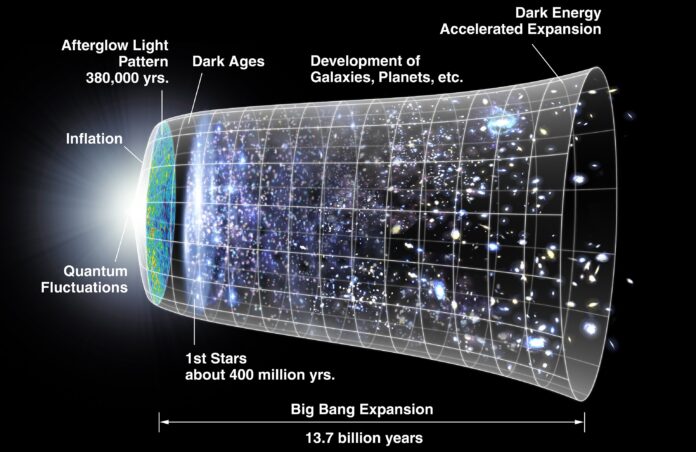
Using the James Webb Space Telescope, a team of international researchers has discovered chemical fingerprints of gigantic primordial stars that were among the first to form after the Big Bang.
In the heart of Namibia, a unique conservation project is quietly preparing for a future no one wants to face. At the Cheetah Conservation Fund, zoologist Dr. Laurie Marker has spent the past 35 years collecting and storing cheetah sperm samples. Her goal is simple, though sobering: to preserve the species’ genetic material in case [...]The post Why a cheetah sperm bank may be key to saving the species from extinction first appeared on The Optimist Daily: Making Solutions the News.
Quantum computing stocks are becoming more popular on Wall Street.
INAHA cube-shaped human skull discovered by researchers in Mexico could yield new insights into an ancient cultural practice known as “intentional cranial deformation.” The skull belonged to a 40-year-old man who lived in the Sierra Madre Oriental mountain range more than 1,000 years ago, according to a translated press release from Mexico’s National Institute of Anthropology and History (INAH). The institute said the practice was carried out during a child’s early years, using boards and bandages wrapped around the skull to sculpt it as the child developed. “Not only was intentional cranial deformation identified for the first time for this type of site, but also a variant [was found] with respect to the models recognized in Mesoamerica not reported until now in the area,” anthropologist Jesús Ernesto Velasco González said, according to the release. He explained that the square shape of the skull was different than the typical “conical” shape seen elsewhere in the region.Read it at PeopleRead more at The Daily Beast.
Michaela Benthaus says she wanted to savor floating in space while beholding Earth from on high and pushing the boundaries for the disabled.
Mr. Angel Gomez is a researcher specializing in the societal impact of government policies. He has a background in psychoanalytical anthropology and general sciences.
The Best in Science News and Amazing Breakthroughs
Working in the space station’s Microgravity Science Glovebox, NASA astronaut Jonny Kim mixes proteins with Janus base nanomaterials, small molecules that mimic DNA base pairs, for DNA Nano Therapeutics-Mission 2. This investigation builds on previous work and aims to develop in-space manufacturing of nanomaterials that are less toxic, more stable, and more biocompatible than current [...]The post Offworld Biotechnology Glovebox Operations: DNA Nano Therapeutics-Mission 2 appeared first on Astrobiology.
The Sun Is Raining Giant Magnetic ‘Tadpoles’ Indian Defence ReviewIt’s Raining Magnetic 'Tadpoles' on the Sun Universe TodayNASA’s Parker Solar Probe Spies Solar Wind ‘U-Turn’ NASA Science (.gov)Finding the point of no return: Sun's shifting, spiky atmospheric boundary mapped in detail for 1st time SpaceA NASA spacecraft is piercing the sun's scorching atmosphere right now Mashable
The first wheelchair user has blasted past the Kármán Line. Michi Benthaus traveled into space aboard Blue Origin’s NS-37 mission.
A paraplegic engineer from Germany blasted off on a dream-come-true rocket ride with five other passengers Saturday, leaving her wheelchair behind to float...
In the best possible news for people who like pizza, researchers report that high-fat cheese may protect brain health and reduce dementia risk. Ancient hunter-gatherer DNA could explain why some people live 100 years or more. And one philosopher believes that we may never be able to tell whether an AI has become conscious.
The most precise timekeepers ever made, atomic clocks, might one day help robotic and crewed missions on Mars stay in sync with each other, as well as enable the equivalent of GPS on the red planet. But, as Einstein made clear, time flows at different rates depending on where you are. Now scientists have estimated the speed at which clocks tick on Mars—an average of 477 millionths of a second faster than clocks on Earth per day. These findings might suggest ways in which future networks on Mars can avoid problems such clock differences might produce.Atomic clocks monitor the vibrations of atoms. Optical atomic clocks, which use intersecting laser beams to entrap and monitor the atoms, are currently accurate down to 1 attosecond, or a billionth of a billionth of a second. These clocks have many applications besides keeping time—for example, they are key to the precisely timed signals that GPS and other global navigation satellite systems rely on to help users pinpoint their own locations.However, because the gravity of massive objects warps spacetime, the rate of time passes different at different gravitational field strengths. In other words, the weaker a planet’s gravitational pull, the faster clocks on its surface tick. And the average strength of Mars’s gravitational pull is roughly three times as weak as Earth’s.Mars Timekeeping and GPS TechnologyIn 2024, scientists at the National Institute of Standards and Technology (NIST) in Boulder, Colo. estimated the rate at which clocks ticked on the moon, which has an average gravitational pull about six times as weak as Earth’s. Given NASA’s plans for missions to Mars, the researchers have now analyzed timekeeping on Mars and detailed their research in a study published online on 1 December in The Astronomical Journal.“With an understanding of these relativistic effects comes the hope that humans will someday become an interplanetary species,” says Neil Ashby, a professor emeritus of physics at the University of Colorado, Boulder, and an affiliate of NIST.Using years of data collected from previous Mars missions, the scientists calculated the strength of gravity on the Martian surface. They also had to account for the how the gravitational effects of the sun and the other planets on Mars changed over time over the course of the Red Planet’s eccentric, elongated orbit.Although clocks on Mars will on average tick 477 microseconds faster than on Earth per day, this value can increase or decrease by as much as 226 microseconds per day over the course of the Martian year, depending on effects from its celestial neighbors. Such variations could prove challenging when it comes to coordinating missions on Mars.“Microseconds matter in navigation and communications,” says Bijunath Patla, a theoretical physicist at NIST. “Current 5G networks rely on microsecond-level synchronization. GPS clocks are synchronized to a few nanoseconds.”This difference between Mars and Earth in clock speeds has not been a problem in past missions, because they relied “on one-way radio communication from ground stations on Earth and Mars,” Ashby says. “There was no need for rovers to be synchronized with each other.”This new research “is important if you have multiple assets on Mars and they need to be in sync with each other and independent from Earth,” Patla says. “This could be important in returning to the same location for further exploration or prospecting.”One possible way for Martian missions to deal with this difference between Earth and Martian clocks may be to deploy a GPS-like constellation of satellites around the planet so that both rover clocks and constellation clocks “share a common, Mars-centric system time,” Ashby says.In such a scheme, only small local corrections would be needed to be applied when comparing clocks on Mars. “‘Mars system time’ would remain internally self-consistent and largely independent of Earth, and only the Earth-Mars link would require periodic calibration to account for the larger interplanetary offsets,” Patla says.
On Episode 190 of This Week In Space, Rod Pyle and Tariq Malik look back at the past year in space — its ups, its downs, its all-arounds.
Penner: Winter blesses us with wonderful night-sky viewing Calgary Herald
Researchers say they have identified what may be the first imaging-based biomarker of chronic stress, using artificial intelligence to analyze routine CT scans in a way that could eventually help flag long-term stress-related health risks.
As Europe seeks to curb its dependence on China for rare earths, plans to mine the continent's biggest deposit have hit a roadblock over fears that mining operations could harm endangered beetles, mosses and mushrooms.
A research team at the Facility for Rare Isotope Beams (FRIB) is the first ever to observe a beta-delayed neutron emission from fluorine-25, a rare, unstable nuclide. Using the FRIB Decay Station Initiator (FDSi), the team found contradictions in prior experimental findings. The results led to a new line of inquiry into how particles in exotic, unstable isotopes remain bound under extreme conditions. Led by Robert Grzywacz, professor of physics at the University of Tennessee, Knoxville (UTK), the team included Jack Peltier, undergraduate student at UTK, Zhengyu Xu, postdoctoral researcher at UTK, Sean Liddick, professor of chemistry at FRIB and interim chairperson of MSU's Department of Chemistry, and Rebeka Lubna, scientist at FRIB.
Happy holidays!The post Holiday Yule Log App Constantly Bombards User With Ads for Premium Version appeared first on Futurism.
It's not that unusual for a 20-something to text Mom from the doctor's office for help answering a health question. Or for patients of any age to struggle at recalling all their medicines. Getting the most out of a doctor's...
The U.S. reportedly plans to overhaul the country’s childhood vaccine schedule. The move could set public health back decades, experts say
Using naturally occurring muons, researchers are embarking on a non-invasive quest to scan the interior of El Castillo.
ZIM Integrated Shipping Services (NYSE:ZIM – Get Free Report) was upgraded by research analysts at Fearnley Fonds from a “strong sell” rating to a “hold” rating in a research note issued on Friday,Zacks.com reports. Several other research analysts have also commented on the stock. Weiss Ratings reaffirmed a “hold (c)” rating on shares of ZIM [...]
AeroVironment (NASDAQ:AVAV – Get Free Report) was upgraded by research analysts at KeyCorp to a “strong-buy” rating in a research report issued to clients and investors on Thursday,Zacks.com reports. AVAV has been the subject of a number of other research reports. Needham & Company LLC reiterated a “buy” rating and set a $450.00 target price [...]
During the deployment of new space telescopes that are several critical steps each has to go through. Launch is probably the one most commonly thought of, another is “first light” of all of the instruments on the telescope. Ultimately, they’re responsible for the data the telescope is intended to collect - if they don’t work properly then the mission itself it a failure. Luckily, the Interstellar Mapping and Acceleration Probe (IMAP) recently collected first light on its 10 primary instruments, and everything seems to be in working order, according to a press release from the Southwest Research Institute who was responsible for ensuring the delivery of all 10 instruments went off without a hitch.
WAUSEON — The Ohio State University Extension Office in Fulton County will be hosting its 20th annual Corn-Soybean Day on Jan. 16 beginning at 8 a.m. at Founder’s Hall in Archbold.
The Southern Ocean is one of the most remote places on Earth, but that doesn't mean it is tranquil. Tumultuous waves that can swallow vessels ensure that...
A new study shows that marine bacteria that alter their surfaces to avoid viral infection are still able to capture and sink carbon to the ocean floor thanks to the mutations giving the cells a "sticky" quality.
Wisk Aero, an autonomous aviation company, has announced the successful completion of the first flight of its Generation 6 aircraft. The flight is a pivotal step forward in Wisk’s journey to deliver the first certified, autonomous passenger-carrying eVTOL to market in the US Wisk says it is the only company to have designed, built, and [...]
The glass industry is entering a new era of digital precision as a result of an EU-funded DiMAT project, which is helping companies like Hegla-Hanic transform complex production processes into more sustainable operations efficiently driven by data. As demand grows for spectacular glass façades and free-formed 3D designs in modern architecture, like the Vaghuset Business [...]
This batch of satellites will populate what the SDA calls the Tracking Layer of its Proliferated Warfighter Space Architecture (PWSA) constellation in low Earth orbit. The work will be divided evenly, with each company building 18 spacecraft.
A number of research firms have changed their ratings and price targets for Emergent Biosolutions (NYSE: EBS): 12/16/2025 – Emergent Biosolutions had its “buy” rating reaffirmed by analysts at HC Wainwright. They now have a $15.00 price target on the stock. 12/15/2025 – Emergent Biosolutions had its “hold (c-)” rating reaffirmed by analysts at Weiss [...]
NBC News' Gadi Schwartz reports on "3I/ATLAS," a mysterious outer space object that is thought to be billions of years old, making its closest approach to Earth, giving scientists an opportunity to study it before it travels further away.